
 Q2
Q2
 QIDI Box
 Plus 4
 Q1 Pro
 X-Max 3


What Is the Strongest 3D Printing Material?

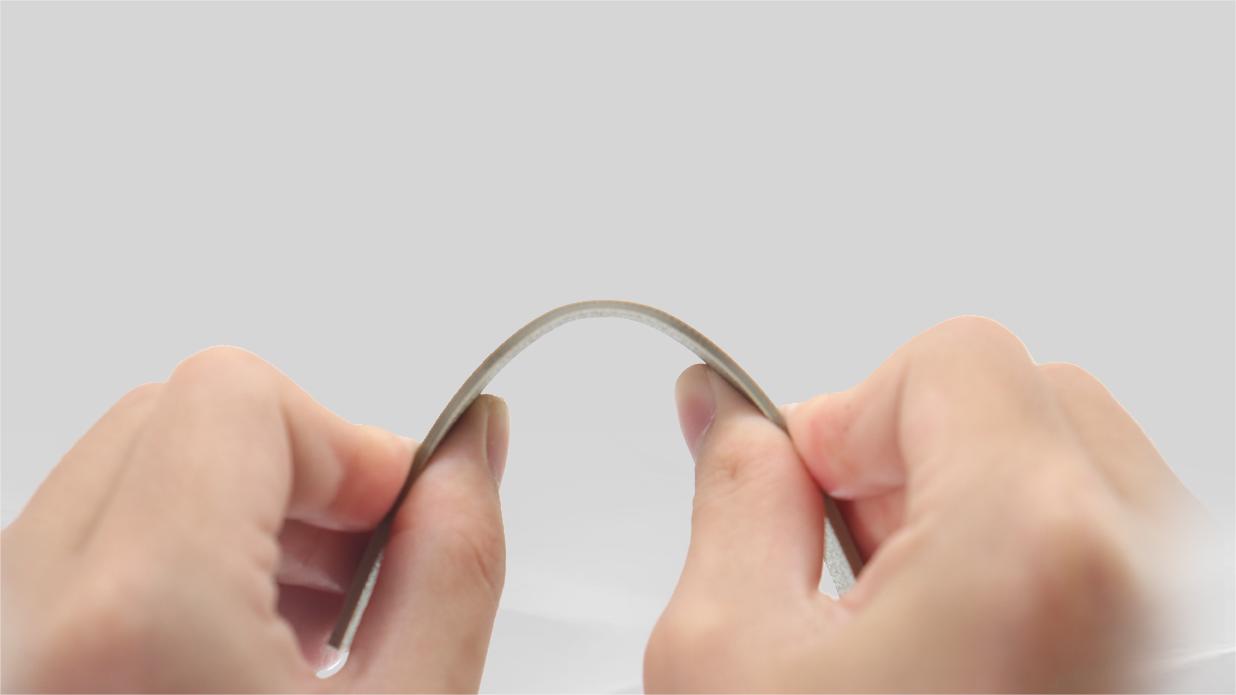
The strongest 3D printing material available on a desktop machine is carbon-fibre reinforced nylon, followed by polycarbonate and PPA/PPS composites; PEEK and PEI are stronger still but need an industrial high-temperature printer. "Strongest" is not one number though — a part fails in tension, in impact, or in heat, and different materials win each of those.
That distinction is the whole reason this question is hard to answer in a sentence. PLA has a higher tensile strength on a datasheet than ABS, and yet a dropped PLA bracket shatters while the ABS one survives. Below is a ranked comparison across the properties that actually decide whether a part breaks, followed by the process factor that outweighs material choice more often than anyone expects.

Strongest 3D printing materials, ranked by property
Typical published ranges for FDM filaments. A printed part will test below these figures, because a datasheet describes the polymer, not a stack of welded extrusion lines.
| Material | Tensile strength (MPa) | Impact resistance | Heat deflection (°C) | Stiffness | Desktop printable? |
|---|---|---|---|---|---|
| PEEK | 90–100 | Good | 150+ | Very high | No — needs an industrial machine |
| PEI (Ultem) | 80–110 | Moderate | 190+ | Very high | No — needs an industrial machine |
| Carbon-fibre nylon (PA-CF) | 70–110 | Good | ~120–180 | Very high | Yes, with a hardened nozzle and heated chamber |
| PPA / PPS composites | 70–100 | Good | ~150–220 | Very high | Yes, on a 370°C hotend with chamber heat |
| Polycarbonate (PC) | 60–70 | Excellent | 110–140 | High | Yes, with chamber heat |
| Nylon (PA6/PA12) | 40–70 | Excellent | 70–100 | Moderate | Yes, must be dried |
| PLA | 50–70 | Poor | 55–60 | High but brittle | Yes, easiest of all |
| PETG | 45–55 | Good | 70–75 | Moderate | Yes |
| ASA | 40–50 | Good | 95–100 | Moderate | Yes, enclosure recommended |
| ABS | 35–45 | Good | 90–100 | Moderate | Yes, enclosure recommended |
Read the table by column, not by row. If your part gets dropped, the impact column decides. If it lives in a car in summer, the heat deflection column decides and PLA is out at 55°C regardless of its respectable tensile number. If it carries a steady pulling load, tensile strength decides. Very few parts are limited by all three at once.
The factor that beats material choice: print orientation
An FDM part is not equally strong in every direction. Along the extrusion lines the load runs through solid polymer; across the layers it runs through the thermal weld between them, which is always weaker. A review of FDM strength optimisation reports reductions on the order of 60% in tensile strength and 45% in flexural strength for vertically printed specimens compared with horizontally printed ones, and a broader review of FFF mechanical characterisation reaches the same conclusion about the Z direction being adhesion-limited.
The practical consequence is blunt: a badly oriented PC part can be weaker than a well-oriented PETG part. Before you buy a more expensive filament, rotate the model so that the expected load runs along the layers rather than across them. That change costs nothing.
Three related levers, in order of effect:
- Orientation. Put the layer lines perpendicular to the crack you are trying to prevent, not parallel to it.
- Wall count. Perimeters carry far more load than infill. Going from 2 to 4 walls typically does more for a bracket than raising infill from 20% to 50%.
- Layer bonding. Higher nozzle temperature, thinner layers, and a warm chamber all improve the weld between layers. This is where an actively heated chamber earns its place — it is a strength feature, not just an anti-warping feature.
The full set of process levers is covered in how to make 3D prints stronger.
What "strength" actually means
Six properties get bundled into the word strength, and they are not interchangeable.
1. Tensile strength
Tensile strength is the maximum pulling stress a material withstands before it breaks, measured in megapascals. It is the number most datasheets lead with, and the one most likely to mislead, because it says nothing about how the material behaves on the way to failure.
2. Elongation at break and ductility
Elongation at break is how far a material stretches before it fails. This is the property that separates tough from brittle. PLA elongates a few percent and then snaps; nylon elongates many times that and deforms instead. A material with moderate tensile strength and high elongation absorbs far more energy before failing than a rigid one with a higher headline number.
3. Impact resistance
Measured by Izod or Charpy impact testing, this is resistance to a sudden shock rather than a steady load. Polycarbonate and nylon dominate here; PLA is the weakest of the common filaments by a wide margin. For protective covers, clips, drone parts, and anything that gets dropped, this is the column that matters.
4. Hardness and wear resistance
Hardness (durometer for polymers) governs resistance to indentation and abrasion. It matters for bushings, sliding surfaces, gear teeth, and tool parts. Nylon and its composites lead the common materials; wear-resistant sliding connectors goes into which materials survive repeated contact.
5. Chemical and UV resistance
A part can fail without any mechanical overload at all. UV degrades most filaments; ASA and UV-stabilised nylons hold up best outdoors, while PLA becomes brittle and discoloured within months of direct sun. Nylon, PC, PPS and PP lead on chemical resistance.
6. Heat deflection temperature
Heat deflection temperature (HDT) is the temperature at which a material deforms under a specified load. Note the "under load" part: a PLA bracket carrying weight sags well below 55°C. This is the single most common cause of a "strong" part failing in service — a car interior on a summer day easily exceeds PLA's limit.

The strong materials, one by one
Carbon-fibre reinforced nylon: the desktop strength leader
Chopped carbon fibre in a nylon matrix combines the fibre's stiffness with nylon's toughness. It is dimensionally stable, resists creep better than unfilled nylon, and holds its properties at higher temperatures. This is the material to reach for when a part must be rigid, light and durable at once — PAHT-CF and UltraPA CF25 sit in this class.
Two caveats that get skipped. Carbon fibre makes a filament stiffer, not automatically tougher — the fibres reduce elongation, so a CF composite can be more brittle in impact than the unfilled base polymer. And the filament is abrasive: a brass nozzle wears out quickly, so a hardened or tungsten-carbide nozzle is required rather than optional. Where carbon-fibre FDM can replace metal covers the honest boundaries of that substitution.
Polycarbonate: the impact champion
PC combines high tensile strength with genuinely excellent impact resistance and an HDT around 110–140°C. It is the material behind safety goggles and machine guards for a reason. The trade-offs are printing difficulty (high nozzle temperature, chamber heat, very moisture-sensitive) and poor UV resistance unless the grade is stabilised.
Nylon (PA): tough rather than stiff
Nylon absorbs impact, resists abrasion, and survives repeated flexing — the properties that matter for gears, hinges, bushings, clips, and living-hinge designs. It is not the stiffest material and it creeps under sustained load. Its real operational problem is moisture: nylon absorbs water from the air fast enough to ruin a print, so it needs drying before every job. UltraPA is the unfilled option.
PPA and PPS composites: heat plus strength
Where a part needs both mechanical strength and real heat tolerance, PPA (high-temperature polyamide) and PPS composites go further than PC without demanding an industrial machine. They need a 370°C hotend and a heated chamber, both standard across the current QIDI printer lineup apart from the entry-level model. Printing PPS-CF covers the settings in detail.
ABS and ASA: moderate strength, useful toughness
ABS has a lower tensile figure than PLA but much better impact resistance and roughly 35°C more heat tolerance, which is why it remains the default for enclosures and functional prototypes. ASA matches it and adds UV stability, making it the better outdoor choice.
PLA: strong on paper, brittle in practice
PLA is stiff and prints beautifully, and its tensile number is genuinely competitive. But it has almost no elongation, so it fails suddenly rather than bending, and it softens at 55–60°C. One correction worth making: PLA is industrially compostable, not simply biodegradable — it needs sustained temperatures around 58°C and controlled humidity to break down, conditions that a home compost heap or a landfill does not provide.
PEEK and PEI: the ceiling, and why it is out of reach
PEEK and PEI (Ultem) lead on every property that matters, with HDT above 150°C and 190°C respectively. They also require nozzle temperatures of 360–430°C and chamber temperatures well above anything a desktop machine provides. Listing them as "the strongest 3D printing material" is true and largely useless for a desktop user — the realistic ceiling on a home machine is carbon-fibre nylon or a PPA composite.

Practical considerations before you upgrade material
Will the part survive its environment?
Strong materials still fail to the environment rather than to load. Moisture weakens nylon over time, UV embrittles most filaments, temperature cycling opens micro-cracks, and chemicals attack specific polymers selectively. Match the material to where the part lives, not just to what it holds. The filament lifespan guide covers ageing in storage and in service.
What does it cost, really?
Cost rises steeply with performance: PLA at the bottom, PETG and ABS close behind, nylon in the middle, carbon-fibre composites higher, PEEK in a different bracket entirely. Factor in the hidden costs too — a hardened nozzle for abrasives, a dryer for nylon, higher failure rates while you dial in a new material. Often the cheaper answer is more walls and a better orientation in a material you already print well. See what drives filament pricing.
Can your printer actually run it?
Match three specifications before buying: hotend maximum temperature (370°C covers everything up to PPA and PPS composites), chamber capability (an actively heated chamber is required for PC, PA and composites, not merely helpful), and nozzle material (hardened or tungsten carbide for anything fibre-filled). A machine without chamber heat will print PC that warps off the plate or cracks between layers, which reads as a material failure but is not.
FAQs about 3D printing material strength
What is the strongest 3D printing material?
On an industrial machine, PEEK and PEI. On a desktop printer, carbon-fibre reinforced nylon leads on tensile strength and stiffness, polycarbonate leads on impact resistance, and PPA or PPS composites lead when heat resistance is part of the requirement. There is no single winner because the three properties trade against each other.
What is the strongest plastic for 3D printing on a home printer?
Carbon-fibre nylon, provided your printer has a hardened nozzle and a heated chamber. If it does not, polycarbonate is the next step and PETG is the practical everyday answer. Do not buy PEEK for a desktop machine.
What is the most durable 3D printing material?
Durability and strength are different questions. For a part that must survive years of handling, impact and temperature swings, nylon and polycarbonate outlast stiffer materials because they deform instead of cracking. For outdoor durability specifically, ASA wins on UV stability regardless of its mid-range strength numbers.
What material is stronger than PLA?
In tensile terms, surprisingly few common filaments beat PLA. In every practical sense, most do: ABS, ASA, PETG, nylon and PC all survive impacts and heat that shatter or soften PLA. If a PLA part is failing, the fix is usually PETG for everyday jobs or PC and nylon for demanding ones.
What is the toughest 3D printing material?
Toughness means energy absorbed before failure, which is where polycarbonate and nylon lead, with TPU beyond both if flexibility is acceptable. Stiff materials such as PLA and carbon-fibre composites score poorly on toughness even when their tensile numbers are high.
What is the strongest infill pattern for 3D printing?
Gyroid and honeycomb patterns give the best strength-to-weight ratio across multiple load directions, while rectilinear or triangular infill aligned with the load performs best in one specific direction. But infill is the wrong lever to pull first: extra perimeters and correct orientation raise part strength more per gram than raising infill density does.
Does higher infill make a print stronger?
Up to a point, and with diminishing returns. Going from 20% to 50% infill gives a real gain; going from 50% to 100% adds a lot of material and print time for a modest one. Adding walls is the more efficient route for most functional parts.
Read more
- Strongest 3D printing materials, ranked by property
- The factor that beats material choice: print orientation
- What "strength" actually means
- 1. Tensile strength
- 2. Elongation at break and ductility
- 3. Impact resistance
- 4. Hardness and wear resistance
- 5. Chemical and UV resistance
- 6. Heat deflection temperature
- The strong materials, one by one
- Carbon-fibre reinforced nylon: the desktop strength leader
- Polycarbonate: the impact champion
- Nylon (PA): tough rather than stiff
- PPA and PPS composites: heat plus strength
- ABS and ASA: moderate strength, useful toughness
- PLA: strong on paper, brittle in practice
- PEEK and PEI: the ceiling, and why it is out of reach
- Practical considerations before you upgrade material
- Will the part survive its environment?
- What does it cost, really?
- Can your printer actually run it?
- FAQs about 3D printing material strength
- What is the strongest 3D printing material?
- What is the strongest plastic for 3D printing on a home printer?
- What is the most durable 3D printing material?
- What material is stronger than PLA?
- What is the toughest 3D printing material?
- What is the strongest infill pattern for 3D printing?
- Does higher infill make a print stronger?
- Read more
Recommended products