
 Q2
Q2
 QIDI Box
 Plus 4
 Q1 Pro
 X-Max 3


QIDI 3D Printer Comparison 2026: Q2C vs Q2 vs Plus 5 vs Max4

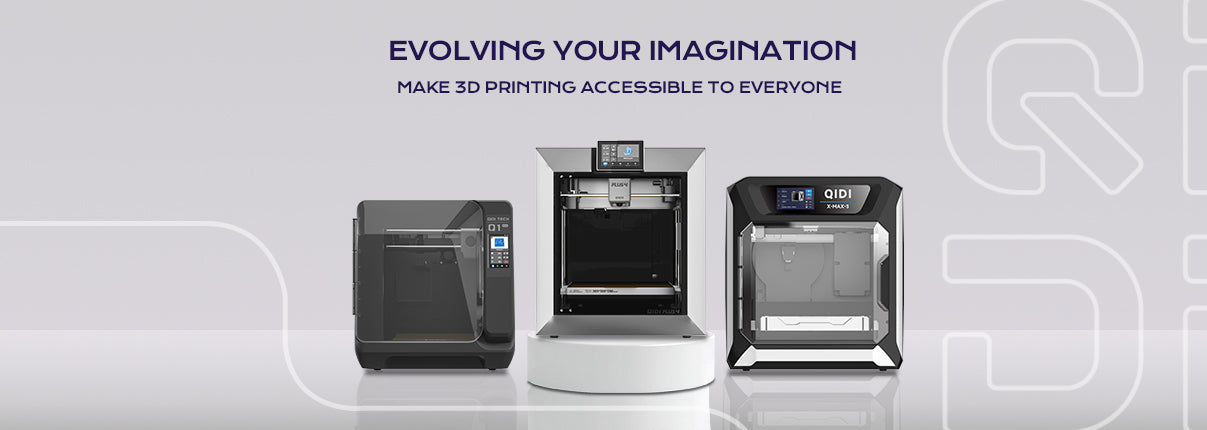
QIDI's current lineup is four FDM 3D printers: the Q2C at $349, the Q2 at $499, the Plus 5 at $749 and the Max4 at $1,049. All four use CoreXY motion, a direct-drive extruder, a 370°C hotend and Klipper-based firmware. What separates them is build volume and whether the chamber is actively heated — the Q2C is the only one without a chamber heater.
QIDI 3D Printer Comparison Chart (2026 Lineup)
The table below lists every QIDI printer currently sold on the main QIDI store, using figures from QIDI's own technical specification pages and store prices as of September 2026. Two rows do most of the work: chamber heating separates the entry machine from the engineering machines, and build volume separates the price tiers above it.
| Specification | Q2C | Q2 | Plus 5 | Max4 |
|---|---|---|---|---|
| Base price (USD) | $349 | $499 | $749 | $1,049 |
| Combo bundle price | $529 | $649 | $899 | $1,199 |
| Build volume (W×D×H, mm) | 270×270×256 | 270×270×256 | 320×320×300 | 390×390×340 |
| Build volume (liters) | 18.7 L | 18.7 L | 30.7 L | 51.7 L |
| Max toolhead speed | 600 mm/s | 600 mm/s | 600 mm/s | 800 mm/s |
| Max acceleration | 20,000 mm/s² | 20,000 mm/s² | 20,000 mm/s² | 30,000 mm/s² |
| Hotend max temperature | 370°C | 370°C | 370°C | 370°C |
| Heated bed max | 120°C | 120°C | 120°C | 120°C |
| Active chamber heating | None — enclosed but unheated | 2nd gen, up to 65°C | 3rd gen, up to 65°C | 3rd gen, up to 65°C |
| Motion system | CoreXY, 1.5GT belt | CoreXY, 1.5GT belt | CoreXY, 9 mm 1.5GT belt, X-axis linear guide rail | CoreXY, 10 mm 1.5GT belt, FOC closed-loop steppers |
| Extruder | Direct, hardened steel dual gears | Direct, hardened steel gears | Direct, hardened steel gears | Direct, hardened steel dual gears |
| Auto leveling method | Loadcell in hotend | Loadcell in hotend | Loadcell in hotend | Loadcell in hotend |
| Camera | Optional, no AI detection | Up to 1080P + AI failure detection | Up to 1080P + AI failure detection | Up to 1080P + AI failure detection |
| Air filtration | Optional | 3-in-1: G3 + H12 HEPA + carbon | 3-in-1: G3 + H12 HEPA + carbon | 3-in-1: G3 + H12 HEPA + carbon |
| QIDI Box multi-color | Yes | Yes | Yes | Yes |
| Rated power | 350 W | 350 W + 280 W chamber | 150 W + 550 W chamber + 500 W bed | 150 W + 500 W chamber + 700 W bed |
| Touchscreen | 4.3-inch, 480×272 | 4.3-inch, 480×272 | 4-inch, 800×480 | 5-inch, 800×480 |
| Machine footprint (mm) | 402×438×494 | 402×438×494 | 500×488×558 | 558×578×612 |
| Net weight | 16.9 kg | 18.1 kg | 29 kg | 40 kg |
| Wi-Fi | 2.4 GHz | 2.4 GHz | 2.4 / 5 GHz | 2.4 / 5 GHz |
QIDI Printer Prices and What Each Step Up Buys You
After the Q2C's price cut to $349, the entry machine is now the cheapest capacity in the range at about $18.70 per liter of build volume. The Max4 follows at $20.30, the Plus 5 at $24.40 and the Q2 at $26.70. The Q2 costs the most per liter because what you pay for at that step is chamber heat and filtration, not space.
| Model | Price | Build volume | Cost per liter | What the extra money buys over the model below |
|---|---|---|---|---|
| Q2C | $349 | 18.7 L | $18.70 | Entry point: 370°C hotend, 120°C bed, loadcell leveling, enclosed flame-retardant frame |
| Q2 | $499 | 18.7 L | $26.70 | 65°C chamber heater, H12 HEPA filtration, AI camera detection |
| Plus 5 | $749 | 30.7 L | $24.40 | 65% more build volume, 3rd-gen 550 W chamber heater, 9 mm belts, X-axis linear rail, 5 GHz Wi-Fi |
| Max4 | $1,049 | 51.7 L | $20.30 | 68% more volume, 800 mm/s, 30,000 mm/s², 40 mm³/s flow, 5-inch screen |
The $150 gap between the Q2C and the Q2 ($120 between the two Combo bundles) is the single most consequential step in the range, because it is the step that adds chamber heating. Everything above it is a question of how big your parts are. Browse all four in the QIDI 3D printer collection.
QIDI Q2 vs Q2C: The Heated Chamber Is the Whole Difference
The QIDI Q2 vs Q2C question comes down to one component. The two machines share the same 270×270×256 mm build volume, the same 402×438×494 mm chassis, the same 370°C hotend, 120°C bed, 600 mm/s and 20,000 mm/s² motion figures, the same loadcell leveling and the same 4.3-inch screen. The Q2 adds a second-generation chamber heater rated to 65°C and the equipment that goes with running one — a 3-in-1 filter and an AI camera.
| Feature | Q2C ($349) | Q2 ($499) |
|---|---|---|
| Chamber heating | No — QIDI's spec sheet lists chamber temperature as "No" | 2nd gen, up to 65°C, 280 W heater |
| Air filter | Optional | G3 pre-filter + H12 HEPA + coconut-shell activated carbon |
| Camera | Optional, no AI detection | Up to 1080P, AI failure detection, timelapse |
| Rated power | 350 W | 350 W + 280 W chamber |
| Net weight | 16.9 kg | 18.1 kg |
| Build volume, hotend, bed, speed, leveling, screen | Identical | Identical |
| Combo bundle | $529 | $649 |
A heated chamber is an enclosure with its own heating element that raises and holds the air temperature around the part, independent of the bed. That is what the Q2C lacks. Its flame-retardant enclosure blocks drafts and keeps dust out, but it only gets as warm as the bed makes it.
So the decision rule is simple. If your material list is PLA, PETG and TPU, buy the Q2C — none of those three benefit from a hot chamber, and you keep $150. If ABS, ASA, PC, nylon or carbon-fiber composites are on the list, buy the Q2: those materials shrink as they cool, and a 65°C chamber is what keeps large flat parts from lifting at the corners. If you are unsure, the Combo pricing narrows the gap to $120, which is the cheapest way into chamber heating in the current lineup.
QIDI Q2C ($349): The Cheapest Route to a 370°C Hotend
The Q2C is QIDI's entry model and the least expensive way into a 370°C hotend anywhere in the lineup. To reach $349 it drops the chamber heater, the camera and the air filter. That is a sound trade if your material list is PLA, PETG and the occasional TPU: none of those benefit from elevated ambient temperature, and all three depend far more on a stable first layer, which the Q2C handles with loadcell leveling, a hardened-steel dual-gear direct extruder and a bimetal nozzle. At 350 W rated power it is also the cheapest QIDI to run.
Where the Q2C runs out of headroom is warp-prone engineering plastics. ABS and ASA will extrude fine, but large flat parts are considerably more likely to lift at the corners without chamber heat. If those materials are central to your plan, read the case for enclosed versus open-frame printers before committing.
QIDI Q2 ($499): The Q2C With a 65°C Chamber and Filtration
The QIDI Q2 is a Q2C with a second-generation PTC chamber heater rated to 65°C, a 1080P AI camera and a G3 + H12 HEPA + activated carbon filter fitted, for $150 more. That is the strongest single upgrade QIDI offers: the chamber heater changes which materials the machine can hold dimensional tolerance on, and the filter stack matters if the printer shares a room with people.
The Q2 is the cheapest QIDI that combines a 370°C hotend with active chamber heating, which makes it the natural default recommendation for anyone whose materials go beyond PETG but whose parts fit inside 270 mm. It is also QIDI Box compatible — see the QIDI Box multi-color system guide for how the hub and hardware fit together.
QIDI Plus 5 ($749): The Engineering Pick When 270 mm Is Too Small
The Plus 5 pairs a 320×320×300 mm build volume with the 370°C hotend and a third-generation independent chamber heater rated to 65°C. That is 65% more build volume than the Q2 for $250 more, and at $24.40 per liter it is cheaper per unit of space than the Q2. It is the machine to choose when the Q2's capability is right but its bed is too small.
Hardware that matters at this tier: a 9 mm 1.5GT belt on the CoreXY gantry, a linear guide rail on the X axis, dual independent Z lead screw motors, a 550 W chamber heater, a 500 W aluminum-plate bed with a full-surface silicone heater, loadcell leveling in the hotend, an AI camera and the same 3-in-1 HEPA and carbon filter as the Q2. Unlike the Plus 4, it has dual-band 2.4/5 GHz Wi-Fi. At 29 kg and 500×488×558 mm it needs a solid bench, not a shelf.
The Plus 5 is the model to pick if you print carbon-fiber reinforced filament, nylon or polycarbonate regularly and your parts run past 270 mm. Its honest limits: the touchscreen is 4 inches rather than the 5 inches on the Max4, and tangle detection needs a QIDI Box attached. Full specifications and pricing are on the Plus 5 product page.
Plus 5 vs Plus 4: What Changed in the Plus Line
The Plus 4 (305×305×280 mm, listed at $699 on the main store) was the previous Plus-series model, and the Plus 5 is its successor and QIDI's current Plus-series printer. QIDI has discontinued the Plus 4 and lists the Plus 5 as its direct successor, though some regional QIDI stores may still have remaining stock; its status is on the Plus 4 product page. The two machines keep the same 370°C hotend, 120°C bed, 600 mm/s top speed, 9 mm belts and dual Z lead screws. The differences are below.
| Specification | Plus 4 | Plus 5 |
|---|---|---|
| Build volume | 305×305×280 mm (26.0 L) | 320×320×300 mm (30.7 L, +18%) |
| Chamber heater | 2nd gen, 400 W, up to 65°C | 3rd gen, 550 W, up to 65°C |
| Auto leveling | Hands-free auto leveling | Loadcell sensor integrated into the hotend |
| Air filtration | Chamber circulation + activated carbon | 3-in-1: G3 + H12 HEPA + carbon |
| Camera | Low framerate, up to 1080P | Up to 1080P + AI detection |
| X/Y motion | 10 mm hardened hollow steel shafts | Linear guide rail on X |
| Wi-Fi | 2.4 GHz | 2.4 / 5 GHz |
| Touchscreen | 5-inch, 800×480 | 4-inch, 800×480 |
| Machine footprint / net weight | 505×487×550 mm / 27 kg | 500×488×558 mm / 29 kg |

In short, the Plus 5 gets 18% more build volume inside essentially the same footprint, plus the Q2 and Max4's filtration and AI camera. For the full head-to-head, including who should upgrade from a Plus 4 and who should not, see our QIDI Plus 5 vs Plus 4 comparison. Independent test data on the older machine is in our QIDI Plus 4 review.
QIDI Max4 ($1,049): 800 mm/s Across 51.7 Liters
The Max4 is the only QIDI printer that exceeds 600 mm/s and 20,000 mm/s², running to 800 mm/s and 30,000 mm/s² on a 10 mm-wide 1.5GT belt driven by FOC closed-loop stepper motors. Build volume is 390×390×340 mm — 51.7 liters, 68% more than the Plus 5 — and rated flow is 40 mm³/s through a 370°C hotend with a ceramic throat.
It also carries the third-generation chamber heater (500 W, rated to 65°C), a 700 W heated bed, the same three-stage HEPA and carbon filter stack as the Q2, a 5-inch 800×480 screen and dual-band 2.4/5 GHz Wi-Fi. At 40 kg net and 558×578×612 mm it needs a dedicated bench rather than a desk corner. The main-store price is $1,049, down from a $1,149 list price.
The interesting part is the arithmetic. At $20.30 per liter of build volume, the Max4 is second only to the $349 Q2C for capacity-per-dollar, and cheaper per liter than the Plus 5. If you genuinely use large build volumes, it is an efficient purchase; if you do not, you are paying for space you will never fill. For context on what 600–800 mm/s means in practice, see our analysis of FDM printing at 600 mm/s. The Max4 product page has the current bundle options.
What an Actively Heated Chamber Does and Who Needs One
Thermoplastics contract as they cool, and uneven cooling builds internal stress between layers — the cause of warping, corner lift and layer separation. An actively heated chamber slows that cooling across the whole part instead of only near the bed. QIDI fits chamber heaters rated to 65°C on the Q2, Plus 5 and Max4; the Q2C is enclosed but unheated.
| Material | Needs a heated chamber? | Cheapest current QIDI that fits |
|---|---|---|
| PLA | No — active part cooling preferred | Q2C ($349) |
| PETG | No | Q2C ($349) |
| TPU | No | Q2C ($349) |
| ABS / ASA | Strongly recommended for large parts | Q2 ($499) |
| PC and PC blends | Yes | Q2 ($499) |
| PA (nylon) and PA-CF | Yes | Q2 ($499) |
| PPS-CF, PET-CF, high-temp composites | Yes | Q2 ($499); Plus 5 ($749) for parts over 270 mm |
The practical consequence: if PLA and PETG are 90% of your printing, the chamber heater is money you do not need to spend, and the Q2C is the honest recommendation. The heated chamber earns its cost the moment ABS, nylon or fiber-filled composites become routine — pair it with engineering spools from QIDI's high-performance filament range. Our guide to fixing warping in 3D printing covers the non-hardware fixes worth trying first.
Which QIDI Printer Should You Buy?
Match the machine to the constraint that actually binds you — material first, then part size, then budget — rather than to the longest spec sheet.
- First printer, PLA and PETG only: Q2C, $349. You get the 370°C hotend and loadcell leveling without paying for a chamber heater you would not switch on.
- Best all-round value, and the cheapest chamber heating: Q2, $499. Chamber heating, HEPA-grade filtration and AI camera detection for $150 over the Q2C.
- Engineering materials with parts larger than 270 mm: Plus 5, $749. 320×320×300 mm with the same 65°C chamber ceiling.
- Maximum build volume and the only machine above 600 mm/s: Max4, $1,049.
- Multi-color printing: any of the four, plus the QIDI Box — all current models support it.
Whichever you choose, budget separately for material. The full range is in the QIDI filament collection, and the current hardware line-up is in 3D printers.
Earlier QIDI Models and What Replaced Them
Several QIDI printers that appear in older comparison articles are no longer part of the current line-up, and this guide deliberately leaves them out of its buying recommendations. They are covered here because their specifications are still useful reference points, and because owners of these machines are still supported with spare parts.
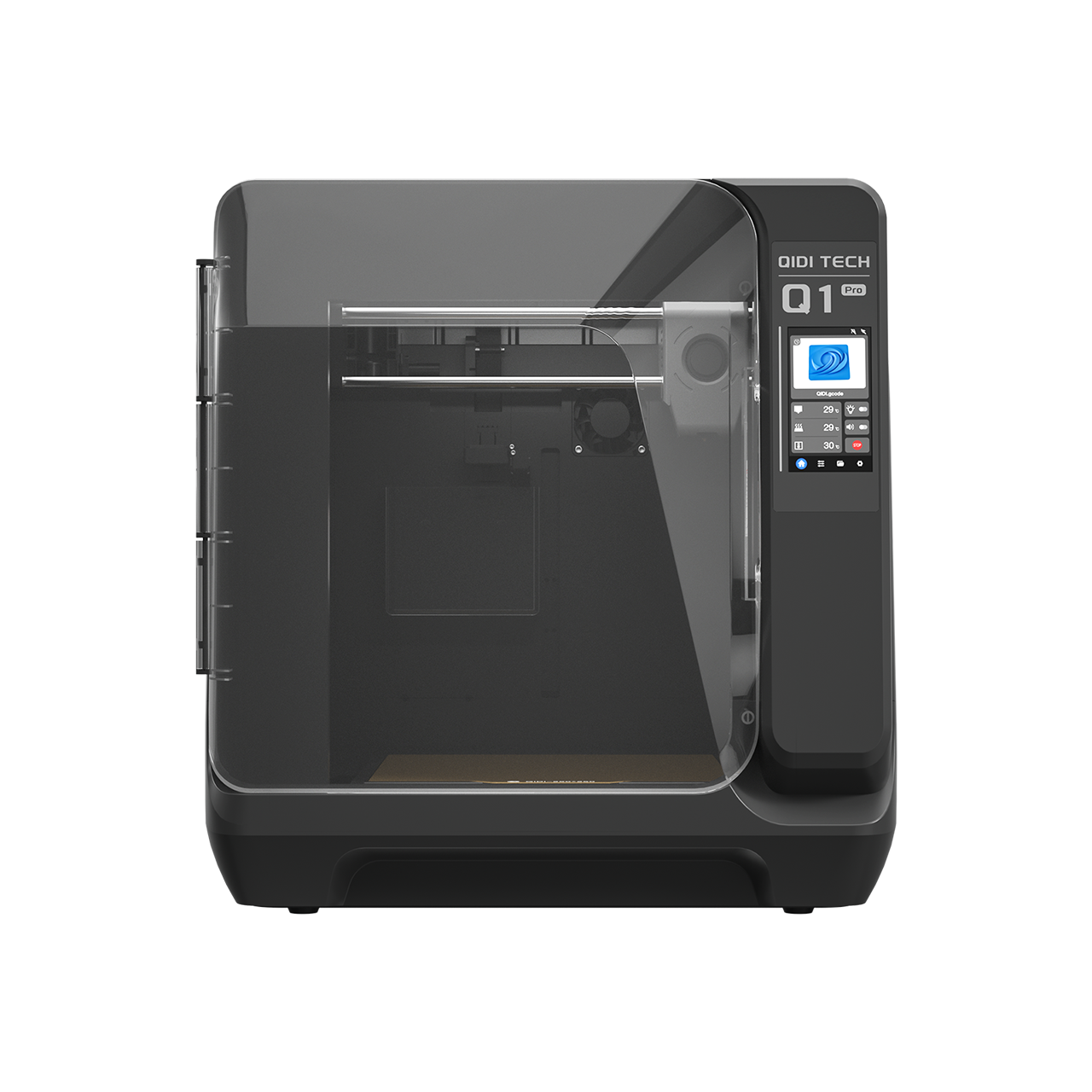
The Q1 Pro was QIDI's compact chamber-heated machine: 245×245×240 mm in a 477×467×489 mm chassis at 17 kg, with a 60°C independently heated chamber, a ceramic-plate hotend rated to 350°C and the same 600 mm/s and 20,000 mm/s² motion figures as the rest of the range. Its role — smallest footprint with chamber heating — is now filled by the Q2, which is slightly wider but raises the hotend ceiling to 370°C.

The X-Max 3 was the large-format machine in the previous generation: 325×325×315 mm on a 30.2 kg all-metal frame, with a 65°C actively heated chamber, a 350°C extruder, a rated flow of 35 mm³/s and Klipper adaptive meshing for leveling. The Max4 supersedes it on every axis — 51.7 liters instead of 33.3, 370°C instead of 350°C, and 800 mm/s instead of 600 mm/s. The X-Plus 3, a mid-size enclosed machine, was followed by the Plus 4, and the Plus line has now moved on to the Plus 5.

Frequently Asked Questions
Which QIDI 3D printer is best for beginners?
The Q2C at $349 is the best QIDI starting point for most beginners. Its hands-free automatic leveling uses a loadcell sensor built into the hotend, which removes the single most common source of first-print failure, and its 270×270×256 mm build volume covers the great majority of hobby projects. Step up to the Q2 only if you already know you will print ABS, ASA or nylon.
What is the difference between the QIDI Q2 and the Q2C?
The Q2 adds a second-generation 65°C actively heated chamber, a 1080P camera with AI failure detection and a three-stage air filter. The Q2C has none of those — its chamber is enclosed but not heated. Build volume (270×270×256 mm), chassis size, 370°C hotend, 120°C bed, 600 mm/s top speed, 20,000 mm/s² acceleration and loadcell leveling are identical. The price difference is $150 for the base machines and $120 for the Combo bundles.
Is the QIDI Q2 worth $150 more than the Q2C?
Only if you will print materials that need chamber heat. For ABS, ASA, PC, nylon and carbon-fiber composites, the Q2's 65°C chamber is the feature that keeps large parts flat, and it is the cheapest way to get it in the QIDI range. For PLA, PETG and TPU, the Q2C prints the same parts on the same hotend, bed and motion system for $150 less.
Do all QIDI 3D printers have a heated chamber?
No. Of the four current models, the Q2, Plus 5 and Max4 have chamber heaters rated to 65°C, and the Q2C does not — QIDI's specification sheet lists its chamber temperature as "No." The Q2C's enclosure still blocks drafts, but it does not raise ambient temperature, which is the property that matters for warp-prone materials.
Is the Plus 5 replacing the Plus 4?
The Plus 5, launched in August 2026, is QIDI's current Plus-series printer and the successor to the Plus 4. It adds 18% more build volume (320×320×300 mm versus 305×305×280 mm), a third-generation 550 W chamber heater, loadcell leveling, H12 HEPA filtration and an AI camera. QIDI has discontinued the Plus 4 and lists the Plus 5 as its direct successor; some regional QIDI stores may still have remaining stock.
Which QIDI printers can print carbon fiber filament?
All four current models reach 370°C at the nozzle and ship with a bimetal nozzle suited to abrasive filament, so all four can print carbon-fiber reinforced polymers. The practical limit is chamber heat rather than nozzle temperature: high-temperature composites such as PPS-CF and PET-CF hold dimensional accuracy far better in a heated chamber, which points to the Q2, Plus 5 or Max4 for anything beyond small parts.
Do all QIDI printers work with the QIDI Box?
Yes, across the current line-up. QIDI lists the Box as compatible with the Q2C, Q2, Plus 5 and Max4. The hub differs by model: according to QIDI's Plus 5 FAQ, a Box set up for a Max4 works on a Plus 5 directly, while a Box from a Plus 4 or Q2 needs the QIDI Box hub and signal cable for the Plus 5. Older models including the Q1 Pro and X-Max 3 are not supported.
What happened to the QIDI X-Plus 3?
The X-Plus 3 is no longer part of QIDI's current catalog. Its position — a mid-size enclosed machine with a heated chamber — passed to the Plus 4 and is now held by the Plus 5, with the Q2 covering smaller build volumes. Accessories and replacement parts for the X-Plus 3 remain available.
Is the QIDI Max4 worth $1,049?
It depends entirely on whether you use the build volume. At 51.7 liters the Max4 costs about $20.30 per liter of capacity, and it is the only current model exceeding 600 mm/s and 20,000 mm/s². If your parts routinely exceed 320 mm in any dimension, it is the efficient choice. If they do not, the Plus 5 delivers the same 370°C hotend and 65°C chamber ceiling for $300 less.
What firmware do QIDI printers run?
QIDI printers run an in-house fork of Klipper, the open-source 3D printer firmware that offloads motion planning to a more powerful host processor. That is what makes input shaping and pressure advance available across the range. Slicing is handled by QIDI Studio, derived from OrcaSlicer; third-party slicers including PrusaSlicer and Orca also work, and all models accept STL, OBJ, 3MF, STEP and STP files.
Are all QIDI printers direct drive?
Yes. Every QIDI model uses a direct-drive extruder with hardened steel gears mounted on the toolhead rather than a Bowden setup. Direct drive shortens the filament path between the drive gears and the melt zone, which improves retraction control and makes flexible filaments such as TPU practical. For the trade-offs in detail see our comparison of direct drive versus Bowden extruders, and the background on fused filament fabrication.
- QIDI 3D Printer Comparison Chart (2026 Lineup)
- QIDI Printer Prices and What Each Step Up Buys You
- QIDI Q2 vs Q2C: The Heated Chamber Is the Whole Difference
- QIDI Q2C ($349): The Cheapest Route to a 370°C Hotend
- QIDI Q2 ($499): The Q2C With a 65°C Chamber and Filtration
- QIDI Plus 5 ($749): The Engineering Pick When 270 mm Is Too Small
- Plus 5 vs Plus 4: What Changed in the Plus Line
- QIDI Max4 ($1,049): 800 mm/s Across 51.7 Liters
- What an Actively Heated Chamber Does and Who Needs One
- Which QIDI Printer Should You Buy?
- Earlier QIDI Models and What Replaced Them
- Frequently Asked Questions
- Which QIDI 3D printer is best for beginners?
- What is the difference between the QIDI Q2 and the Q2C?
- Is the QIDI Q2 worth $150 more than the Q2C?
- Do all QIDI 3D printers have a heated chamber?
- Is the Plus 5 replacing the Plus 4?
- Which QIDI printers can print carbon fiber filament?
- Do all QIDI printers work with the QIDI Box?
- What happened to the QIDI X-Plus 3?
- Is the QIDI Max4 worth $1,049?
- What firmware do QIDI printers run?
- Are all QIDI printers direct drive?
Recommended products