
 Q2
Q2
 QIDI Box
 Plus 4
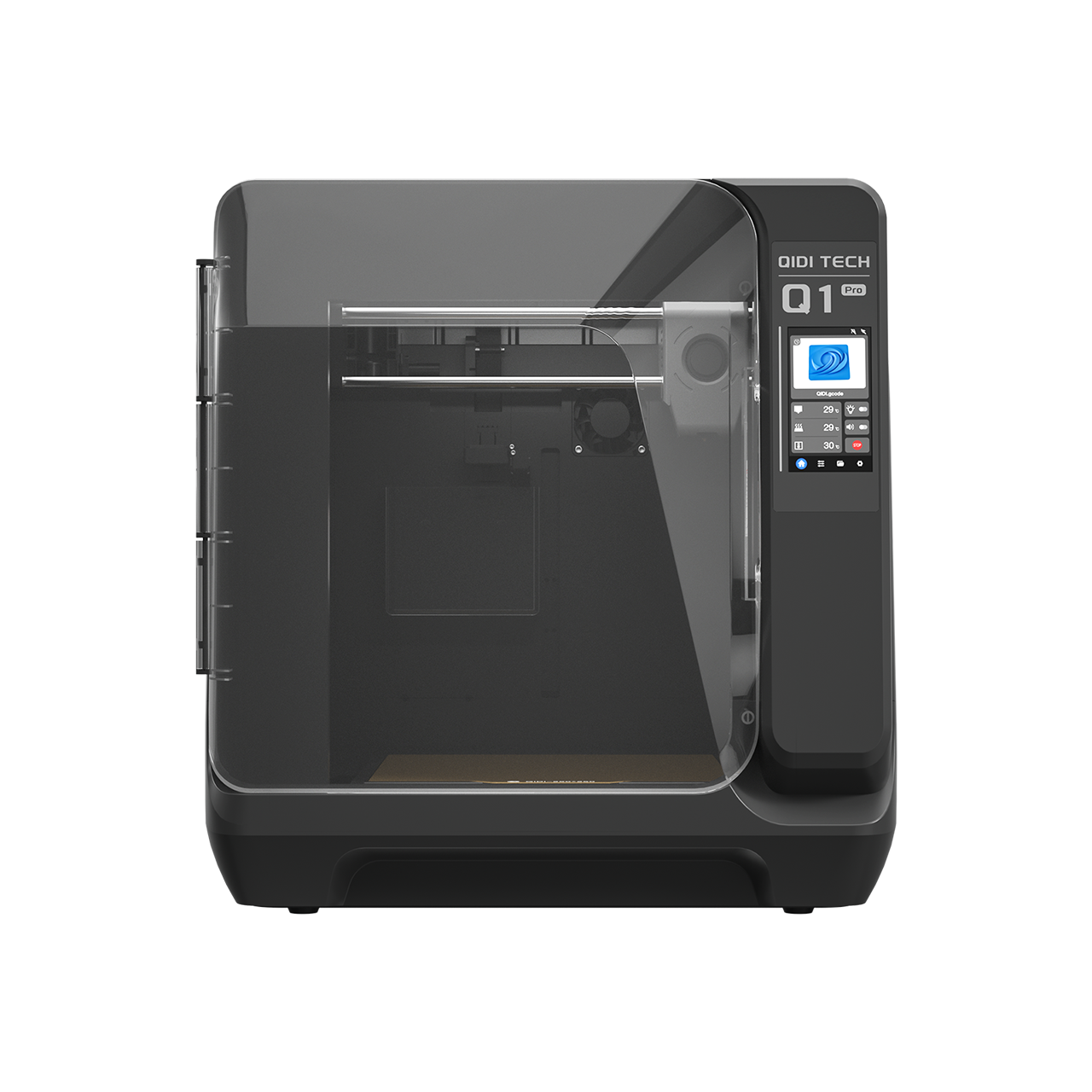 Q1 Pro
 X-Max 3


PLA vs PETG: Choosing the Best Material for Heavy Wall Hooks


PETG is the better material for a heavy wall hook, because PLA creeps under sustained load long before it breaks. QIDI's data sheets put PETG at 45.2 MPa tensile strength and 71.8°C heat deflection against PLA's 34.74 MPa and 57.6°C. PLA is the stiffer material on paper, but stiffness measured in seconds says nothing about a hook that carries a coat for two years.
The Critical Choice: Why Your Wall Hooks Fail
It's a familiar scenario: a 3D-printed wall hook finally gives way, sending a coat, a tool, or a bag tumbling to the floor. For the hobbyist, this is a minor annoyance. For the prosumer or small shop owner, it is a failure of engineering that undermines the reliability of a workspace.
When moving from decorative prints to functional, load-bearing parts, the choice between Polylactic Acid (PLA) and Polyethylene Terephthalate Glycol (PETG) is no longer about aesthetics—it is about managing mechanical stress, thermal limits, and material fatigue. While PLA is often praised for its stiffness, it harbors a hidden weakness called "creep." Conversely, PETG offers the toughness required for heavy loads but introduces challenges in flexibility and moisture management.
In this guide, we will analyze the technical performance of these materials in the context of heavy-duty organization. By understanding the underlying physics of material deformation and applying professional design heuristics, you can move away from "trial and error" and toward predictable, high-performance manufacturing.

PLA vs PETG: The Numbers That Decide a Hook
Both filaments below are QIDI's own basic grades, tested under the same ISO methods, so the comparison is like-for-like rather than a blend of marketing figures from different vendors. PETG-GF is included because it is the answer when neither of the first two is enough.
| Property | PLA Basic | PETG Basic | PETG-GF | What it decides for a hook |
|---|---|---|---|---|
| Tensile strength (XY) | 34.74 ± 4 MPa | 45.2 ± 4 MPa | 51 MPa | Peak load before the hook arm tears |
| Tensile modulus (XY) | 2200 ± 100 MPa | 1720 ± 100 MPa | 2400 MPa | How much the arm droops under load |
| Elongation at break (XY) | 5.18 ± 1% | 11.4 ± 1.8% | 8% | Whether it bends or snaps when shocked |
| Impact strength (XY) | 18 ± 2 kJ/m² | 25 ± 3.5 kJ/m² | 35 kJ/m² | Surviving a bag dropped onto the hook |
| Heat deflection temperature | 57.6°C | 71.8°C | 76°C | The temperature where creep accelerates |
| Vicat softening temperature | 61.6°C | 79.7°C | 85°C | Point-load indentation under a strap |
| Density | 1.17 g/cm³ | 1.26 g/cm³ | 1.26 g/cm³ | Filament used per hook |
| Water absorption | 0.6% | 0.06% | — | Long-term stability in a damp garage |
| Nozzle / bed temperature | 190–240°C / 30–60°C | 240–280°C / 70–80°C | 240–270°C / 70–80°C | Whether your printer can run it |
Is PETG stronger than PLA?
In tensile strength, yes: 45.2 MPa against 34.74 MPa, about 30% higher. In stiffness, no: PLA's 2200 MPa tensile modulus is roughly 28% higher than PETG's 1720 MPa. That split is the whole reason this question keeps getting contradictory answers online. A PLA hook resists initial bending better; a PETG hook resists ultimate failure better and keeps resisting it after months under load. For a wall hook, which is a sustained-load part rather than a stiffness-critical one, the second property matters more.
Is PETG heavier than PLA?
Yes, by about 8%: 1.26 g/cm³ against 1.17 g/cm³. A 40 g PLA hook becomes roughly a 43 g PETG hook at identical geometry and settings. That difference is irrelevant to the hook's own performance — nobody's wall cares about three grams — but it is worth knowing when estimating filament consumption for a batch, since a 1 kg spool of PETG yields about 8% fewer identical parts by count than a 1 kg spool of PLA.
Understanding the "Creep" Factor: Why PLA Isn't Always the Answer
PLA is the most common entry-level filament because it is easy to print and possesses high stiffness. According to the Purdue University Libraries 3D Printing Glossary, PLA is a biodegradable thermoplastic derived from renewable resources like corn starch, making it a favorite for those prioritizing sustainability.
Creep is the slow, permanent deformation of a solid material held under constant stress well below its yield strength. It is the failure mode that short tensile tests cannot see, and it is the one that actually kills printed hooks. A hook does not fail at the moment the coat is hung; it fails after four hundred days of holding it.
The Temperature Trap
Creep rate is governed by how close the service temperature sits to the polymer's glass transition. PLA's heat deflection temperature is 57.6°C and its Vicat softening point is 61.6°C, so a room at 30°C is already at roughly half of PLA's usable thermal range — and creep does not wait for the softening point to arrive.
| Ambient temperature | PLA hook under 3 kg | PETG hook under 3 kg | Practical guidance |
|---|---|---|---|
| 18–22°C, climate-controlled room | Stable for years | Stable for years | Either material is fine |
| 25–30°C, unconditioned interior | Slow sag over months | Stable | Prefer PETG for anything permanent |
| 30–40°C, garage or sunlit wall | Visible droop within weeks | Slow sag over months | PETG minimum; PETG-GF preferred |
| Above 40°C, summer garage, near heater | Progressive straightening, load slides off | Noticeable creep | PETG-GF, or move to ABS or ASA |
| Any temperature, intermittent load | Recovers partially between loads | Recovers well | Duty cycle matters as much as peak load |
Experienced practitioners consistently report that PLA hooks fail gradually through creep rather than sudden fracture. In rooms with direct sunlight or near heating sources, temperatures can easily exceed 40°C at the wall surface. At those temperatures the constant pull of a heavy load slowly straightens the hook until the object slides off — no crack, no bang, just a coat on the floor one morning.
PETG: The Tougher Alternative for Functional Parts
For serious makers, PETG Basic is the better default for wall hooks and organizers. PETG combines PLA-adjacent ease of use with mechanical durability closer to ABS.
The primary advantage of PETG in this context is layer adhesion. PETG's higher processing temperature and slower crystallisation give the extruded strand more time to fuse with the layer beneath it, which reduces the risk of delamination — the "splitting" of a print along its horizontal lines — under cyclic loading from repeatedly hanging and removing items. Published testing of infill density across PLA, ABS, PC and PETG found that the material and the print parameters interact rather than acting independently, so a PETG hook printed badly can still underperform a well-printed PLA one.
Impact and Flexibility
Unlike PLA, which is brittle and may snap under a sudden shock, PETG has a higher elongation at break — 11.4% against 5.18% — and a higher impact strength, 25 against 18 kJ/m². It can "give" under stress without failing. While this flexibility is a disadvantage if the hook is too thin, it serves as a safety buffer against impact, and it is why a PETG hook usually announces its distress by bending before it lets go.
Methodology Note (Modeling Logic): The comparisons above use manufacturer-published ISO test values for the specific filaments named, printed under standard FDM parameters.
- Assumption 1: Prints are oriented to avoid placing the screw interface in pure tension across layer lines.
- Assumption 2: A minimum of 4 wall loops is used for all load-bearing parts.
- Boundary Condition: These figures do not apply to prints with under-extrusion, wet filament, or poor thermal management.
Choosing by Service Condition
Material choice for a hook is really a choice about where the hook lives and what hangs on it. Find the row that matches, then apply the settings in it.
| Where and what | Load | Material | Walls / infill | Design note |
|---|---|---|---|---|
| Bedroom, office, indoor hallway | Under 2 kg (bags, headphones, keys) | PLA Matte | 3 walls / 20% gyroid | Matte finish hides layer lines on visible hooks |
| Kitchen, utility room, laundry | 2–5 kg (pans, cleaning tools) | PETG | 4 walls / 40% gyroid | Resists steam and cleaning chemicals |
| Garage or workshop, stable temperature | 5–10 kg (power tools, cable coils) | PETG | 5 walls / 50% gyroid | 4 mm reinforced collar around screw holes |
| Garage or shed, 10–40°C swing | Over 10 kg (ladders, hose reels) | PETG-GF | 6 walls / 50% gyroid | Glass fibre resists creep across the swing |
| Outdoors or sunlit wall | Any | ASA, not PLA or PETG | 5 walls / 50% | UV stability outranks strength here |
| Anything overhead or above a person | Any | Use commercial hardware | — | Printed parts have no certified load rating |
Engineering the Interface: Design for Load Distribution
Even the best material will fail if the design is flawed. For heavy wall hooks, the "screw interface"—the area where the fastener meets the plastic—is the most common point of failure.
Professional design standards recommend creating a reinforced collar around screw holes. This collar should have at least 4mm of wall thickness to prevent the screw head from pulling through the material. Furthermore, hooks should be designed to distribute shear stress (downward force) across a larger surface area rather than concentrating it on a single point of tensile loading. The minimum wall thickness guide covers how thin a load-bearing feature can safely get.

Infill Strategies for Heavy Loads
While many users default to "Grid" or "Lines" infill, these patterns are often suboptimal for hooks. PETG's flexibility requires an infill that provides multi-directional support.
- Gyroid Infill: This 3D pattern provides near-equal strength in all directions and prevents "squishing" of the internal structure.
- Honeycomb Infill: Excellent for shear resistance, though it can increase print time.
- Density: For hooks supporting up to 5kg, 40–50% infill is the recommended baseline for professional-grade parts.
- Walls beat infill: Adding a wall loop does more for a hook than adding ten percentage points of infill, because bending stress peaks at the outer skin. The infill pattern and density guide covers the trade-off in detail.
Print Orientation
Orientation outranks both material and infill. Print the hook so that the layer lines run along the direction of the load path, not across it — an FDM part is at its weakest when a load tries to peel layers apart. For an L-shaped hook, that usually means printing it lying on its side rather than standing up. The model placement and slicing guide walks through how to reason about this for a given geometry.
Building a Wall Mount System, Not Just a Hook
A single hook is a part. A wall mount system is a set of parts that share one mounting standard, so anything can be repositioned without new holes in the wall. That system decision matters more for long-term usefulness than the choice between PLA and PETG.
- Backer plate into studs. The strongest option: one PETG or plywood backer screwed into wall studs, with hooks bolted onto the plate. Load goes into structure, not drywall.
- French cleat. A 45° cleat strip on the wall and a matching cleat on the back of every hook. Printed cleats work well in PETG; keep the cleat face at least 6 mm thick and print it flat so layers run parallel to the shear plane.
- Pegboard-compatible. Prints that clip into standard 1/4 inch pegboard. Zero new holes, but load per hook is limited by the board, not by your part — see the garage pegboard accessory guide.
- Direct-to-drywall. Only with a proper anchor rated above your intended load, and only for light items. Drywall, not the plastic, sets the limit here.
Whichever system you choose, keep the mounting interface identical across every hook you print. The PETG wall-mounted bracket strength analysis covers the bracket side of the same problem, and impact-resistant door hardware covers the case where the part gets knocked rather than loaded.
Advanced Materials: When Standard PETG Isn't Enough
If you are manufacturing hooks for a small shop or industrial environment where loads exceed 10kg, standard filaments may reach their limit. This is where reinforced composites like PETG-GF (glass fiber reinforced) become essential.
According to research from NIST on Advanced Materials for Additive Manufacturing, the addition of fibers into a polymer matrix significantly increases the material's tensile modulus and dimensional stability. QIDI's PETG-GF data bears that out: 2400 MPa tensile modulus against 1720 MPa for unfilled PETG, a 76°C heat deflection temperature against 71.8°C, and 35 kJ/m² impact strength against 25. In hook terms, it droops less, creeps later, and survives more abuse — at the cost of requiring a hardened steel or bimetal nozzle, since glass fiber destroys brass.
The Humidity Factor: A Professional "Gotcha"
One of the most overlooked aspects of functional printing is moisture. It affects PLA and PETG differently, and the popular shorthand gets it backwards often enough to be worth stating precisely.
On measured immersion uptake, PLA absorbs far more: QIDI reports 0.6% for PLA Basic against 0.06% for PETG Basic. But PETG shows moisture damage more dramatically during printing, because it processes 50–90°C hotter and any absorbed water flashes to steam in the melt. The symptoms are popping in the nozzle, visible bubbles in the extrudate, heavy stringing, and — the part that matters for a hook — poor interlayer bonding.
So both materials need dry storage, for different reasons: PLA because it absorbs the most water over time, PETG because it suffers the most visible processing damage from the water it does absorb. For hooks intended to hold heavy loads, printing from a wet spool is a load-bearing risk, not a cosmetic one. Dry to the filament manufacturer's recommendation, typically 65–70°C for 6–8 hours, before printing any load-bearing component.
Safety and Maintenance Protocols
In professional applications, 3D printed parts should be treated with the same scrutiny as purchased hardware. Apply a factor of safety of at least 3 for hand-height hooks: a hook meant to hold a 5 kg bag should be designed and tested to hold 15 kg without immediate failure. For anything mounted above head height, use 5 and cross-check against the shelf bracket load capacity guide, which covers the geometry side of the same problem.
Inspect periodically for stress whitening or visible deformation, every 6 months in a conditioned room and more often in a garage. Even high-quality prints have a service life; for continuous heavy loading, plan a replacement cycle of about two years to account for accumulated creep and micro-fractures. If a hook has visibly straightened, it will not recover — replace it rather than reloading it.
Summary of Key Takeaways
Choosing the right material for wall hooks is a balance of environmental awareness and mechanical requirements. PLA offers ease and appearance, but its 57.6°C heat deflection temperature and susceptibility to creep make it a short-term solution for heavy loads. PETG, especially when reinforced with glass fibers, provides the long-term reliability required for a professional workshop.
- Material chemistry: PETG for toughness and thermal stability; PETG-GF above 10 kg or in a garage.
- Design integrity: 4 mm reinforced collars, gyroid infill, walls before infill.
- Orientation: layers along the load path, never across it.
- Environmental control: dry the filament before any load-bearing print.
- System thinking: one mounting standard beats six one-off hooks.
Frequently asked questions
Does PETG creep under load in 3D printing?
Yes, but far more slowly than PLA at the same temperature. Creep in thermoplastics accelerates as service temperature approaches the glass transition, and PETG's heat deflection temperature is 71.8°C against PLA's 57.6°C. In a 20°C room both are stable for years; in a 35°C garage a loaded PLA hook visibly droops within weeks while PETG takes months. Glass-filled PETG pushes that further still.
Is PETG stronger than PLA?
In tensile strength and impact resistance, yes — 45.2 MPa and 25 kJ/m² for PETG against 34.74 MPa and 18 kJ/m² for PLA, per QIDI's data sheets. In stiffness, no: PLA's 2200 MPa tensile modulus exceeds PETG's 1720 MPa. PLA resists initial bending better; PETG resists ultimate failure and long-term creep better.
Is PETG heavier than PLA?
Yes, by roughly 8%: 1.26 g/cm³ against 1.17 g/cm³. Identical geometry in PETG weighs about 8% more and consumes about 8% more of a 1 kg spool by part count. The difference has no practical effect on a hook's performance.
How much weight can a 3D printed wall hook hold?
There is no published rating, and any number quoted without the geometry, orientation, wall count and fastener is meaningless. The defensible approach is to destructively test one sacrificial copy of your exact design, then divide the breaking load by 3 for hand-height hooks or 5 for anything overhead. Load a printed hook only after that test, and never above a person.
What infill should I use for a heavy-duty hook?
40–50% gyroid with 4–6 wall loops for loads up to 10 kg. Add walls before adding infill: bending stress concentrates at the outer skin, so a sixth perimeter buys more capacity than another 10% of infill and prints faster.
Disclaimer: This article is for informational purposes only. The load-bearing capacity of 3D-printed parts depends heavily on print settings, orientation, and hardware quality. Always perform independent load testing before using 3D-printed components for safety-critical applications or supporting expensive equipment.
- The Critical Choice: Why Your Wall Hooks Fail
- PLA vs PETG: The Numbers That Decide a Hook
- Is PETG stronger than PLA?
- Is PETG heavier than PLA?
- Understanding the "Creep" Factor: Why PLA Isn't Always the Answer
- The Temperature Trap
- PETG: The Tougher Alternative for Functional Parts
- Impact and Flexibility
- Choosing by Service Condition
- Engineering the Interface: Design for Load Distribution
- Infill Strategies for Heavy Loads
- Print Orientation
- Building a Wall Mount System, Not Just a Hook
- Advanced Materials: When Standard PETG Isn't Enough
- The Humidity Factor: A Professional "Gotcha"
- Safety and Maintenance Protocols
- Summary of Key Takeaways
- Frequently asked questions
- Does PETG creep under load in 3D printing?
- Is PETG stronger than PLA?
- Is PETG heavier than PLA?
- How much weight can a 3D printed wall hook hold?
- What infill should I use for a heavy-duty hook?
Recommended products