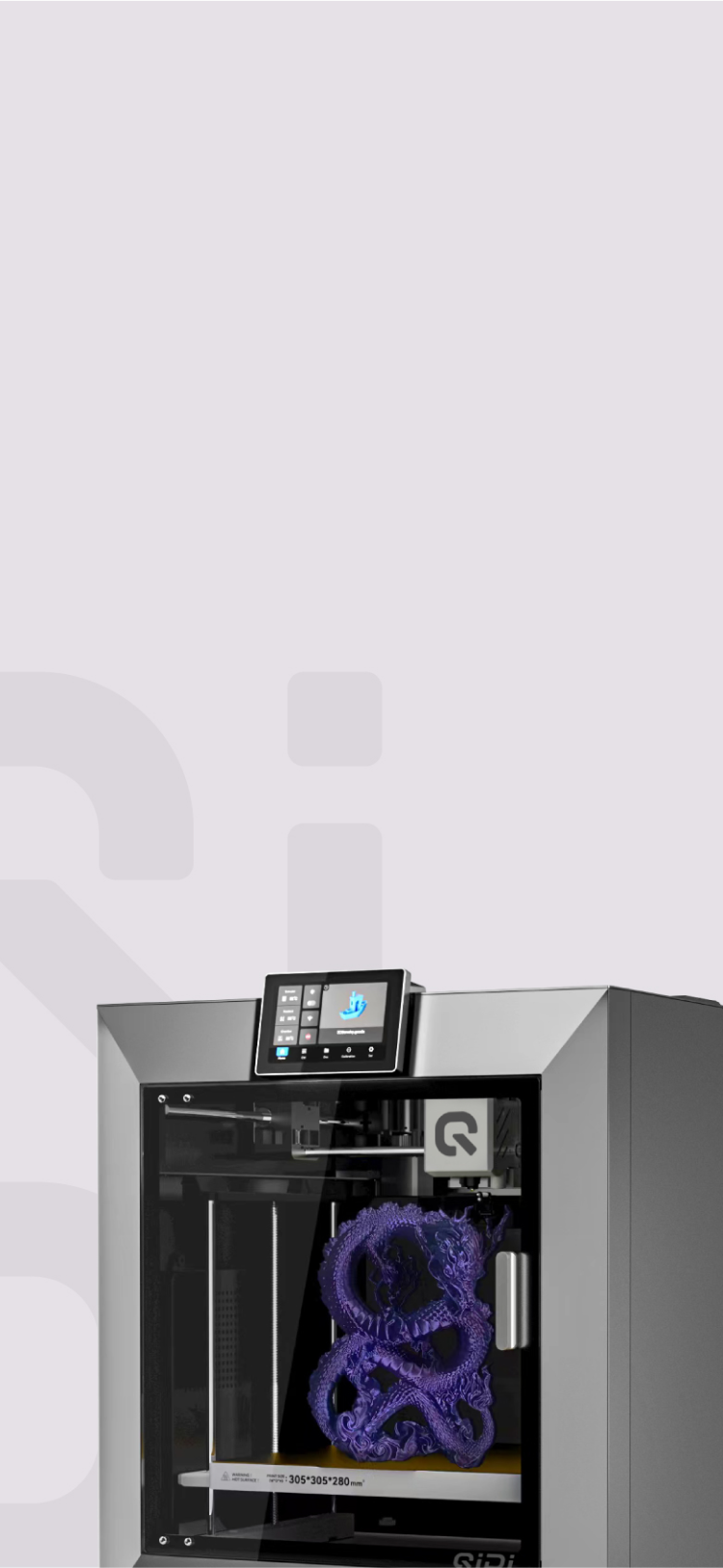

 Q2
Q2
 QIDI Box
 Plus 4
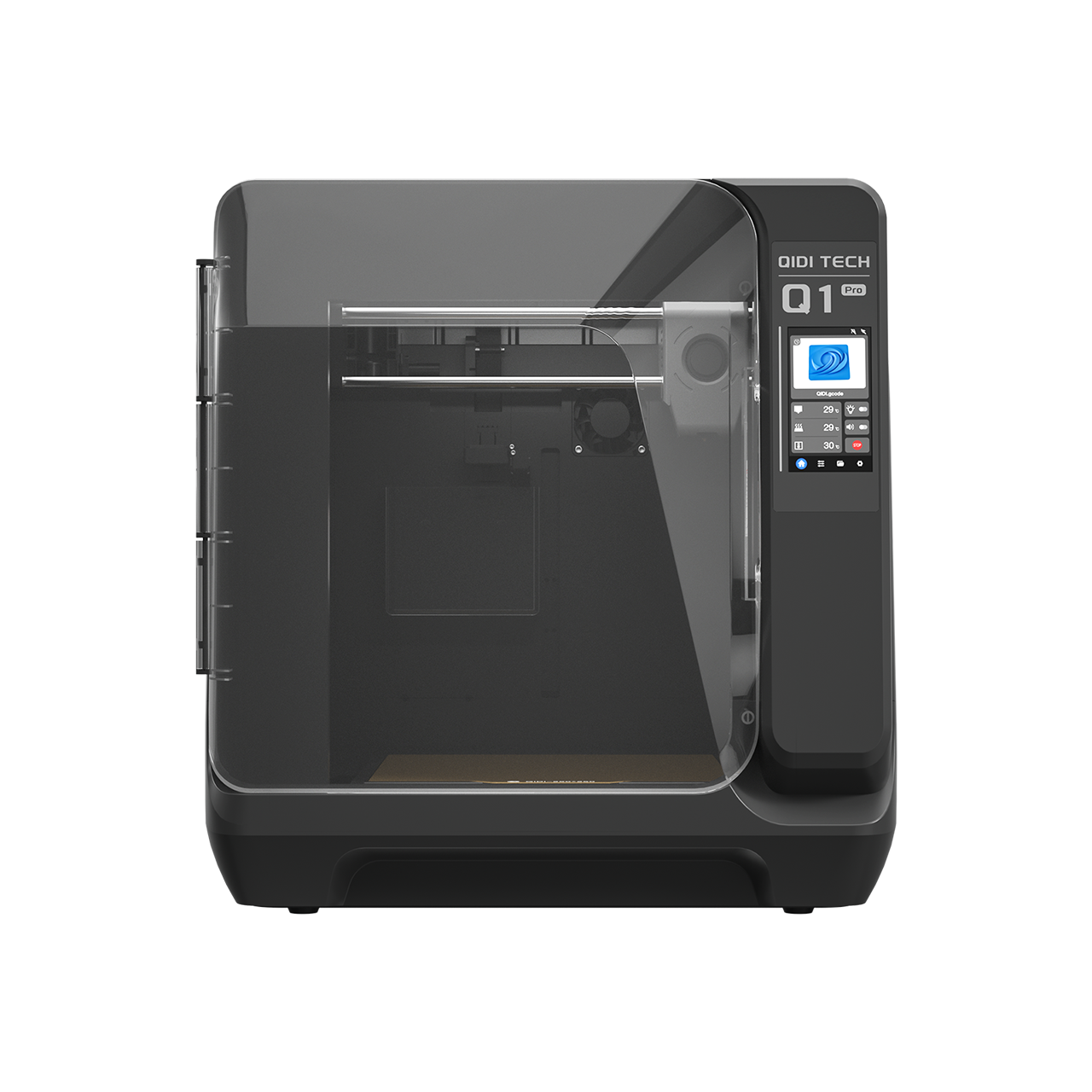 Q1 Pro
 X-Max 3


How to 3D Print Replacement Clips for Loose Window Screens


Short answer: measure the screen frame's cross-section and spline groove with calipers, print the clip in ASA for sun-facing windows or PETG for shaded ones, orient it on edge so the hook does not peel apart along a layer line, and allow 0.2–0.3 mm of clearance on every mating face. Almost every failed screen clip is a measurement problem, not a filament problem.
Start with the frame, not the clip
Residential window screens are built from roll-formed aluminium extrusion in a small number of standard cross-sections, and the broken plastic part you are replacing was designed around one of them. Identify the frame first and the clip geometry mostly falls out of it.
Phifer, one of the largest screening manufacturers, publishes three general frame sizes and the spline diameters that go with each mesh type. That spline chart is the single most useful reference for anyone printing screen hardware, because the spline groove is the feature you can measure most reliably with a caliper:
| Screen type | 5/16" × 3/4" frame (7.9 × 19.1 mm) | 7/16" × 3/4" frame (11.1 × 19.1 mm) | 7/16" × 1" frame (11.1 × 25.4 mm) |
|---|---|---|---|
| Standard fiberglass insect screen | .125–.140" (3.2–3.6 mm) | .140–.160" (3.6–4.1 mm) | .220–.235" (5.6–6.0 mm) |
| Aluminium insect screen | .125–.140" | .140–.160" | .220–.235" |
| BetterVue / UltraVue 2 | .140–.160" | .160–.175" | .220–.235" |
| Pool & patio (18×14 mesh) | .125–.140" | .140–.160" | .220–.235" |
| No-see-um (20×20 mesh) | .125–.140" | .140–.160" | .220–.235" |
| TuffScreen / PetScreen | .125–.140" | .125–.140" | .190–.220" (4.8–5.6 mm) |
| SunTex 80 / 90, Super Solar | .125–.140" | .125–.140" | .175–.190" (4.4–4.8 mm) |
Notice that thicker fabrics take a smaller spline in the same groove, because the fabric itself fills part of the channel. If you are printing a clip that indexes off the spline groove, that difference is the difference between a part that seats and one that stands proud.
The five measurements to take before you open CAD
- Frame face width — 5/16" (7.9 mm) or 7/16" (11.1 mm). This is the dimension your clip straddles.
- Frame depth — 3/4" (19.1 mm) or 1" (25.4 mm).
- Spline groove width at the mouth, to 0.05 mm. This tells you which row of the table above applies.
- Wall thickness of the extrusion. Roll-formed screen frame is thin, typically in the 0.019–0.025" range (0.48–0.64 mm). A clip that clamps on it must not rely on the frame taking a point load — it will dent.
- Frame-to-track gap. Slide the screen into the window channel and measure the free play. That gap, minus your intended preload, is the travel your clip's spring section has to work through.
Take each measurement three times at different points along the frame. Extruded aluminium is consistent; twenty-year-old extruded aluminium that has been dropped is not.
Know which clip you are replacing
"Screen clip" covers several unrelated mechanisms, and they fail for different reasons:
| Type | How it works | Typical failure | Printing note |
|---|---|---|---|
| Spring-loaded plunger | A spring-backed pin retracts into the frame end | Spring corrodes or the plastic housing splits | Reuse the metal spring; print only the housing and plunger |
| Flat tension clip | A flat leaf presses the screen against the track | Loses its set; the leaf goes flat | Needs a genuinely resilient material and correct layer orientation |
| Rigid retainer / "diamond" clip | A screwed-down tab holds the frame in a channel | Screw boss cracks | Thicken the boss; put layers across the screw axis |
| Corner key | Joins two frame legs at 90° | Snaps at the elbow | Print flat with the elbow in-plane; fillet the inside corner |
| Pull tab / finger grip | Non-structural handle | Breaks off from repeated pulling | The easiest win — geometry is forgiving |
If the original had a metal spring, keep it. Reproducing a steel spring's energy storage in a printed polymer is the hardest version of this project, and it is usually unnecessary.
Clearances that actually work
Printed dimensions do not come out at nominal. Extrusion width, elephant's foot on the first layer, and material shrinkage all push holes smaller and posts larger. These are practical starting values, to be verified with a test coupon in your chosen filament:
| Feature | Clearance per side | Why |
|---|---|---|
| Slip fit over the frame | 0.25–0.35 mm | Must go on with hand pressure after a winter of thermal cycling |
| Friction fit (no fastener) | 0.10–0.15 mm plus crush ribs | Ribs absorb the variance instead of the whole bore |
| Snap hook engagement | 0.20–0.30 mm | Enough to release without tearing the hook off |
| Screw clearance hole | +0.4 mm on the shank diameter | Screw threads cut into a tight hole and split the boss |
| Spline groove index feature | 0.15 mm | Locating feature only, carries no load |
Print a clearance test comb — five tabs at 0.10, 0.15, 0.20, 0.25 and 0.30 mm — in the actual filament you plan to use, and try them on the actual frame. It takes twelve minutes and saves three failed clips. Our snap-fit clearance guide and the broader tolerance guide go through the calibration in detail.
Material: sun exposure decides it
A window clip lives in the one place in your house that gets maximum UV and maximum daily temperature swing. These are QIDI's published technical data sheet values:
| Material | Heat deflection temp | Tensile strength | Elongation at break | Impact strength | Verdict for clips |
|---|---|---|---|---|---|
| ASA-CF20 Core | 101.1 °C @ 0.45 MPa | 50.06 ± 1.0 MPa | 1.64 ± 0.11 % | 5.76 ± 0.17 kJ/m² | Rigid retainers, not springs |
| PETG Rapido | 70 °C | 47 MPa | 10 % | 39 kJ/m² | Best all-rounder for flexing clips |
| PETG Basic | 71.8 °C | 45.2 ± 4 MPa | 11.4 ± 1.8 % | 25 ± 3.5 kJ/m² | Shaded windows, easy print |
| PETG-CF | 77 °C | 57 MPa | 7 % | 30 kJ/m² | Rigid parts needing dimensional stability |
| PLA Basic | 57.6 °C | 34.74 ± 4 MPa | 5.18 ± 1 % | 18 ± 2 kJ/m² | Fit checks only |
The elongation column is what separates a spring clip from a retainer. PETG Rapido stretches to 10 % and absorbs 39 kJ/m² — it bends and comes back. ASA-CF20 Core breaks at 1.64 % strain; it is a superb rigid retainer and a poor flexing tab. Match the property to the mechanism, not to a general "which filament is best" ranking.
On weathering, unfilled ASA is still the material of choice for a south-facing window. A 2023 study exposed PLA, PETG, ABS and ASA to five degradation regimes — UV lamp at 20 h and 100 h, 100 h at 100 % humidity and 55 °C, 130 freeze-thaw cycles from −18 °C to 21 °C, 100 h at 60 °C, and 98 days outdoors — and found ASA's properties least affected across the board, while PLA lost up to 28 % of its tensile strength in the condensation test alone. Environmental factors matter more than most spec sheets admit; NIST's work on advanced materials for additive manufacturing makes the same point about long-term polymer performance.
PLA deserves one specific warning here: its 57.6 °C heat deflection temperature is not a comfortable margin for a dark-coloured part sitting in a sunlit window channel in July. Use it to check fit, then reprint.

Designing the flexing section
A retention clip must bend enough to install, then hold a preload for years. Two failure modes compete: it snaps on installation if it is too stiff, and it takes a permanent set if it is too thin or too highly stressed.
- Flex section thickness 1.5–2.0 mm. Below 1.5 mm the part loses too much cross-section once the surface weathers; above 2.0 mm the installation force gets uncomfortable.
- Make the flex length do the work. Deflection at a given stress scales with the cube of beam length. Doubling the length of the spring arm gets you far more travel at the same stress than thinning it does — and thinning it is the change that leads to a snap.
- Fillet the root. R ≥ 1 mm where the spring arm meets the body. This is where every printed clip cracks.
- Design for creep. A clip under constant preload slowly relaxes. Build in 0.2–0.3 mm of extra interference so it still holds after it has settled, and expect to reprint a set eventually. Reprints cost pennies.
Orientation is not optional
FDM parts are anisotropic: the bond between layers is weaker than the extruded strand itself. Print a hook flat on the bed and the hook is held on by that interlayer bond alone — it will shear off. Print the same part on edge and the load runs along continuous extrusions.
- Print clips on edge (rotated 90°) so layer lines run perpendicular to the bending stress.
- 4 perimeter walls, 100 % infill. On a part this small the material saving from infill is irrelevant and the strength is all in the walls anyway.
- Add a brim if the on-edge footprint is small — a clip that tips at layer 40 wastes an hour.
- Reduce the first-layer squash or add a 0.2 mm chamfer to avoid elephant's foot fattening the exact edge you measured to 0.05 mm.
Overcoming Technical Friction: The Role of the Heated Chamber
Printing with high-performance materials like ASA or ABS often introduces "friction points" for the user—specifically warping and shrinking. Because these materials contract as they cool, the corners of the part can lift off the bed, ruining the dimensional accuracy.
This is where hardware capability becomes essential. Professional-grade machines like the QIDI Plus4 3D Printer or the QIDI Max4 3D Printer utilize active chamber heating. By maintaining a consistent internal temperature (up to 65°C in the QIDI Plus4 3D Printer), the printer prevents the material from cooling too quickly. This "reduced friction" in the printing process ensures that your 0.2mm tolerances are actually met in the final part.
For smaller shops or those just entering the world of functional repairs, the QIDI Q2 3D Printer offers an entry-level path to these professional features, including a heated chamber that makes technical filaments accessible without the constant "tinkering" often associated with hobbyist machines. The QIDI Plus 5 covers the same ground with a 320 × 320 × 300 mm build volume, and the Q2C is the entry point — though note its enclosure is flame-retardant rather than actively heated, which makes it a PETG machine for this job.
Prusa's warping reference covers the mechanism in general terms; for the background on why chamber temperature changes what these materials can do, see what a temperature-controlled chamber is and 11 tips for printing ABS, ASA and PC.
Two comparisons worth reading first
Weathering behaviour decides most outdoor material questions: ASA vs PETG in direct sunlight and predicting outdoor lifespan for printed mounts. For a related repair with the same clip-and-clearance logic, see replacement mounting pieces for blinds.
Frequently asked questions
What filament should I use for window screen clips?
ASA for windows in direct sun, PETG Rapido or PETG Basic for shaded ones. PETG's 10–11 % elongation makes it the better choice for any clip that has to flex; ASA's weathering stability makes it the better choice for anything rigid that bakes all afternoon.
How do I know what size clip my screen takes?
Measure the frame's face width — it will be 5/16" (7.9 mm) or 7/16" (11.1 mm) — and the spline groove width. Those two numbers identify the frame family and, with the spline chart above, the mesh type as well.
Why did my printed clip snap the first time I installed it?
Almost always orientation. If the clip was printed flat on the bed, the hook is held on by interlayer adhesion. Reprint it on edge so the bending load runs along the extrusions rather than across layer boundaries, and add a 1 mm fillet at the root of the spring arm.
How much clearance should I leave?
0.25–0.35 mm per side for a slip fit over the frame, 0.10–0.15 mm plus crush ribs for a friction fit. Verify with a clearance comb printed in your actual filament — the numbers shift with material and with nozzle wear.
Can I print a replacement spring?
You can print a flexing arm, but reproducing a steel coil spring in polymer is a losing project. If the original clip used a metal spring, reuse it and print only the plastic housing.
How long will a printed clip last outside?
Long enough to be worth doing, and not forever. ASA is measurably the most weather-stable of the common filaments, but every polymer in full sun loses surface ductility over seasons. Inspect at the same time you clean the windows: flex each clip, and replace the set when one goes brittle. Filament options are in the filament collection.
Disclaimer: This article is for informational purposes only. When performing home repairs, ensure all components meet local safety and building codes. Screen clips are not a fall-protection device — never rely on a window screen or its hardware to stop a person or a pet from falling. Always use appropriate personal protective equipment when handling 3D printing filaments and machinery.
- Start with the frame, not the clip
- The five measurements to take before you open CAD
- Know which clip you are replacing
- Clearances that actually work
- Material: sun exposure decides it
- Designing the flexing section
- Orientation is not optional
- Overcoming Technical Friction: The Role of the Heated Chamber
- Two comparisons worth reading first
- Frequently asked questions
- What filament should I use for window screen clips?
- How do I know what size clip my screen takes?
- Why did my printed clip snap the first time I installed it?
- How much clearance should I leave?
- Can I print a replacement spring?
- How long will a printed clip last outside?
Recommended products