
 Q2
Q2




Best Filament for Car Interiors: ABS vs. ASA Heat Resistance Test


The short answer
ASA is the best filament for a hot car interior; ABS is the equal choice for anything permanently in shade. Both hold shape to roughly 92°C under light load, which covers a parked cabin. The deciding factor is sunlight: ABS yellows and embrittles under UV within a season on a dashboard, while ASA is built to resist it. PETG is not suitable for sun-exposed positions.
How hot car interiors actually get
An Arizona State University study measured temperatures across six vehicles parked in summer sun (ambient above 37°C). After one hour:
| Surface | Parked in sun | Parked in shade |
|---|---|---|
| Dashboard | 69°C (157°F) | 48°C (118°F) |
| Steering wheel | 53°C (127°F) | 42°C (107°F) |
| Seats | 51°C (123°F) | 41°C (105°F) |
| Cabin air | 47°C (116°F) | 38°C (100°F) |
Those numbers are from Arizona, which is hot but not extreme by global standards. Studies from Baghdad recorded dashboard temperatures approaching 100°C. Florida Solar Energy Center data shows dashboards reaching 93°C. The pattern is clear: cabin air stays below 70°C even in the worst conditions, but dashboard surfaces in direct sunlight can exceed 80°C routinely and approach 100°C in extreme climates.
This means the location of a 3D printed part in your car matters enormously. A phone mount clipped to an air vent sees cabin air temperatures (47–60°C). A cupholder adapter sits in shade. Both are well within safe range for most engineering filaments. A part resting directly on a sun-baked dashboard faces a completely different thermal environment.

Pick the filament by where the part sits
Temperature and UV vary more inside one car than between two climates. Find the row that matches where the part will live, and the material choice follows from it.
| Location in the vehicle | Peak temperature | Direct UV? | Recommended filament | Key print requirement |
|---|---|---|---|---|
| Dashboard top, windscreen line | 69–93°C, up to ~100°C in extreme climates | Yes, all day | ASA | 55–65°C chamber, 5–10 mm brim, 4+ walls |
| Windscreen suction mount, sun visor | 60–80°C | Yes | ASA | Same as above; avoid thin cantilevers |
| Air vent clip | 47–60°C (cooled when AC runs) | Partial | ASA, or ABS if shaded | Print clip arms so layers run across the flex axis |
| Centre console, cupholder, gear surround | 45–55°C | No | ABS | Standard enclosed ABS profile |
| Glovebox, under-seat, boot | 40–50°C | No | ABS or PETG | PETG needs no chamber |
| Door card, window switch trim | 50–65°C | Partial, low angle | ASA | Colour-match; ASA holds colour longer |
| Engine bay or exhaust-adjacent bracket | Above 120°C | No | Neither — use PPS-CF or metal | Outside the scope of styrenics entirely |
The pattern is simple enough to state as a rule: if the part can see the sky through glass, print it in ASA; if it cannot, print it in ABS. Temperature only becomes the binding constraint on the dashboard top, and even there both styrenics have margin.
ABS vs. ASA: mechanical and thermal comparison
According to QIDI's technical data sheets, ABS and ASA exhibit broadly similar mechanical and thermal performance, with only limited differences in most categories under the reported ISO test methods.
| Property | QIDI ABS | QIDI ASA | Test standard |
|---|---|---|---|
| Tensile yield strength (XY) | 38.96 MPa | 38.5 MPa | ISO 527 |
| Young's modulus (XY) | 2384 MPa | 2317 MPa | ISO 527 |
| Elongation at break (XY) | 5.77% | 5.2% | ISO 527 |
| Flexural strength (XY) | 67.81 MPa | 64.49 MPa | ISO 178 |
| Flexural modulus (XY) | 2400 MPa | 2399 MPa | ISO 178 |
| Charpy impact strength (XY) | 20.03 kJ/m² | 12.9 kJ/m² | ISO 179 |
| HDT at 0.45 MPa | 92°C | 93°C | ISO 75 |
| HDT at 1.8 MPa | 86°C | 83°C | ISO 75 |
| Vicat softening temp | 103°C | 101°C | ISO 306 |
| Glass transition temperature | 101°C | 98°C | ISO 11357 |
The data indicate that ABS has a modest advantage in stiffness, flexural strength, and especially impact resistance, whereas ASA remains close in tensile and flexural properties. The most pronounced difference is in Charpy impact strength, where ABS outperforms ASA by a substantial margin — 20.03 against 12.9 kJ/m², a 55% advantage.
With respect to thermal behavior, the two materials are effectively comparable for practical purposes. Both hold a heat deflection temperature of 92–93°C at 0.45 MPa and 83–86°C at 1.8 MPa. The load matters as much as the temperature: a lightly stressed clip survives a hotter environment than a bracket carrying a phone at the end of a lever arm.
For automotive interior applications, this means either material is thermally suitable, provided the part is properly designed and printed. The more important selection criterion is service environment: ASA where UV exposure and long-term weathering are concerns, ABS where impact toughness matters most.
UV resistance: the real differentiator
ABS contains butadiene rubber as its impact modifier. Butadiene is highly susceptible to UV-induced photo-oxidation. In practice, ABS parts left on a car dashboard in sunlight visibly yellow within months and become progressively more brittle. That is a chemistry problem, not a quality problem — the same double bonds that give ABS its impact toughness are the ones UV attacks first.
ASA replaces butadiene with acrylic rubber (acrylate ester) as its impact modifier. Acrylic rubber is inherently UV-stable. ASA was specifically engineered in the 1970s as a UV-resistant alternative to ABS for outdoor applications. Industry literature from BASF and other manufacturers claims approximately 10x the UV resistance of ABS. That lower impact strength in the table above is the price paid for it: acrylic rubber toughens less effectively than butadiene, which is exactly why the two materials exist side by side.
Glass matters too. Laminated windscreens block most UV-B, but side and rear windows in many vehicles are tempered rather than laminated and transmit considerably more. A part on the dashboard behind a windscreen is not UV-free, just UV-reduced; the EPA's UV index scale is a useful proxy for how aggressive that exposure is where you live.
For car interior parts, this difference is meaningful but context-dependent. A cupholder adapter that never sees direct sunlight degrades slowly in either material. A phone mount on the dashboard in direct sun will yellow and weaken in ABS within a season. In ASA, the same part maintains its color and mechanical properties for years.
The recommendation: if the part lives anywhere that sunlight reaches, use ASA. If it sits permanently in shade (glovebox organizer, trunk storage, console insert), ABS works fine and is slightly easier to print. For ABS parts that need occasional UV exposure, acetone vapor smoothing creates a glossy, sealed surface that slows UV degradation, though it doesn't eliminate it. The ASA vs PETG sunlight comparison covers the outdoor case in more depth.
PAHT-CF vs ASA: when the composite is worth it
PAHT-CF is a carbon-fiber-reinforced high-temperature polyamide; ASA is an unfilled styrenic. They are not really competitors for most interior parts, but the comparison comes up often enough to be worth settling with numbers.
| Property | QIDI ASA | QIDI PAHT-CF | Which wins for car interiors |
|---|---|---|---|
| Tensile strength (XY) | 38.5 MPa | 93.15 MPa | PAHT-CF, by 2.4x |
| Heat deflection (0.45 MPa) | 93°C | 84.8°C unannealed / 190.7°C annealed | PAHT-CF only if annealed |
| Impact strength | 12.9 kJ/m² (Charpy) | 10.37 kJ/m² | ASA, marginally |
| Elongation at break | 5.2% | 1.92% | ASA — PAHT-CF is stiff and brittle |
| UV stability | Engineered for it | Not UV-stabilised | ASA, decisively |
| Moisture uptake | Low | 1.37% | ASA — no drying ritual |
| Nozzle requirement | Standard brass acceptable | Hardened steel, 300–320°C | ASA |
The practical reading: PAHT-CF is the right choice only when the part is load-bearing and hidden from sunlight — a bracket behind a trim panel, a mounting arm carrying a heavy display, a structural insert inside a console. For anything visible, in sunlight, or shaped like a snap-fit clip, ASA wins on UV stability, ductility and cost. A 1.92% elongation at break means a PAHT-CF clip snaps where an ASA clip flexes. Browse the high-performance filament collection if the composite route is the right one.
What about PETG?
QIDI's PETG data sheet reports a heat deflection temperature of 71.8°C and a Vicat softening point of 79.7°C. That puts it right in the danger zone for car interior use. Cabin air at 47–60°C is fine. But a PETG phone mount sitting on a sun-exposed dashboard at 70–80°C will soften and deform under its own weight, and it will do so faster under load than an unloaded test bar suggests.
PETG has real advantages: it's easier to print than ABS or ASA (less warping, no enclosure strictly required, lower fumes), it has moderate UV resistance (better than ABS, worse than ASA), and it's widely available. If you know a part will stay in a temperature-controlled area, PETG is a reasonable choice. A glovebox organizer, a trunk divider, or a part clipped to an air vent (which gets cooled air) can all be PETG.
For anything dashboard-adjacent or anything that might sit in a parked car in summer sun, PETG is the wrong material. ABS or ASA is required. The ABS vs PLA comparison covers additional material tradeoffs that apply beyond the car interior scenario.
Popular 3D printed car interior parts
Phone mounts
Vent-clip, cupholder-insert, and dashboard-mount designs. The vent-clip style is the safest thermally because it sits in the airflow path. Cupholder-insert mounts see moderate temperatures. Dashboard mounts are the most UV-exposed. Print phone mounts in ASA for maximum durability, or ABS if the mount stays out of direct sunlight.
Cupholder adapters
Sizing rings that let smaller bottles or cups fit snugly in oversized cupholders. These sit in permanent shade and see minimal thermal stress. ABS, ASA, or even PETG all work here. A single adapter uses about 30–50g of filament and costs under $2 to print.
Replacement knobs
HVAC controls, radio dials, and window cranks. Many older vehicles have knobs that crack and break over time, and OEM replacements cost $15–30 when they're still available at all. Print replacements in ABS for heat resistance. The replacement knob design guide covers shaft measurement, D-shaft modeling, and tolerances for a proper fit.
Console organizers and trim
Center console dividers, card/coin holders, cable management clips. These sit in shade and rarely experience extreme temperatures. Any engineering filament works. Match the color to your interior if aesthetics matter.
Classic car restoration parts
Discontinued OEM components that are impossible to source. Dashboard trim bezels, broken clip replacements, mirror housings, and custom brackets. ABS is the right material here because most original automotive interior plastics were injection-molded ABS. The printed replacement matches the material behavior of the original.
Print settings for car-ready parts
| Setting | ABS | ASA |
|---|---|---|
| Nozzle temperature | 245–265°C | 240–260°C |
| Bed temperature | 90–100°C | 90–100°C |
| Chamber temperature | 55–65°C | 55–65°C |
| Part cooling fan | Off | Off |
| Print speed | 50–200 mm/s | 50–200 mm/s |
| Drying before printing | 70°C for 6 hours | 70°C for 7 hours |
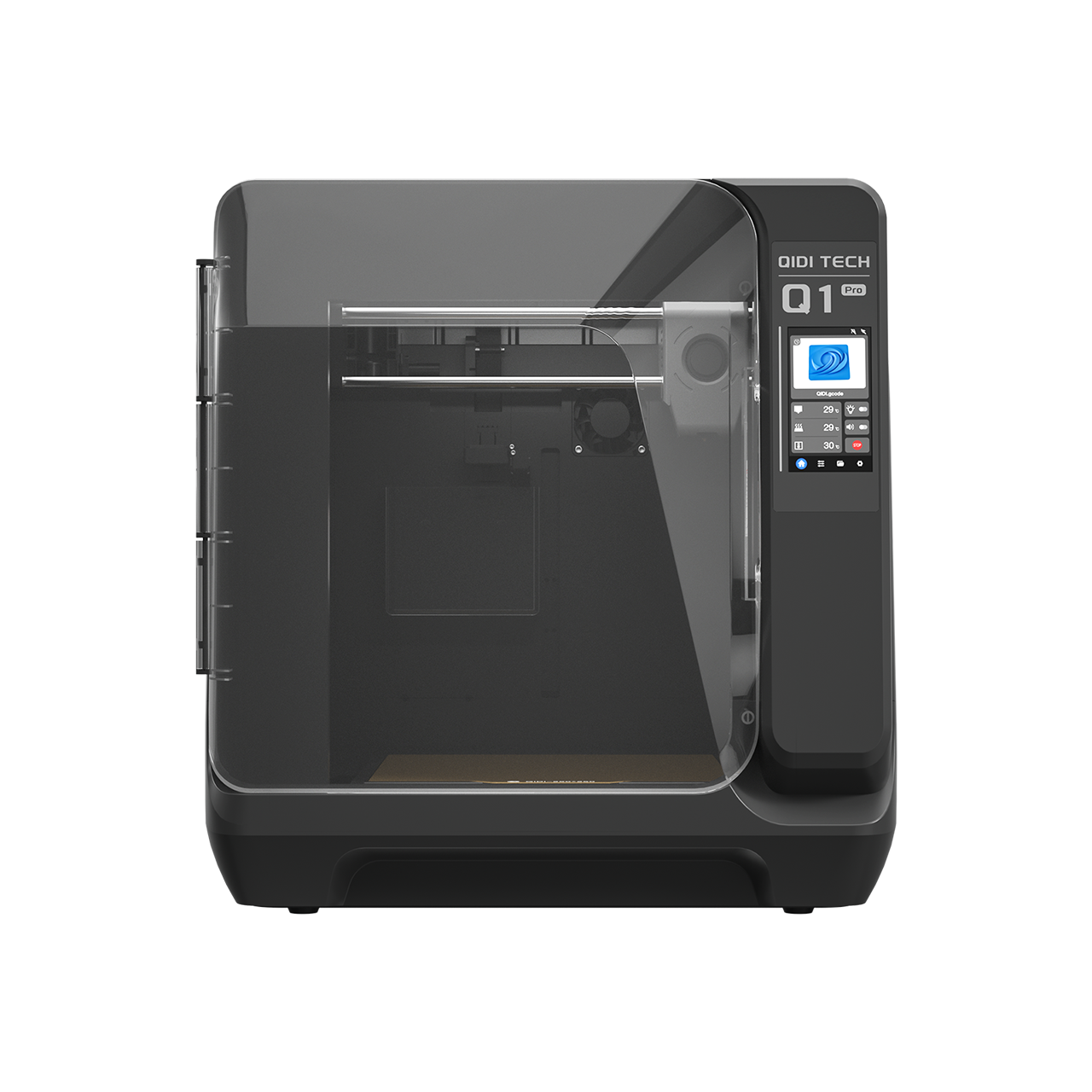
Both materials require a heated chamber for reliable results. Without one, large parts warp and delaminate, especially on corners and flat surfaces. The Plus4 with its 65°C heated chamber handles both ABS and ASA well. Among the current lineup, the Q2, Plus 5 and Max4 all run a 65°C actively heated chamber; the entry-level Q2C has a flame-retardant enclosure but no chamber heater, so it belongs to the shaded-part rows of the table above rather than the dashboard ones. The enclosure benefits guide explains why chamber temperature matters for styrenic polymers.
ASA warps slightly less than ABS in practice, making it somewhat more forgiving for beginners. Both materials benefit from a brim (5–10mm) on flat parts and from printing on a clean, glue-stick-treated PEI bed. The ABS/ASA/PC printing guide covers adhesion, warping prevention, and layer adhesion optimization in detail.
For parts that need maximum strength (phone mount arms, snap-fit clips), print with 4+ walls and 40–60% infill. Orient the part so that the primary load direction runs parallel to the layer lines. A phone mount arm that flexes up and down should be printed so the layers stack vertically, not horizontally.
Chemical resistance in car environments
Car interiors contact various chemicals: interior cleaners, isopropyl alcohol wipes, silicone protectants (Armor All), and sunscreen residue from hands.
Both ABS and ASA resist silicone-based protectants, dilute acids, and mineral oils without issue. The differences emerge with specific solvents. Isopropyl alcohol can cause environmental stress cracking (ESC) in ABS, especially in parts under mechanical load. ASA handles alcohols better, with improved ESC resistance compared to ABS.
Sunscreen is an overlooked risk. The surfactants in sunscreen lotions have been documented to cause stress cracking in ABS. A printed phone mount or steering wheel accessory that gets sunscreen transferred from hands repeatedly can develop surface cracks over a summer. ASA resists this better. If you're printing a part that will get frequent hand contact in summer, ASA is the safer bet.
Browse the ASA Aero and PC/ABS-FR collection for the specialised variants, or the common filaments collection for everyday ABS.
A note on outgassing
ABS emits more volatile organic compounds (VOCs) than ASA during printing, primarily styrene (IARC Group 2A, "probably carcinogenic to humans"). A 2022 peer-reviewed study measured ASA's styrene emissions at less than one-quarter the rate of ABS during printing.
After printing and cooling, finished parts emit far less than during the printing process. ABS is widely used in injection-molded automotive interiors by every major car manufacturer, so the off-gassing from a cured, cooled ABS part at car temperatures is within industry-accepted thresholds. That said, allowing printed parts to off-gas in a ventilated area for several days before installing them in a vehicle is a reasonable precaution, especially for parts printed in ABS.
Frequently asked questions
What is the best filament for a hot car?
ASA for anything the sun reaches, ABS for anything permanently shaded. Both are rated at 92–93°C heat deflection under a 0.45 MPa load, which covers the 69–93°C a dashboard reaches in summer sun. ASA adds the UV stability that ABS lacks. Skip PLA entirely and keep PETG to the glovebox and boot.
ABS vs ASA heat resistance: is there a real difference?
Barely. QIDI's data sheets put ABS at 92°C and ASA at 93°C heat deflection at 0.45 MPa, and 86°C versus 83°C at 1.8 MPa. Those differences are within the noise of print orientation and wall count. Choose between them on UV exposure and impact toughness, not on heat.
Can I use PLA for car interior parts?
Only if the part will never experience temperatures above about 55°C. QIDI's PLA data sheet lists a heat deflection temperature of 57.6°C and a Vicat softening point of 61.6°C. A PLA phone mount left on a dashboard in summer will warp beyond recognition. PLA works for parts that live permanently inside an air-conditioned vehicle and are removed when the car is parked in sun, but that's an impractical constraint for most use cases.
Will ASA or ABS parts survive a parked car in Arizona summer?
Cabin air reaches about 60°C and dashboard surfaces hit 69–80°C in typical conditions, against a 92–93°C heat deflection temperature at 0.45 MPa for both materials. Parts in the cabin — anywhere except resting directly on the hottest dashboard surface in full sun — survive without deformation. In extreme conditions (Baghdad-level heat, south-facing dashboard, black interior), dashboard surface temperatures approach 100°C, which exceeds the light-load HDT and is close to the 101°C glass transition. For margin, mount parts away from the dashboard surface and keep them lightly loaded.
Is PETG strong enough for a vent-clip phone mount?
Yes, if the vent supplies cooled air. A vent-clip mount in an air-conditioned car stays well below PETG's 71.8°C heat deflection temperature. The concern is what happens when the car is parked for hours in summer sun with the AC off. If interior temperatures climb above 70°C in your climate, the PETG clip may soften enough to lose grip. ABS or ASA removes that worry.
Should I use ABS or ASA for replacement knobs near a stove in an RV?
ABS. Its 92°C heat deflection temperature at 0.45 MPa gives comfortable margin for stove-adjacent knobs, where surface temperatures during cooking typically stay below 76°C per UL 858 standards. UV resistance doesn't matter indoors, and ABS's 20.03 kJ/m² Charpy impact strength is the better match for a control that gets grabbed and twisted. It also prints marginally easier than ASA and can be acetone-smoothed for a polished finish. For how print speed affects dimensional accuracy on fitted parts, see the FDM speed and precision analysis.
- The short answer
- How hot car interiors actually get
- Pick the filament by where the part sits
- ABS vs. ASA: mechanical and thermal comparison
- UV resistance: the real differentiator
- PAHT-CF vs ASA: when the composite is worth it
- What about PETG?
- Popular 3D printed car interior parts
- Phone mounts
- Cupholder adapters
- Replacement knobs
- Console organizers and trim
- Classic car restoration parts
- Print settings for car-ready parts
- Chemical resistance in car environments
- A note on outgassing
- Frequently asked questions
- What is the best filament for a hot car?
- ABS vs ASA heat resistance: is there a real difference?
- Can I use PLA for car interior parts?
- Will ASA or ABS parts survive a parked car in Arizona summer?
- Is PETG strong enough for a vent-clip phone mount?
- Should I use ABS or ASA for replacement knobs near a stove in an RV?
Рекомендуемые продукты