
How the QIDI Q2C Helps a Board Game Club Keep Kids Playing and Learning

Share this post
Overhead flat lay of Earth board game by Inside Up Games, showing box, components, tokens, and player boards

Board games bring children together in ways that feel playful but deeply educational. Around the table, they count, compare, plan, communicate, take turns, and learn how to handle both wins and setbacks. In Ottawa, Canada, The Board Game Clubhouse uses modern board games to help children aged 6 to 13 build academic and social skills in a relaxed setting. As its programs grow, the QIDI Q2C 3D printer has become a practical tool for keeping games organized, playable, and ready for learning.

At a Glance

  • Organization: The Board Game Clubhouse
  • Location: Ottawa, Canada
  • Program Focus: Board game-based learning for children aged 6 to 13
  • QIDI Support: A donated QIDI Q2C 3D printer
  • Current Uses: Replacement parts, custom storage inserts, future teaching aids, game upgrades, and student prizes
Fliptoons card game by Thunderworks Games, open box showing Dragonfly character cards and blue card sleeves

What Makes Board Games a Powerful Way for Kids to Learn?

A good board game asks children to think while they play. Some games encourage quick mental math. Others build logical reasoning, probability awareness, memory, strategy, creativity, or problem-solving skills.

Because the learning happens during play, children often practice these skills with less pressure than they might feel in a traditional classroom task.

The social side matters just as much. During a game session, students explain their choices, listen to others, take turns, work as a team, and manage disappointment when luck or strategy goes against them. They also learn how to win with kindness and lose with respect.

At The Board Game Clubhouse, each six-week session explores a different part of the board gaming hobby. Students may play push-your-luck games one week, cooperative games another week, then move into card and dice games, dexterity challenges, drafting games, and other formats.

In its first year, the organization welcomed over 60 students into its programs. That growth brings incredible energy, bursts of laughter, and beautifully chaotic tables. However, with dozens of eager little hands reaching for dice and tokens every day, it also brings a very practical challenge that every educator and parent knows all too well: the wear, tear, and eventual disappearance of tiny game pieces.

Young elementary school children gathered around a 3D printer holding a Board Game Clubhouse sign

A Missing Game Piece Can Put a Whole Activity on Hold

Board games depend on small pieces. Tokens, markers, cards, trays, counters, coins, and custom-shaped components all play a role. In a children’s program with repeated sessions and many hands at the table, small components can sometimes disappear.

One missing piece may seem minor, yet it can affect the whole activity. A game that is missing a critical token or marker may need to sit on the shelf until a replacement is found.

For a club that relies on its game library every week, that can become frustrating. Each game represents a chance for students to practice a skill, connect with peers, and enjoy a structured activity. When a game is unavailable because of one small missing part, students lose a useful learning opportunity.

For The Board Game Clubhouse, keeping games in circulation is part of keeping the program running smoothly.

Fliptoons card game components spread out: Dragonfly tiles, animal character cards including Ostrich, Cow, Monkey, Cat, Alligator, and Turkey

How Can a 3D Printer Help Keep Board Games in Play?

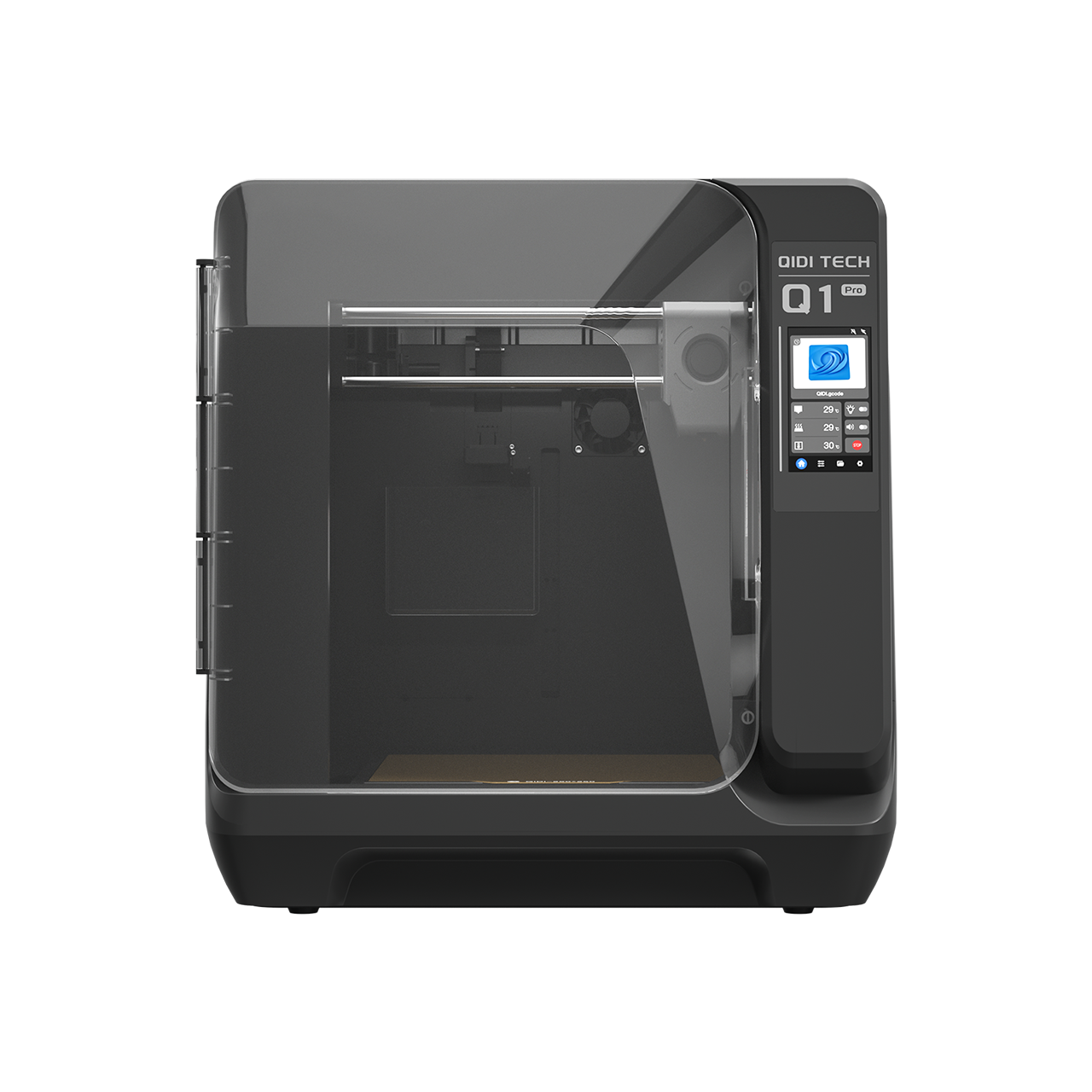
With the QIDI Q2C, The Board Game Clubhouse can create simple, practical replacement parts when appropriate. A missing marker, token, or utility piece no longer has to stop a game from returning to the table.

For a busy community program, the most useful 3D printer features are not just technical specs. They are the details that make printing easier to repeat.

Why the QIDI Q2C fits this setting:

  • Easier first prints: Hands-free automatic leveling and zero-offset first-layer design help reduce setup guesswork for users who are new to 3D printing.
  • Enough room for practical projects: The 270×270×256 mm build volume can handle many board game organizers, trays, tokens, holders, and teaching aids.
  • Stable repeat printing: Its CoreXY full-metal frame supports consistent printing when the club needs multiple useful pieces over time.
  • Material flexibility: Support for common materials like PLA and PETG, along with more advanced options, gives the club room to choose materials based on the project.
  • Future creative options: QIDI Box compatibility leaves room for multi-color or multi-material projects, such as teaching aids, upgraded game pieces, or student prizes.

The value here is very grounded. The printer helps the club protect its game collection and reduce downtime. For a not-for-profit organization, that kind of resourcefulness matters. Every game that stays playable supports future sessions without extra cost or delay.

The QIDI Q2C also gives the club room to respond quickly. When a part is needed, staff can print a useful replacement and keep the program moving.

A practical tool can make a quiet difference: one printed piece can bring a game back to the table, and one organized box can give students a smoother session.

For someone new to 3D printing, that ease of use made a strong impression. The club shared that the printer was simple to use out of the box, allowing them to begin printing inserts and replacement components almost immediately.

Many schools, clubs, and community programs like the idea of 3D printing, then hesitate because the technology can sound complicated. The experience at The Board Game Clubhouse shows how the right 3D printer can fit into a non-technical setting when the need is clear and the workflow is practical.

Overhead flat lay of Earth board game by Inside Up Games, showing box, components, tokens, and player boards

Custom Inserts Give Students More Time to Play, Learn, and Connect

Missing pieces are only one part of the challenge. Setup time can be just as important.

Many modern board games include hundreds of components. Before students can play, those pieces often need to be sorted from plastic bags, divided among groups, checked, and packed away again after the session.

For a program that runs in 90-minute blocks, every minute spent sorting is a minute taken away from play, discussion, and learning.

With the QIDI Q2C, The Board Game Clubhouse can print custom storage inserts for its games. These inserts help keep components organized, visible, and ready for use. Students and facilitators can find what they need faster, return pieces to the right place, and move through setup and cleanup with less friction.

That time saving may sound small, but in a children’s program, small improvements can change the rhythm of a session.

A smoother setup helps students settle in faster. A cleaner storage system reduces confusion at the table. A quicker cleanup gives facilitators a calmer ending to the activity.

Most importantly, organized games allow students to spend a larger part of the session doing what they came to do: play, think, talk, laugh, and learn together.

Group of middle school students posing with a 3D printer at a school library Board Game Clubhouse event

What New Learning Possibilities Can 3D Printing Bring to the Clubhouse?

As The Board Game Clubhouse becomes familiar with 3D printing, the possibilities continue to grow. Replacement pieces and storage inserts solve immediate needs, while custom teaching aids open new creative paths.

The club hopes to use the QIDI Q2C to create learning tools, game upgrades, and small prizes for students participating in its programs.

A printed object can help make learning feel more concrete. Students can hold it, move it, compare it, and discuss it. That kind of hands-on experience fits naturally with the spirit of board game learning.

3D printing also gives educators and organizers the freedom to adapt. If a group needs a simple object to support an activity, a clearer organizer for a complex game, or a small reward for participation, they can create it directly.

The tool becomes part of the learning environment. It helps a good program run with less friction and a little more room for creativity.

Bring More Hands-On Learning to Your Community With QIDI

QIDI Tech donated a QIDI Q2C 3D printer to support The Board Game Clubhouse and its educational board game programs in Ottawa, Canada. The result is a meaningful example of how 3D printing can serve real community needs.

For schools, clubs, libraries, makerspaces, and educational organizations, a 3D printer can become a flexible tool for repair, organization, prototyping, and creative learning. It can help preserve shared materials, save preparation time, and bring student ideas into the physical world.

The Board Game Clubhouse uses board games to help children build confidence, resilience, and real-world human connections. QIDI is incredibly proud to support this mission. By providing a tool that mends games, we are ultimately helping to protect the spaces where children learn to share, communicate, and grow together.

Explore QIDI 3D printers and discover how hands-on making can support your next classroom, club, or community project.

FAQ

당사의 3D 프린팅 장비와 서비스에 대한 가장 궁금한 질문에 대한 답변을 찾아보세요.

3D 프린팅은 디지털 파일로부터 3차원 물체를 제작하는 과정입니다. 플라스틱이나 금속과 같은 재료를 겹겹이 쌓아 최종 제품을 제작합니다. 이 혁신적인 기술은 맞춤형 제작과 신속한 프로토타입 제작을 가능하게 합니다.

저희는 모든 제품에 대해 빠르고 안정적인 배송 옵션을 제공합니다. 주문이 접수되면 배송 진행 상황을 확인할 수 있는 추적 번호를 보내드립니다. 배송 시간은 지역에 따라 달라질 수 있습니다.

저희 3D 프린터는 제조 결함에 대한 1년 보증을 제공합니다. 연장 보증 옵션을 구매하실 수 있습니다. 자세한 내용은 보증 정책을 참조하세요.

네, 저희는 번거로움 없는 반품 정책을 시행하고 있습니다. 구매하신 상품에 만족하지 못하시면 30일 이내에 반품하시면 전액 환불해 드립니다. 상품이 원래 상태 그대로인지 확인해 주세요.

물론입니다! 저희 전담 지원팀이 모든 질문과 문제를 도와드립니다. 이메일이나 전화로 연락하시면 신속한 지원을 받으실 수 있습니다. 또한, 다양한 정보를 제공하는 온라인 리소스 센터도 운영하고 있습니다.

여전히 질문이 있습니까?

문의사항이 있으시면 언제든지 연락주세요.