

 Q2
Q2




PETG vs ABS: Best Material for Garage Pegboard Accessories


The Garage Environment: Why Material Science Matters for Your Workshop
In our experience managing professional workshops and assisting prosumers transitioning to functional manufacturing, the garage remains one of the most demanding environments for 3D printed parts. Unlike the stable, climate-controlled atmosphere of a home office, a garage is a battlefield of temperature extremes, chemical exposure, and mechanical shock.
When we design pegboard accessories—hooks, wrench organizers, or heavy-duty power tool holsters—the choice between PETG and ABS isn't just about aesthetics. It is about preventing a $300 impact driver from hitting the concrete floor because a bracket sagged in the summer heat.
In this guide, we will break down the mechanical realities of PETG-Tough Filament and Odorless-ABS Rapido Filament to help you decide which material belongs on your pegboard.

Thermal Stability: The Summer Garage Test
The most common failure point for garage prints is "creep"—the slow deformation of a part under constant load. In a garage, this is accelerated by heat.
During peak summer, interior garage temperatures can easily exceed 60°C (140°F). While PETG is often praised for its ease of use, its Heat Deflection Temperature (HDT) typically ranges between 70°C and 80°C. This provides a dangerously thin margin of safety. If you are hanging a heavy hammer on a PETG hook in a 60°C garage, the material may begin to soften and "creep" downward over time.
In contrast, ABS offers a significantly higher thermal ceiling. Standard ABS, such as our Odorless-ABS Rapido Filament, maintains its structural integrity up to approximately 95-100°C. This 20-30°C advantage is the difference between a tool holder that lasts a decade and one that fails during the first heatwave.
Impact Resistance and Layer Adhesion
While ABS wins on heat, PETG often takes the lead in pure impact resistance. In a workshop, tools are dropped, knocked, and shoved into holders.
However, we have addressed this historical ABS weakness with Odorless-ABS Rapido Filament. By utilizing low-VOC treatment and improving Z-axis strength, this specialized ABS achieves a tensile strength in the XY axis of nearly 40MPa (based on internal testing of 3D printed specimens). This allows you to gain the heat resistance of ABS without the brittle "delamination" risks associated with older, hobbyist-grade ABS filaments.
Chemical Resistance: Oils vs. Cleaners
A garage pegboard isn't just a storage rack; it’s an extension of your workbench. This means exposure to automotive fluids, lubricants, and household cleaners.
- ABS Performance: ABS shows high tolerance to petroleum-based products, including motor oils and many automotive greases. However, it is highly sensitive to solvents like acetone or certain heavy-duty degreasers.
- PETG Performance: PETG is remarkably resilient against water-based cleaners and many common solvents. It is often used in food-related or medical applications because of its chemical inertness. However, long-term exposure to some oils can eventually cause PETG to become brittle.
For a general-purpose workshop, PETG Rapido is an excellent choice for organizers that will be frequently wiped down with spray cleaners. For parts living near an engine stand or oil change station, ABS remains the industry standard.
Engineering for Longevity: The 3mm Rule
Regardless of the material you choose, the geometry of your design determines its ultimate lifespan. We often see makers attempt to save a few cents by using thin walls, only to have the part fail under the weight of a cordless drill.
In our analysis of functional workshop prints, we have identified that thicker wall designs (≥3mm) combined with rounded internal corners significantly reduce stress concentrations. Sharp 90-degree angles act as "stress risers" where cracks are likely to begin. By adding a simple 2mm fillet (radius) to your corners, you can theoretically double the part's resistance to snapping.
Modeling Note: Functional Design Parameters
To ensure your pegboard accessories survive the "garage gauntlet," we recommend the following baseline parameters for engineering-grade filaments:
| Parameter | Recommended Value | Rationale |
|---|---|---|
| Wall Thickness | 3.0mm - 4.0mm | Provides sufficient "meat" for load-bearing screw holes and hooks. |
| Infill Pattern | Gyroid or Honeycomb | Offers isotropic strength (strength in all directions) vs. Grid infill. |
| Infill Density | 40% - 60% | Diminishing returns occur above 60% for most pegboard geometries. |
| Corner Radius | ≥ 2.0mm | Eliminates sharp stress points that lead to delamination. |
| Layer Height | 0.2mm | Optimizes the balance between print speed and inter-layer surface area. |
Note: These are heuristics based on common workshop load profiles (2kg - 5kg per hook) and are not a substitute for specific FEA (Finite Element Analysis) for critical safety equipment.
Success Rates: Reducing Printing Friction
The "best" material is the one that actually completes the print without warping. Historically, ABS was the "nightmare" material for garage-based makers because of its high shrink rate and toxic fumes.
We have removed these barriers in two ways:
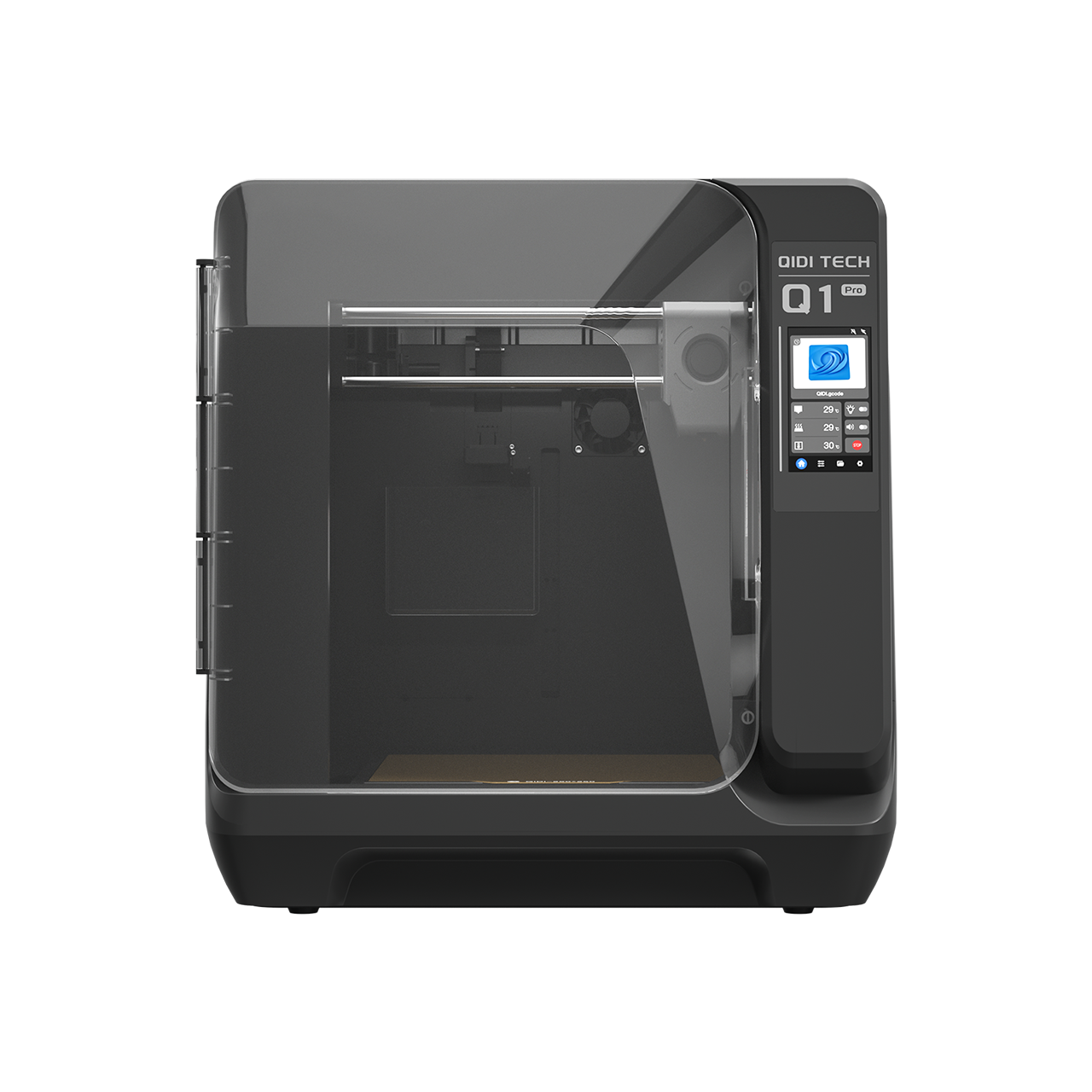
- Chamber Heating: Using a printer with a controlled heated chamber (targeting 55-80°C) is essential for ABS. This "soaks" the part in heat, allowing it to cool slowly and preventing the edges from peeling off the build plate.
- Material Innovation: Our Odorless-ABS Rapido Filament significantly reduces the pungent "burning plastic" smell compared to standard ABS, making it more viable for workshops that share air with the rest of the house.
For those without an enclosed printer, PETG-Tough Filament remains the gold standard for success. It prints with the ease of PLA but offers the durability required for functional home utility. If you've previously used PETG for household repairs, such as repairing refrigerator handles, you already know how reliable its layer bonding can be.
The "Pro" Alternative: PET-CF for Heavy Duty
For users who need to store heavy floor jacks, large sledgehammers, or industrial power tools, standard PETG or ABS might still fall short. This is where carbon-fiber-reinforced materials come into play.
PET-CF Filament infuses a PET base with carbon fibers, creating a material with a Bending Modulus of over 5300 MPa. This makes the part incredibly stiff—it will not sag, even under heavy, long-term loads. Furthermore, the addition of carbon fiber raises the HDT of PET-CF to approximately 86°C, making it more heat-resistant than standard PETG while maintaining the chemical resistance of the PET family. This aligns with the "Green Manufacturing" trends discussed in recent polymer research, where reinforced plastics are used to replace metal components in industrial settings.

Summary Decision Matrix
Choosing the right material for your garage pegboard depends on your specific environment and the tools you are storing.
- Choose Odorless-ABS Rapido Filament if: Your garage gets very hot (>40°C ambient), you are storing tools covered in oil/grease, and you have an enclosed printer with a heated chamber.
- Choose PETG-Tough Filament if: You want a "set it and forget it" printing experience, your garage stays relatively cool, or you need maximum impact resistance for tools that are frequently dropped.
- Choose PET-CF Filament if: You are building load-bearing systems for heavy industrial tools and require zero-flex performance in a professional workshop setting.
By matching the material properties to your garage's specific "micro-climate," you ensure that your organization system is as reliable as the tools it holds.
Disclaimer: This article is for informational purposes only. 3D printed parts for load-bearing applications should be tested individually for their specific use case. Always ensure your printer is operated in a well-ventilated area, and consult professional engineering advice for high-risk or safety-critical storage solutions.
- The Garage Environment: Why Material Science Matters for Your Workshop
- Thermal Stability: The Summer Garage Test
- Impact Resistance and Layer Adhesion
- Chemical Resistance: Oils vs. Cleaners
- Engineering for Longevity: The 3mm Rule
- Modeling Note: Functional Design Parameters
- Success Rates: Reducing Printing Friction
- The "Pro" Alternative: PET-CF for Heavy Duty
- Summary Decision Matrix
Productos recomendados