
 Q2
Q2




Is PLA Safe for Aquariums? Printing Coral Frags and Hides


Is PLA aquarium safe? The short answer
PLA is aquarium safe for short-term freshwater use, but it is not a permanent material. It degrades by hydrolysis, faster in alkaline reef water than in a planted tank. Expect roughly 6–18 months of service in tropical freshwater and 3–12 months in a reef. For anything meant to stay in the tank indefinitely, print PETG.
That answer has two separate parts, and mixing them up is where most of the confusion online comes from. The first is toxicity: does PLA poison the water? The second is durability: how long does the part survive? Pure PLA scores well on the first question and poorly on the second. Colored and specialty filaments are where the toxicity question gets murkier, because the pigment package, not the polymer, carries the unknowns.
| Tank type | Typical pH / temp | Uncoated natural PLA | Better choice |
|---|---|---|---|
| Quarantine / hospital tank (2–6 weeks) | 7.0–7.8 · 24–26°C | Fine — well inside PLA's stable window | PLA is the practical pick |
| Cold freshwater (goldfish, native) | 6.5–7.5 · 18–22°C | 1–3+ years | PLA acceptable |
| Tropical planted freshwater | 6.5–7.5 · 24–28°C | 6–18 months | PLA acceptable, PETG lasts longer |
| Shrimp tank | 6.5–7.5 · 20–24°C | 6–18 months, use uncolored filament | PLA or PETG |
| Reef / saltwater | 8.0–8.4 · 24–26°C | 3–12 months, degrades fastest here | PETG |
| Filter internals, pump parts | Continuous flow | Not recommended — hard to replace | PETG |
How PLA degrades underwater
PLA (polylactic acid) is a plant-derived thermoplastic polyester. It degrades through hydrolysis: water molecules break the ester bonds in the polymer chain, producing lactic acid as the primary breakdown product. The rate depends heavily on temperature. At industrial composting temperatures (58°C+), PLA breaks down in weeks. At aquarium temperatures (24–28°C for tropical, 18–22°C for coldwater), the process is dramatically slower.
A 2024 study simulating marine environments found that PLA showed significant changes only after 120 days of submersion at 25°C, and did not disintegrate after 428 days in a natural seawater aquarium. At pond-bottom temperatures, PLA can persist for years.
Aquarium water sits well below PLA's glass transition temperature (55–60°C), so the material won't soften or warp. Degradation is chemical, not thermal. The print becomes chalky and brittle over months, loses dimensional stability, and eventually crumbles. But "eventually" is measured in months to years, not days.

Freshwater vs. saltwater: different timelines
PLA hydrolysis accelerates in both acidic and alkaline conditions, with the slowest degradation near mildly acidic pH. A 2021 study in Polymers measured PLA fibers held at 37°C across a pH range and found roughly 25% tensile strength loss at neutral pH after 25 days, rising to 40% at pH 10. That alkaline penalty is exactly what a reef tank imposes.
| Environment | Typical pH | Expected lifespan (uncoated PLA) |
|---|---|---|
| Cold freshwater (18–22°C) | 6.5–7.5 | 1–3+ years |
| Tropical freshwater (24–28°C) | 6.5–7.5 | 6–18 months |
| Saltwater / reef (24–26°C) | 8.0–8.4 | 3–12 months |
Reef tanks are the worst case. The alkaline pH that corals require (8.0–8.4) accelerates PLA hydrolysis compared to the near-neutral pH of freshwater. Dissolved salts add a secondary degradation pathway. Reef-keeping communities consistently describe PLA parts becoming soft and chalky within a few months in reef systems.
Freshwater planted tanks are far more forgiving. At pH 6.8 and 24°C, a PLA frag rack or cave hide lasts 6–18 months before visible degradation sets in. That's long enough for many practical uses. The same temperature-and-pH logic drives PLA's behavior in any wet application, which the PLA water resistance guide works through with the full data set.
What actually leaches out
PLA's hydrolysis products are lactic acid, then eventually CO2 and water. Lactic acid is a naturally occurring organic acid with FDA GRAS (Generally Recognized as Safe) status. It's the same compound produced by fermentation in yogurt and sauerkraut. In the quantities released by a 50–150g printed part in a 200+ litre aquarium, the pH impact is undetectable. The tank's buffering capacity (carbonates in freshwater, alkalinity in saltwater) absorbs trace lactic acid without measurable change.
The real concern is colorants and additives. Pure, natural PLA contains no BPA, phthalates, or heavy metals. But colored filaments include pigments and dyes that are not tested for aquatic safety.
| Filament type | What the additive is | Aquatic-safety data | Recommendation |
|---|---|---|---|
| Natural / uncolored PLA | None beyond the polymer | Best understood | First choice |
| White PLA | Titanium dioxide pigment | Chemically inert in water | Acceptable |
| Black PLA | Carbon black pigment | Chemically inert in water | Acceptable |
| Glow-in-the-dark PLA | Strontium aluminate particles | No published aquatic data | Avoid in livestock tanks |
| Wood-fill PLA | Cellulose fibres | Absorbs water, can rot and foul | Avoid submerged |
| Silk / metallic PLA | Surface-effect additives | No published aquatic data | Avoid in livestock tanks |
The safest option is natural (uncolored, translucent) PLA. Beyond white and black, you're trusting the filament manufacturer's pigment choices without aquatic toxicity data to back it up. The PLA toxicity overview covers the broader safety picture of PLA compositions, and printing with glow-in-the-dark filament explains what those additives actually are.
Effects on fish, shrimp, and coral
Peer-reviewed research on PLA microplastics does show measurable toxicity in aquatic organisms at laboratory concentrations. A 2024 chronic-exposure study on Daphnia magna reported survival dropping to 52.4% at 5 mg/L of PLA microplastics, against 85.7% for PET microplastics at the same dose, along with reduced offspring counts. A separate six-month feeding study published in Science of the Total Environment (2023) found that juvenile European perch fed 2% w/w PLA microplastic particles showed altered social behaviour, though life-cycle parameters were unchanged.
These are real findings, and worth stating plainly. But they describe animals ingesting suspended microplastic particles at dosed laboratory concentrations, not a solid printed object sitting on the substrate. A single decorative print does not shed particles at anything close to those levels while it is intact. The relevant caution is different: do not leave a PLA print in the tank once it has gone chalky and started to crumble, because that is the point at which it begins producing exactly the kind of particulate the studies dosed.
No peer-reviewed coral-specific studies exist for PLA exposure. The reef community is split: some hobbyists report running PLA frag racks for a year with no observable impact on coral health, while others attribute algae outbreaks and coral stress to PLA introduction. Without controlled studies, separating correlation from causation is impossible. Other variables (nutrient spikes, lighting changes, new livestock) can cause the same symptoms.
For freshwater fish and shrimp, community experience converges on a consistent conclusion: PLA prints in freshwater show no observable harm to livestock over periods of months. Neocaridina shrimp are kept alongside PLA prints regularly without reported issues.
For reef tanks, the consensus leans the other way. Most experienced reef keepers recommend PETG or coated PLA rather than bare PLA, both because of faster degradation in alkaline saltwater and because the higher sensitivity of corals and invertebrates provides less margin for error.
Aquarium items worth printing
Coral frag racks
Frag racks hold coral fragments on plugs while they grow. Magnetic-mount designs sit inside the tank on the glass, with a magnet on the outside holding them in place. Printing one uses roughly $1–2 in filament. For reef tanks, print these in PETG instead of PLA for longevity.
Cave hides and decorations
Fish caves, arches, and tunnel structures for bottom-dwelling species (plecos, loaches, cichlids). These are good PLA candidates in freshwater tanks because the parts are submerged but don't need to last years. When the PLA eventually degrades, print a replacement. Some aquarists intentionally use PLA for temporary structures during tank cycling or quarantine setups.
Plant holders and planting baskets
Rim-hanging plant holders for pothos and other emergent plants that dip their roots into the tank water. The part above the waterline lasts indefinitely. Submersible planting baskets for aquatic plants work well in PETG, which resists degradation even fully submerged. For a broader look at how different filaments handle water contact, the hydroponics filament comparison covers the same material considerations from a planting perspective.
Filter modifications
Custom media baskets, intake guards, and flow diffusers for canister and hang-on-back filters. These typically sit in the filter body where water flows through them continuously. PETG is the better material for filter components since they're harder to replace than decorative items inside the tank.
For general filament selection guidance, the complete filament types guide covers mechanical, thermal, and chemical properties across all common materials. Proper filament storage matters here too: wet filament produces micro-bubbles during printing that compromise the water seal of finished parts.
PETG: the better long-term material
PETG absorbs roughly 0.12–0.2% of its weight in water over 24 hours, compared to 0.5–1.0% for PLA. That's about a 5:1 difference. More importantly, PETG's water absorption plateaus and the material does not undergo meaningful hydrolysis at aquarium temperatures. Hobbyist reports describe PETG parts lasting several years in reef tanks with no visible degradation.
| Property | PLA | PETG | Why it matters in a tank |
|---|---|---|---|
| 24-hour water absorption | 0.5–1.0% | 0.12–0.2% | Less uptake, slower internal attack |
| Hydrolysis at 24–28°C | Ongoing | Negligible | Decides service life |
| Behaviour at pH 8.0–8.4 | Accelerated breakdown | Stable | Reef tanks are alkaline |
| Glass transition | 55–60°C | 80–85°C | Neither softens in a tank |
| Nozzle / bed temperature | 200–220°C / 60°C | 235–245°C / 80°C | PETG needs a hotter, steadier setup |
| Typical service life submerged | 3–18 months | Years | The whole reason to switch |
PETG belongs to the same polymer family as PET water bottles and the base resin is listed for food contact under 21 CFR 177.1630. A 3D-printed part isn't equivalent to an injection-molded bottle (layer lines create porosity, and printing introduces thermal history the regulation doesn't account for), but the base polymer is well-characterized as chemically inert in water.
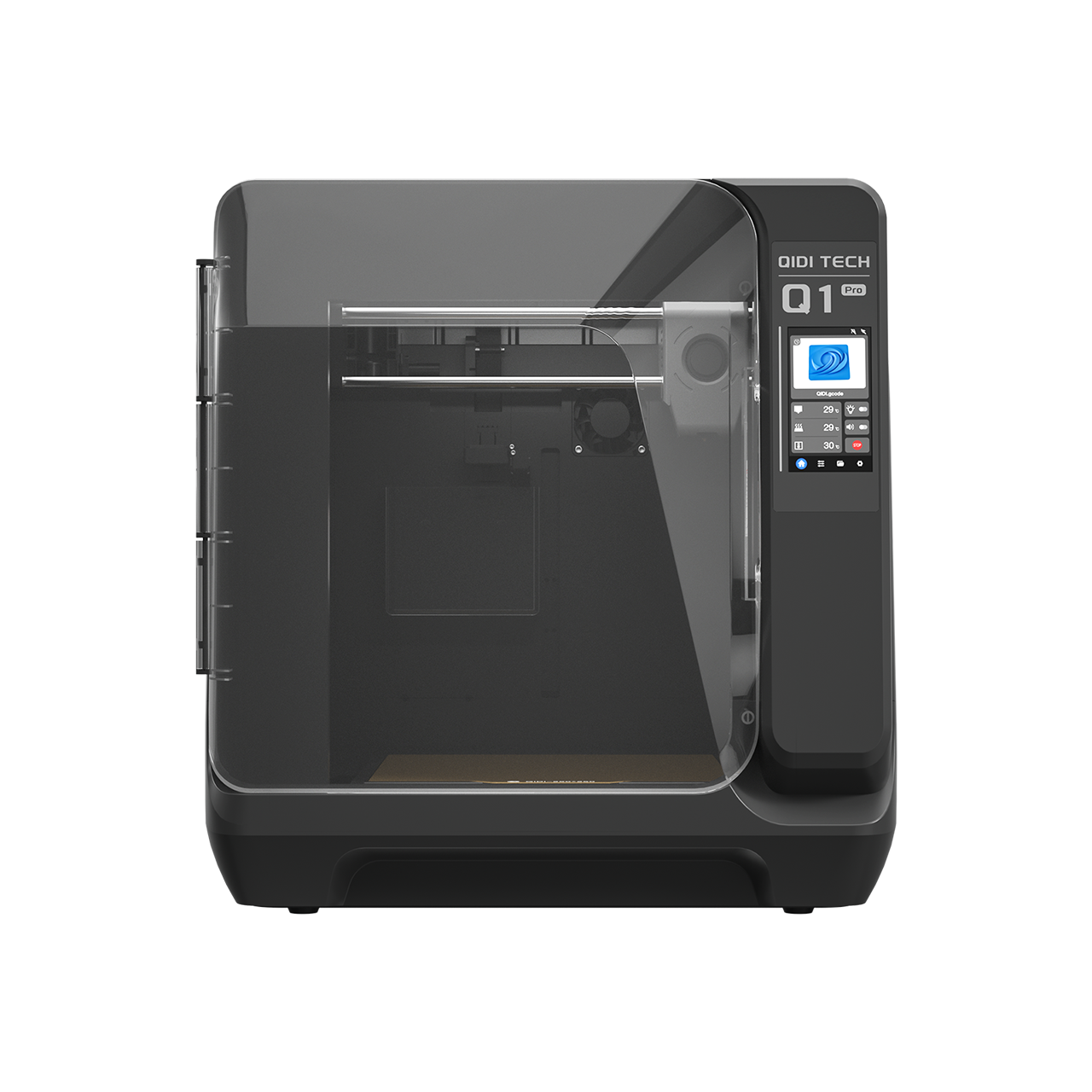
Printing PETG for aquarium parts works well on the Q2 or any of the current QIDI printers, all of which run a 370°C direct-drive hotend. Use 4+ walls and 0.15mm layer height for watertight results. Print at 235–245°C with an 80°C bed. Browse the PETG filament lineup for standard and rapid-print variants.
Aquarium-safe coatings
Coating PLA with an aquarium-safe sealant slows the degradation problem and blocks additive leaching. A well-coated PLA part can last several years submerged, provided the coating stays intact — a chipped or thin spot re-opens the same hydrolysis path.
Epoxy resin
Two-part epoxy is the most reliable option. Choose a product the manufacturer specifically states is safe for aquarium use once fully cured, in fresh or saltwater as appropriate. Apply two or more coats, allowing each coat to cure before applying the next. Full cure typically takes 3–4 days at room temperature. The cured epoxy creates a non-porous, chemically inert barrier between the PLA and the water.
Aquarium-grade silicone
100% pure silicone with no anti-mildew additives. Check the label: any silicone marketed as "kitchen" or "bathroom" likely contains fungicides that are harmful to fish. Pure silicone is the same material used to seal aquarium glass joints. It cures in 24–48 hours and is inert once cured. It's harder to apply evenly on complex 3D-printed geometry compared to epoxy, but works well for sealing specific areas.
Polyurethane spray
Spray-on polyurethane clear coat is easier to apply than brush-on epoxy and provides a reasonably durable barrier. Apply 2–3 thin coats with 72 hours minimum cure time. Less durable than two-part epoxy, but adequate for freshwater use where the chemical environment is less aggressive.
A 2021 biofilm study in Frontiers in Microbiology found that bacteria colonize 3D-printed PLA preferentially in the valleys between layer lines. Coating seals these micro-grooves and reduces bacterial colonization. In aquarium context, some biofilm is normal and often beneficial (nitrifying bacteria), but reducing colonization sites on decorative items helps keep things looking cleaner.
Frequently asked questions
Is PLA safe for fish tanks?
For freshwater tanks, yes, with two conditions: use natural, white, or black PLA rather than glow, silk, or wood-fill variants, and remove the part once it turns chalky. PLA's breakdown product is lactic acid, which a tank's buffering absorbs without a measurable pH shift. The limitation is service life, not acute toxicity.
Is PLA filament aquarium safe in a reef tank?
It is the wrong material for a reef. Reef water sits at pH 8.0–8.4, and alkalinity roughly doubles PLA's rate of strength loss compared with neutral water. Print reef hardware in PETG, or coat the PLA in a cured aquarium-rated epoxy.
Can I use PLA for a temporary quarantine tank decoration?
Yes. Quarantine tanks typically run for 2–6 weeks, well within PLA's stable period even in saltwater. Use natural or white PLA to avoid colorant concerns. If the part only needs to last one quarantine cycle, PLA is the simpler choice over PETG since it prints easier and doesn't need an enclosed printer.
Will PLA affect my aquarium's pH?
Not measurably. A 100g PLA print in a 200-litre aquarium releases trace amounts of lactic acid as it degrades. The tank's biological and chemical buffering absorbs this without detectable pH change, especially with regular water changes. If you're monitoring pH closely for a reef tank (where 0.1 pH shifts matter), use PETG or coated PLA to remove the variable entirely.
Is 3D printed PLA safe for shrimp?
Freshwater shrimp keepers routinely use PLA prints without reported issues. Neocaridina and Caridina shrimp have been kept alongside PLA hides and moss holders for extended periods across multiple online communities. The main precaution is using uncolored or simply colored (white, black) filament and avoiding specialty filaments whose additives haven't been tested in aquatic environments. For fishing lure applications where the print contacts water only briefly, PLA's short-term water safety is even less of a concern.
Should I use PLA or PETG for a coral frag rack?
PETG. Coral frag racks sit in reef tanks at pH 8.0–8.4, which accelerates PLA degradation. A PETG frag rack lasts years under the same conditions. The printing effort is minimal (slightly higher temperatures, same level of difficulty), and you avoid having to replace degraded racks while corals are attached. A Reef Builders overview of 3D printing for reef aquariums reaches the same conclusion.
How long does PLA last in an aquarium?
Roughly 1–3 years in cold freshwater, 6–18 months in a tropical planted tank, and 3–12 months in a reef. Coating with cured epoxy extends all three figures substantially. The failure mode is gradual: the surface turns chalky and the part becomes brittle before it breaks apart, so there is plenty of warning.
- Is PLA aquarium safe? The short answer
- How PLA degrades underwater
- Freshwater vs. saltwater: different timelines
- What actually leaches out
- Effects on fish, shrimp, and coral
- Aquarium items worth printing
- Coral frag racks
- Cave hides and decorations
- Plant holders and planting baskets
- Filter modifications
- PETG: the better long-term material
- Aquarium-safe coatings
- Epoxy resin
- Aquarium-grade silicone
- Polyurethane spray
- Frequently asked questions
- Is PLA safe for fish tanks?
- Is PLA filament aquarium safe in a reef tank?
- Can I use PLA for a temporary quarantine tank decoration?
- Will PLA affect my aquarium's pH?
- Is 3D printed PLA safe for shrimp?
- Should I use PLA or PETG for a coral frag rack?
- How long does PLA last in an aquarium?
Рекомендуемые продукты