

 Q2
Q2




PETG vs ASA for Permanent Tubing Clamps in Drip Systems


Nothing is more frustrating for a small farm operator or a serious DIY gardener than a drip irrigation system that leaks. You spend hours designing the perfect layout, only to find that six months later, the tubing has slipped off the connectors. The culprit usually isn't the tubing or the water pressure—it's the material choice of your 3D-printed clamps.
When we talk about permanent outdoor components, we are fighting a silent enemy: Creep. This is the tendency of a solid material to move slowly or deform permanently under the influence of persistent mechanical stresses. In a drip system, a clamp is under constant tension. If the material "creeps," the clamp expands, the tension drops, and the seal fails.
To build a reliable system, we must evaluate the two heavyweights of functional 3D printing: PETG and ASA. While both are "outdoor-safe," their performance under long-term mechanical stress is worlds apart.
The Science of Material Creep in Outdoor Environments
To understand why a clamp fails, we have to look at the molecular level. According to the Purdue University Libraries 3D Printing Glossary, FDM (Fused Deposition Modeling) materials like PETG and ASA have different thermal and mechanical profiles that dictate how they handle stress.
PETG: The "Flexible" Engineering Choice
PETG (Polyethylene Terephthalate Glycol) is beloved for its ease of use and impact resistance. Materials like PETG Basic offer excellent water resistance and UV stability, making them a go-to for garden projects. However, PETG has a lower glass transition temperature ($T_g$)—typically around 75–80°C.
In engineering terms, the closer a material operates to its $T_g$, the faster it will creep. Even though 30°C (86°F) is well below 80°C, the constant "pull" of the tubing against the clamp causes the polymer chains in PETG to slowly slide past each other.
ASA: The Industrial Standard
ASA (Acrylonitrile Styrene Acrylate) was designed specifically for automotive and outdoor industrial use. It possesses a higher $T_g$ (often above 100°C) and a more rigid molecular structure. This rigidity makes it significantly more resistant to long-term deformation. ASA-Aero Filament, for instance, retains the high heat resistance and UV aging resistance of standard ASA, which is critical for components exposed to the sun 365 days a year.
Real-World Performance: 6 Months vs. 2 Years
In practical irrigation applications, we have observed a distinct "failure timeline" between these materials.
- PETG Clamps: PETG can gradually lose clamping force under sustained outdoor load. The timing varies with preload, geometry, climate, formulation, orientation, and print quality, so inspect the joint rather than assuming a fixed service interval.
- ASA Clamps: ASA generally offers better UV and creep resistance than standard PETG, but its maintenance interval still depends on the specific installation and must be validated in use.
The Temperature Cycling Multiplier
Daily temperature swings can accelerate creep by repeatedly expanding and contracting the clamp. The amount varies with material, geometry, preload, climate, and print quality, so outdoor performance should be checked periodically.

Engineering the Perfect Clamp: Design Insights
Material choice is 70% of the battle, but the remaining 30% lies in how you design and print the part. If you are using an "engineering-grade" material, you must use engineering-grade design principles.
1. Geometry Matters More Than Thickness
A common mistake is making a clamp thicker to make it stronger. However, research into structural polymers, such as the developments discussed in PMC research on fibre-reinforced polymer composites, shows that stress distribution is key.
For a tubing clamp, a wider clamping surface is more effective than a thicker, narrow one. A wide surface distributes the tension over a larger area of the tubing, reducing the "point load" on the plastic and slowing the rate of creep.
2. Print Orientation and Creep Resistance
Layer orientation strongly affects clamp performance. Avoid placing sustained opening force across weak layer interfaces, because interlayer adhesion is usually lower than strength along a continuous extruded strand.
3. The "Glass Fiber" Advantage
If you prefer the printing ease of PETG but need industrial-level resistance, PETG-GF is a powerful alternative. By compounding PETG with 5% glass fibers, the material's tensile modulus (stiffness) is significantly increased. Glass fibers act as internal "rebar," physically blocking the polymer chains from sliding. This results in much better dimensional stability and a significant reduction in creep compared to PETG Rapido or standard variants.
Modeling the Longevity of Your System
To help you decide which material fits your specific garden or farm setup, we have modeled the expected maintenance intervals based on the environmental and mechanical factors discussed.
| Parameter | Value/Range | Unit | Rationale / Source Category |
|---|---|---|---|
| Ambient Temp Swing | 15–35 | °C | Typical temperate day/night cycle (Field Observation) |
| Clamping Force | Test-dependent | — | Determine through application-specific pressure and leak testing |
| Surface Area | 10–12 | mm² | Contact patch of the clamp (Standard Design) |
| Print Orientation | XY (Horizontal) | - | Optimized for interlayer strength (Best Practice) |
| Material T_g (PETG) | ~75–80 | °C | Thermal threshold (Prusa Knowledge Base: PETG) |
Scenario A: The High-Maintenance "Quick Fix"
Using standard PETG for a seasonal garden.
- Pros: Easy to print, low cost, widely available.
- Cons: Requires a "walk-through" every 6 months to check for leaks.
- Best For: Temporary setups or indoor hydroponics where temperatures are stable.
Scenario B: A Lower-Maintenance Farm System
Using ASA or PETG-GF for permanent irrigation.
- Pros: High resistance to UV and creep; 2+ year maintenance cycle.
- Cons: ASA requires a chamber temperature of 40–70°C to prevent warping; PETG-GF requires a hardened steel nozzle.
- Best For: Remote farm plots, permanent orchard lines, and high-value landscaping.
Implementation Guide: Printing for Permanence
If you are moving forward with standard ASA, a validated foamed-ASA design, or ASA-Aero Filament or a reinforced PETG, follow these technical steps to ensure the highest reliability:
- Dry Your Filament: Both PETG and ASA are hygroscopic. Moist filament creates microscopic steam pockets in your print, which act as "fracture points" and accelerate creep. Dry PETG-GF at 65°C for 5-8 hours before printing.
- Optimize Infill: For clamps, use 100% infill or at least 6-8 perimeters. You want the clamp to be a solid block of plastic to ensure there are no internal voids that can collapse under tension.
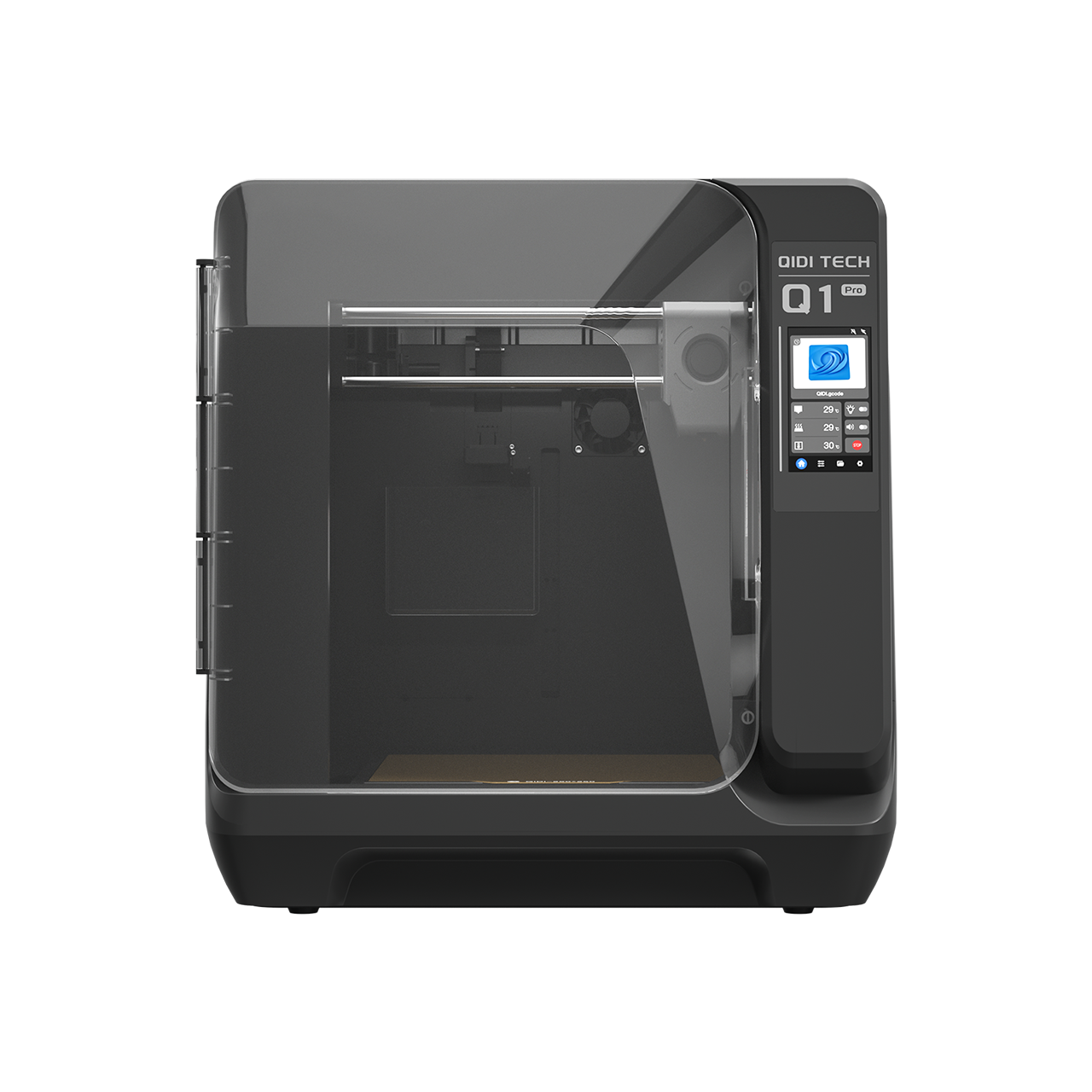
- Manage the Environment: When printing ASA, use a ventilated environment or an enclosed printer. ASA releases styrene fumes, and maintaining a warm ambient temperature (40–70°C) is essential to "release internal stress" and prevent the part from cracking later under sun exposure.
- Post-Print Inspection: Check for any "silvering" or stress marks near the bolt holes. If the plastic looks stressed immediately after installation, it is likely to fail prematurely.
Final Engineering Verdict
For long-term tubing clamps in outdoor drip systems, ASA is often the stronger starting choice for UV and creep resistance. Actual maintenance intervals depend on preload, climate, geometry, print quality, and pressure testing; printed clamps should still be inspected periodically.
However, for those who find ASA difficult to print due to warping or fumes, PETG-GF offers a high-performance middle ground. By adding glass fibers, you gain the stiffness needed to combat creep while maintaining the user-friendly nature of PETG.
Regardless of the material, remember the golden rule of irrigation: design for width, print in the XY plane, and always account for the 2-3x creep acceleration caused by the summer sun. By following these engineering principles, you can build a water management system that lasts for years, not just a single season.
References & Authoritative Sources:
- PMC: Fused Deposition Modeling of Polymer Composites
- Purdue University: 3D Printing Glossary
- Prusa Knowledge Base: Filament Material Guides
- UTHSCSA LibGuides: 3D Printing Materials
Disclaimer: This article is for informational purposes only. The performance of 3D-printed parts can vary based on printer calibration, environmental extremes, and specific design geometry. Always test your irrigation components under pressure in a controlled environment before full-scale deployment.
Related Reading:
- The Science of Material Creep in Outdoor Environments
- PETG: The "Flexible" Engineering Choice
- ASA: The Industrial Standard
- Real-World Performance: 6 Months vs. 2 Years
- The Temperature Cycling Multiplier
- Engineering the Perfect Clamp: Design Insights
- 1. Geometry Matters More Than Thickness
- 2. Print Orientation and Creep Resistance
- 3. The "Glass Fiber" Advantage
- Modeling the Longevity of Your System
- Scenario A: The High-Maintenance "Quick Fix"
- Scenario B: A Lower-Maintenance Farm System
- Implementation Guide: Printing for Permanence
- Final Engineering Verdict
Prodotti consigliati