
3D Printers Accessories

Strong. Smooth. Reliable

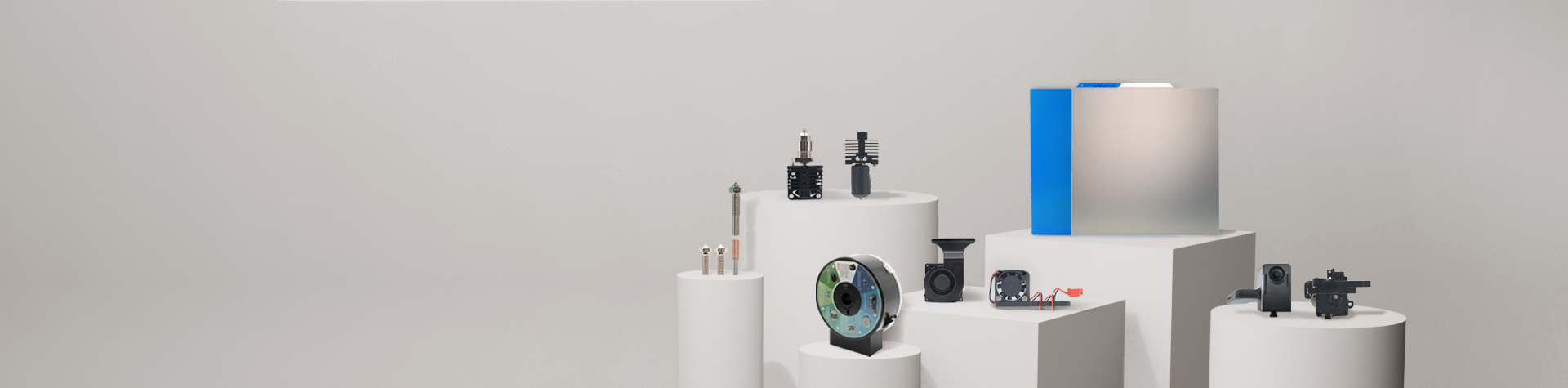
QIDI Printer Accessories

Keep your QIDI 3D printer running at peak performance with genuine replacement parts and engineered upgrades. All accessories match the exact specifications of your printer model, guaranteeing correct fit and consistent performance from day one. You won’t need to modify third-party parts or guess about compatibility.

Core Accessory Categories

1. Build Plates and Build Surfaces

Build plates and build surfaces form the foundation of every successful print. Adhesive sticker replacements remain available for older models including I-Fast, X-Plus, and I-Mates. These come pre-cut to the exact dimensions of your heated bed, so you simply peel and stick to restore like-new adhesion.

Our premium HF heated build plates offer upgraded performance for all current models, from 200×200mm for X-Smart 3 up to 330×330mm for X-Max 3. These magnetic plates feature a removable top surface that flexes for easy part removal, plus improved heat distribution across the entire bed that reduces warping.

2. Nozzles and Hotend Components

Nozzles and hotend components require periodic replacement, especially when printing abrasive materials. We stock nozzles in multiple diameters (0.2mm, 0.4mm, 0.6mm, 0.8mm) for every QIDI printer model.

  • Brass nozzles: Fit normal-temperature extruders on older models.
  • Hardened high-temperature nozzles: Work with all-metal extruders for abrasive composites.

Specific models including X-Plus II, X-Max II, Q1 Pro, Q2, Q2C, Plus4, and Max4 have purpose-designed nozzles that match the original equipment exactly. Complete hotend assemblies are also available for direct replacement on popular models.

3. Extruders, Sensors, and Upgrade Components

Extruders, sensors, and upgrade components add capability and fix worn parts.

  • Dual-gear extruder upgrade kits: For X-Plus II and X-Max II improve filament feeding for flexible and composite materials.
  • Filament runout sensors: Detect empty spools mid-print and pause the job, preventing failed runs.
  • BL Touch replacement sensors: Restore automatic bed leveling on the X-CF Pro.

All parts come ready to install, with the correct mounting points and electrical connections for your specific model.

3 FAQs about 3D Printer Accessories

Q1: How often does a nozzle need replacing?

Replace nozzles when you notice inconsistent extrusion or frequent jamming. For standard materials like PLA, PETG, and ABS, a single nozzle can last hundreds of hours. For abrasive carbon fiber-filled composites, upgrade to a hardened steel, bimetallic, or tungsten carbide nozzle. These can last 300–1,000 hours with carbon fiber materials, far outlasting standard brass. Keeping a spare on hand means you're never waiting on shipping to get back printing.

Q2: What nozzle diameter should I use most of the time?

A 0.4mm nozzle balances fine detail with reasonable print speed for most general-purpose projects. Use smaller diameters (0.2mm) for small parts that require sharp detail, and larger diameters (0.6mm, 0.8mm) for large objects where faster print time matters more than extremely fine layer lines.

Q3: Will these accessories fit 3D printers from other brands?

No. All QIDI accessories are engineered specifically for QIDI printer models. Dimensions, mounting points, and electrical connections match our machines exactly, and won’t fit other brands without modification. Always confirm your printer model against the compatibility notes before ordering.

3D printer buying guide

Find the perfect 3D

printer for your projects.

Start your creative adventure today!

Bring Your Ideas to Life with QIDI FDM 3D Printers

Fused Deposition Modeling (FDM) is a prevalent 3D printing technology at the heart of QIDI’s offerings.FDM 3D printersoperate by heating thermoplastic filaments to a semi-liquid state and precisely depositing them layer by layer onto a build platform, guided by a digital 3D model. This additive manufacturing process allows for the creation of complex three-dimensional objects with high precision and repeatability.

FDM printers are one of the most popular types of 3D printers on the market today. This type of 3D printer has good material compatibility and user-friendly applications.

Material versatility: FDM 3D printers support the use of a variety of thermoplastic materials, including PLA, ABS, PETG, TPU, etc. Each material has unique properties, such as strength, flexibility, heat resistance, and transparency, and you can choose the most suitable 3D printing material according to your specific application.

Cost-effectiveness: Compared with other 3D printing methods, FDM technology is generally more affordable. The cost of FDM printers is relatively low, and the price of raw materials (filaments) is also reasonable. This makes FDM a viable choice for hobbyists, educators, and small and medium-sized enterprises.

Easy to use and maintain: Our FDM printers are equipped with a simple and clear control panel, allowing beginners to easily control the basic functions of the printer by pressing buttons or turning knobs. The operation process is intuitive and easy to understand. Maintenance is also simple, mainly involving regular cleaning, nozzle replacement, and occasional calibration.

FDM 3D printers are used in many fields, including:

Daily Necessities: Print household items such as mobile phone holders, key chains, coasters, spice jar holders, and office supplies such as file storage boxes and mouse pads.

Artistic and Decorative Pieces: Used to create sculptures, including abstract sculptures and sculptures with specific themes, and to make unique jewelry such as earrings and necklace pendants.

Educational Models: Make teaching models, such as human organ models in biology classes, topographic models in geography classes, and geometric models in mathematics classes.

Industrial Prototypes & Custom Parts: Print product prototypes for appearance and function testing in the early stages of product development, and print customized parts for special industrial equipment.

Medical & Healthcare Applications: Make customized orthopedic appliances, such as arch support pads, and surgical guides to assist oral or orthopedic surgery.

If you are not sure which 3D printer is suitable for you, you can first clarify the purpose or goal of printing:

Printing purpose

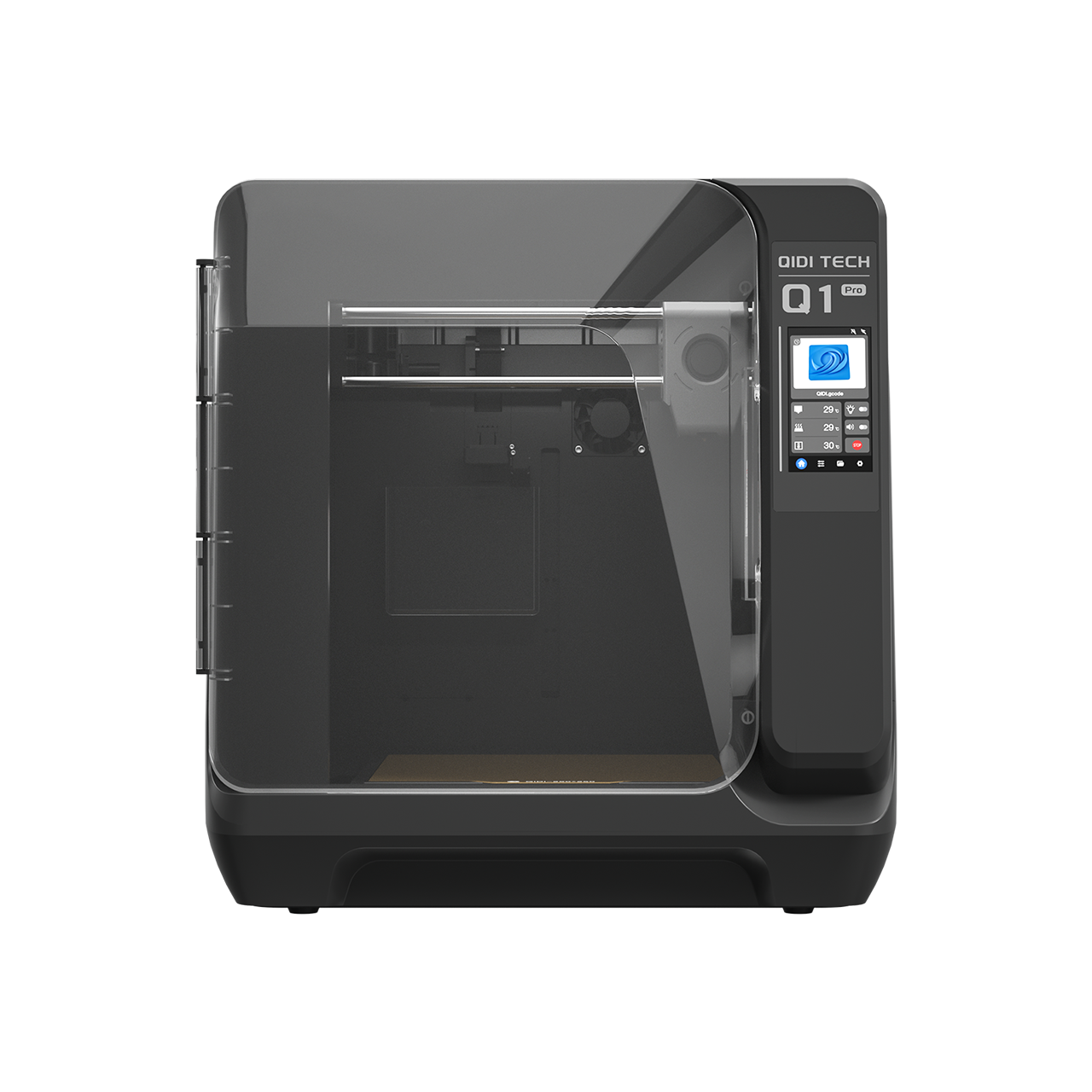
Consumer level (personal/family): suitable for printing small models, creative designs, and usually with a lower budget, such as Qidi Tech Q1 Pro.

Professional level (education/laboratory): needs to take into account both accuracy and stability, which supports high-speed printing and automatic leveling.

Industrial (production/manufacturing) printers like the QIDI Plus4 are designed for high-intensity production. It has a large build volume for handling large projects. The QIDI Plus4 has a heated chamber temperature of 65°C and supports high-temperature resistant materials, which helps to achieve high-quality prints.

Printing target

Model size: Industrial level requires large build size, while consumer level is mainly 200-300mm³.

Material compatibility: If you need to print engineering plastics (ABS, nylon) or composite materials (carbon fiber reinforced), you need to choose a model that supports high temperature nozzles and closed structure.

You can also look at performance parameters such as print accuracy. Print accuracy is measured by factors such as layer height and nozzle diameter. Smaller layer heights and nozzle diameters generally produce higher resolution prints with finer details. If your project requires high-precision parts, look for a printer that can achieve smaller layer heights and has smaller nozzle options.

Invest in QIDI FDM 3D Printers for Exceptional Performance!

QIDI FDM 3D printers are an excellent choice due to their exceptional cost-performance ratio. QIDI offers high-quality printers at competitive prices, with features and performance on par with or exceeding more expensive models, appealing to both beginners and pros. Another highlight is the integrated chamber temperature control, a feature rare in printers of the same price range. It precisely regulates the chamber temperature, crucial for temperature-sensitive materials like ABS and PC. This control prevents warping, enhances layer adhesion, and guarantees consistent, professional-quality prints.

FAQs

Find answers to your most pressing questions about our 3D printing machines and services.

An FDM 3D printer, also known as Fused Deposition Modeling printers, is a printer that creates objects through layer-by-layer deposition of molten plastic filament. The plastic filament is heated until it becomes molten and extruded through a nozzle to form the shape of interest. One reason FDM printers are popular is that they are inexpensive and very easy to use, so they are widely used by both beginners and professional users.

FDM 3D printers have several advantages. The first one is that they are usually more cost-effective than other types of 3D printing technologies. This economy makes them accessible to a wide market, such as hobbyists, educators, and professionals. Second, FDM printers are user-friendly and accommodate a wide range of materials, from tough to engineering-grade thermoplastics, such as ABS and PLA. These printers are versatile, which enables one to use them in a wide range of applications, from prototyping to designing functional parts. The parts produced are strong, and they can withstand mechanical use. Running costs are also low, as it does not require any type of hazardous chemicals, making it safe and easy to run.

The FDM 3D printing process involves designing a 3D model using CAD software. After your design is ready, slicing software is used to convert the model into various layers. The printer then heats the plastic filament and extrudes it through a nozzle, laying down each layer according to the sliced model. As the layer is laid down, it cools and solidifies, building up the final object. This layer-by-layer mechanism provides control over the final object's shape and structure.

SLA and FDM are two different 3D printing technologies. The main difference is the material and the process. FDM printers use thermoplastic filaments, which are melted and extruded to lay down layers. SLA printers use liquid resin that is cured by a laser to cure each layer. SLA is usually at a better resolution, and the surfaces are smoother, so it's very fit for the designs with much detail and very intricate. FDM is more suitable for functional prototypes and bigger parts because it's stronger and cheaper. Generally, FDM is also cheaper compared to SLA printers and their materials.

Print resolution, layer height, extruder and platform temperature, print speed, filament quality, nozzle size, and proper slicer settings all impact the final print quality. Dual extrusion, an enclosed build chamber, and auto-calibration features also help improve consistency, precision, and reliability.

Still have questions?

We’re here to help you with any inquiries.

Contact