
 Q2
Q2
 QIDI Box
 Plus 4
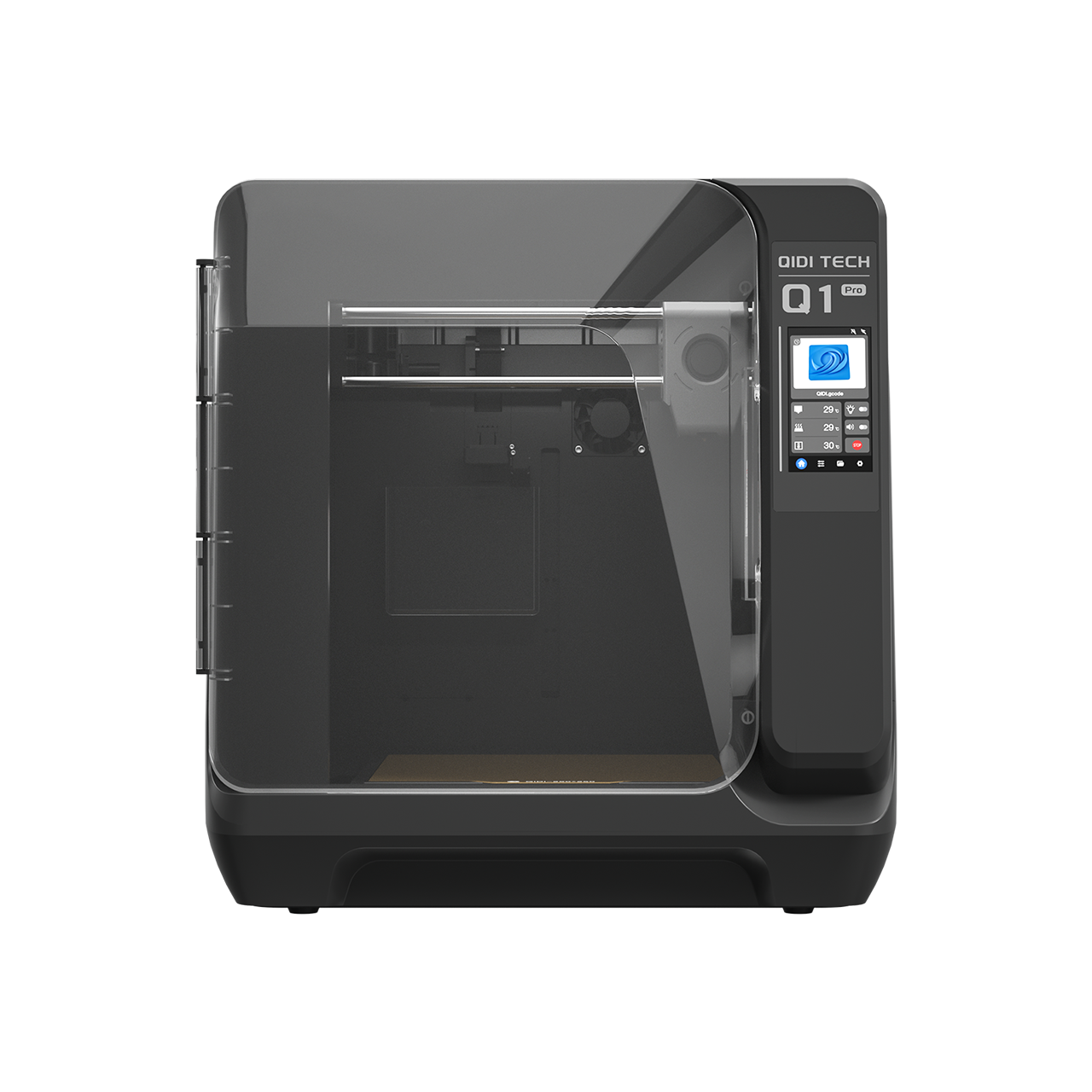 Q1 Pro
 X-Max 3


Choosing Food-Safe Filaments for Coffee Dosing Funnels


Beyond the Filament: A Safer Approach to Barista Tools
In the world of high-end espresso, precision is everything. Baristas often turn to 3D printing to create custom dosing funnels, tamper stations, and portafilter stands to streamline their workflow. However, when a part comes into direct contact with coffee grounds, the conversation shifts from "Does it fit?" to "Is it safe?"
For serious makers and small shop owners, the term "food-safe" should not be treated as a simple material property. In reality, achieving food safety in FDM (Fused Deposition Modeling) printing is a system-wide requirement that involves material chemistry, hardware selection, and post-processing techniques. At QIDI TECH, we prioritize reliability and real-world utility, which is why we advocate for a rigorous, engineering-first approach to coffee station accessories.
The "Bacteria Trap" and the Science of Layer Lines
The most significant hurdle in 3D printing food-contact parts isn't just the plastic itself; it's the geometry. FDM prints are characterized by microscopic ridges known as layer lines. In the context of coffee, these ridges create a "Bacteria Trap."
Coffee is rich in lipids (oils). When coffee grounds pass through a raw 3D-printed dosing funnel, these oils migrate into the microscopic gaps between layers. Over time, these trapped oils go rancid. Because the gaps are too small for standard cleaning brushes to reach, they become a breeding ground for bacteria, regardless of whether the filament is labeled "food-safe."
To mitigate this, we recommend a specific printing heuristic: The Large-Format Surface Strategy.
- Nozzle Selection: Switch from a standard 0.4mm nozzle to a 0.6mm or 0.8mm nozzle.
- Layer Height: Use thicker layers (e.g., 0.3mm or 0.4mm).
- The Logic: Increasing the nozzle size and layer height reduces the total number of surface crevices by up to 50%, making the part significantly easier to clean and coat.
Material Science: Why PETG Outperforms PLA for Coffee
While PLA Rapido Filament is a favorite for its ease of use and bio-based origins, it often fails in a professional coffee environment.
In a coffee shop, equipment like espresso machines and steam wands can easily exceed these temperatures. A PLA dosing funnel left on top of a warm machine or near a group head is prone to warping. Furthermore, PLA is more susceptible to chemical degradation when exposed to acidic coffee oils over long periods.
For these reasons, PETG Basic is the preferred choice for prosumer barista tools. It offers:
- Thermal Stability: A higher Tg (~80°C) ensures the funnel maintains its dimensional stability near heat sources.
- Chemical Resistance: PETG is highly resistant to the lipids and acids found in coffee.
- Durability: It possesses mechanical strength and impact resistance close to ABS, ensuring it survives the rigors of a busy cafe.
Hardware Heuristics: The Nozzle Safety Factor
A common "gotcha" in the 3D printing community is the assumption that the filament is the only source of contamination. Standard brass nozzles often contain trace amounts of lead to improve machinability. While negligible for hobbyist trinkets, this is a non-negotiable safety concern for parts touching consumables.
For genuine food contact, switching to a Hardened Steel or Stainless Steel nozzle is mandatory. These materials are lead-free and far more resistant to abrasion.
Post-Processing: The Final Safety Barrier
Even with the best filament and a lead-free nozzle, a raw FDM print is not truly food-safe due to the aforementioned layer lines. To achieve a professional, hygienic finish, we recommend a two-step post-processing workflow:
- Mechanical Sanding: Start with 200-grit and move to 600-grit to level the layer ridges as much as possible.
- Food-Safe Epoxy Coating: Apply a thin layer of a certified food-safe epoxy resin. This fills the remaining microscopic gaps, creating a glass-smooth, non-porous surface that is easy to sanitize.
This approach aligns with the PMC Review on 3D Printing Materials Advances, which notes that while FDM allows for incredible customization, the inherent porosity of the process requires secondary sealing for high-hygiene applications.

Scenario Analysis: Choosing Your Setup
To help you decide on the best approach for your specific needs, we have modeled two common scenarios based on patterns we observe in the serious maker community.
Scenario A: The Home Enthusiast
- Usage: 2-3 espressos per day, cleaned after each use.
- Recommended Material: PLA Matte Basic for its excellent aesthetic finish, provided it is kept away from the machine's heat.
- Safety Level: Moderate. Requires diligent cleaning and periodic replacement of the part.
Scenario B: The Small Coffee Shop / High-Volume User
- Usage: 50+ espressos per day, high heat exposure, constant friction.
- Recommended Material: PETG Basic.
- Safety Level: High. Must be printed with a stainless steel nozzle and finished with a food-safe epoxy coating to withstand heavy use and rigorous cleaning.
Sustainability and the Future of Barista Tools
As we move toward "Green Manufacturing," the use of high-performance recycled filaments is becoming more viable. Recent developments in carbon fibre reinforced polymer composites suggest that we can create industrial-grade barista tools that are both strong and environmentally conscious. While these materials are generally used for non-contact parts like tamper stations or shock-absorbing tool grips, they represent the next step in professional-grade 3D printing.
For those looking to expand their coffee station setup beyond food-contact parts, exploring impact-resistant filaments for handles or wear-resistant sliding connectors for organizers can further enhance the durability of your custom shop tools.
Summary Checklist for Food-Safe Dosing Funnels
To ensure your 3D-printed coffee accessories are as safe as they are functional, follow this expert checklist:
- Material: Choose PETG Basic for its thermal and chemical resistance.
- Hardware: Use a Stainless Steel or Hardened Steel nozzle to avoid lead contamination.
- Settings: Use a 0.6mm nozzle and thicker layers to reduce the "Bacteria Trap" effect.
- Finishing: Sand and seal with a certified food-safe epoxy resin.
- Maintenance: Regularly inspect for cracks or degradation; 3D printed parts should be considered semi-permanent and replaced if the surface integrity is compromised.
By treating food safety as a comprehensive system rather than a single material choice, you can produce professional-grade barista tools that meet the high standards of the coffee industry.
Frequently Asked Questions
Is PETG food safe for a dosing funnel?
PETG resin is widely used in food packaging, but a printed funnel is only as safe as the whole system around it: the additives and colourants in the specific spool, a lead-free nozzle, and a surface finish that leaves nowhere for coffee oils to collect. Treat the part as semi-permanent, inspect it for cracks and crazing, and replace it once the surface is no longer smooth.
Can a 3D-printed funnel go in the dishwasher?
Generally no. Domestic cycles run around 60-70°C, close enough to PETG's roughly 80°C glass transition to distort thin walls over repeated washes, and the detergent phase is aggressive toward epoxy coatings. Hand-wash in warm water instead. If a part genuinely has to survive dishwasher cycles, our guide on dishwasher-safe PC printing covers the higher-temperature options.
YMYL Disclaimer: This article is for informational purposes only and does not constitute professional health, safety, or legal advice. 3D printing for food contact involves inherent risks regarding bacterial growth and chemical leaching. Users should consult local health regulations and perform their own safety testing before using 3D-printed parts in a commercial or consumable environment.
Sources
- Beyond the Filament: A Safer Approach to Barista Tools
- The "Bacteria Trap" and the Science of Layer Lines
- Material Science: Why PETG Outperforms PLA for Coffee
- Hardware Heuristics: The Nozzle Safety Factor
- Post-Processing: The Final Safety Barrier
- Scenario Analysis: Choosing Your Setup
- Sustainability and the Future of Barista Tools
- Summary Checklist for Food-Safe Dosing Funnels
- Frequently Asked Questions
- Sources
Recommended products