
 Q2
Q2
 QIDI Box
 Plus 4
 Q1 Pro
 X-Max 3


How Do You Earn Money in 3D Printing? 10 Ways

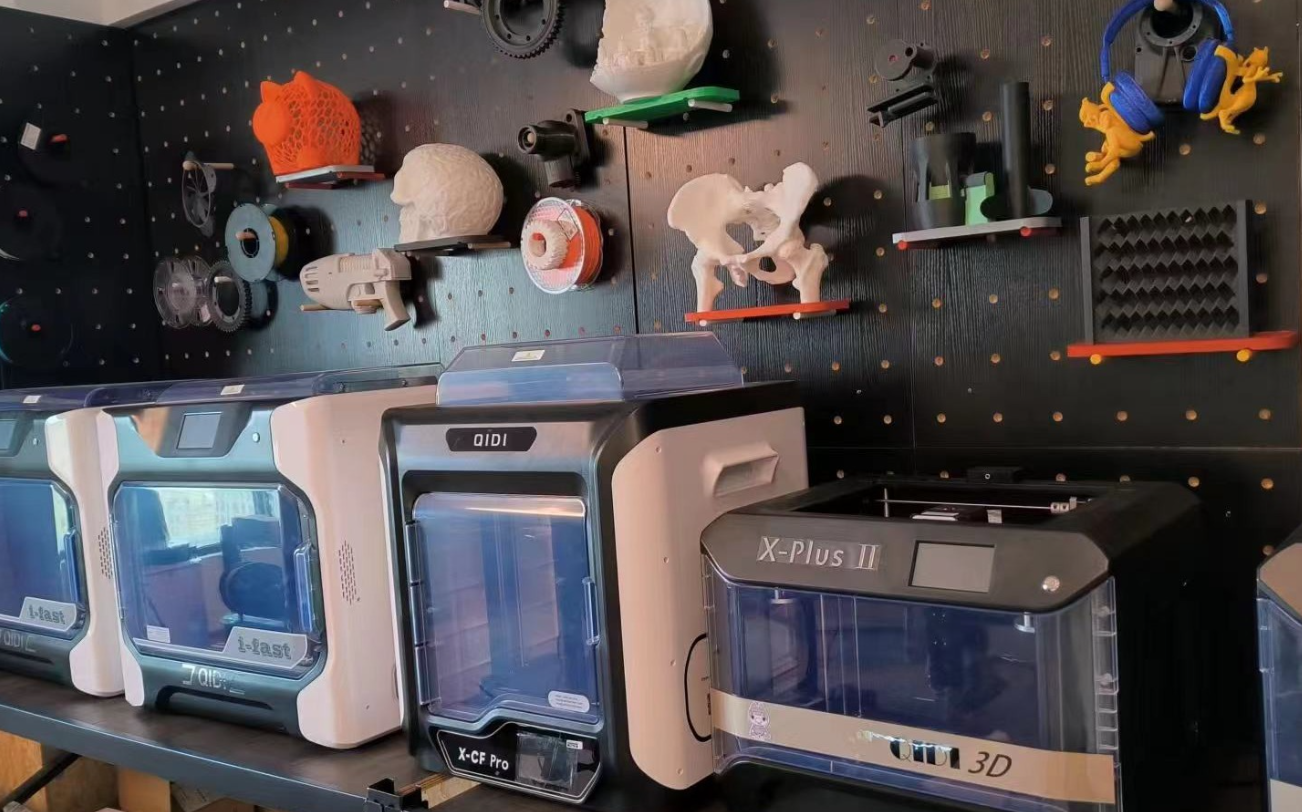
You can earn money in 3D printing through nine realistic paths: selling finished products, print-on-demand fulfilment, selling STL files, prototyping for businesses, printer repair and setup, teaching, printer rental, technical consulting, and niche B2B parts. They differ enormously in startup cost, margin per unit and how much of your own time each sale consumes.
This guide is about the arithmetic. Every path below gets a startup cost, a realistic gross margin, the time it consumes per unit, whether it scales without you, and the specific way it usually fails. No income figures are promised, because income depends on demand you have to find and validate yourself. What is knowable in advance is the cost side, and that is where most people get it wrong.

First: what a printed part actually costs you
The single biggest error in 3D printing side businesses is pricing against filament cost alone. Filament is usually the smallest line item. Here is the full build-up for a representative product — a 120 g desk organiser, 6 hours of print time, sold on a marketplace at $25.
| Cost line | How it's derived | This example |
|---|---|---|
| Filament | 120 g at $16.99/kg PLA = $0.017/g | $2.04 |
| Electricity | 6 h at ~0.15 kW average draw × your rate per kWh | $0.10–$0.30 |
| Machine depreciation | $499 printer ÷ 3,000 usable hours = $0.17/h | $1.00 |
| Consumables (nozzle, plate, filter) | Roughly $0.05–$0.12 per print hour | $0.30–$0.72 |
| Failure allowance | 8% scrap rate applied to the above | $0.28 |
| Packaging and shipping materials | Box, filler, label | $1.20 |
| Marketplace and payment fees | Listing + transaction + processing, typically 10–13% all-in | $2.50–$3.25 |
| Post-processing labour | 12 min at $20/h notional | $4.00 |
| Total cost | ≈ $11.50–$12.80 | |
| Gross margin on a $25 sale | ≈ $12–$13.50 (49–54%) |
Three things to notice. Filament is 8% of the cost. Labour is the largest single line, and it is the line most people set to zero when they run this calculation — which is exactly how you end up working for $4 an hour. And the marketplace fee is larger than the filament, electricity and depreciation combined.
Verify the two variable inputs for yourself: your electricity rate against the EIA's published average retail electricity prices by state, and your consumables burn against a real parts list — the electricity cost per hour guide and the maintenance cost guide work through both with itemised numbers. Filament price varies more than people expect by material and volume; the filament pricing breakdown covers what drives it.
The nine paths, compared
Startup cost below assumes you already own nothing. Margin is gross margin after direct costs but before your own labour, unless the row says otherwise. "Scales without you" is the question that decides whether this becomes a business or a second job.
| Path | Startup cost | Gross margin | Your time per sale | Scales without you? | Usual failure mode |
|---|---|---|---|---|---|
| Selling finished products | $400–$1,500 | 40–60% | 10–30 min post-processing + fulfilment | Only by adding printers and staff | Competing on price against sellers who ignore their own labour cost |
| Print-on-demand via a platform | $0 (they own the machines) | 15–35% | 0 min per sale after upload | Yes, fully | Margin too thin to fund marketing; you are invisible without traffic |
| Selling STL files | $0–$300 (CAD software) | 60–90% | 0 min per sale after design | Yes, fully | Piracy and a crowded free-model market; needs a real design skill |
| Prototyping for business clients | $700–$3,000 | 50–70% | 2–8 h per job including consultation | No — you are the service | Scope creep and unpaid revision rounds |
| Printer repair and setup | $100–$400 (tools) | 70–85% (labour-heavy) | 1–3 h per callout | No | Thin local demand; travel time eats the margin |
| Teaching and workshops | $500–$2,000 (loaner machines) | 60–80% | 3–6 h per session + prep | Only via recorded courses | Filling seats; a half-empty workshop still costs the full room |
| Printer rental | $1,500–$5,000 (fleet) | 30–50% | 1–2 h per rental cycle | Partially | Damage, and printers idle between bookings |
| Technical consulting | $0–$500 | 80%+ | Billable hours only | No | Requires demonstrable industry credibility, not enthusiasm |
| Niche B2B parts (jigs, fixtures, spares) | $1,000–$4,000 | 50–75% | Front-loaded design, then repeat orders | Yes, once a part is qualified | Long sales cycle before the first order lands |
The pattern worth internalising: margin and scalability move in opposite directions to certainty. Selling STL files has the best margin and scales perfectly, but almost everyone who tries it makes nothing because design skill is the actual product. Repair work has near-certain demand and no scalability at all. The two paths that combine decent margin with genuine repeat revenue are niche B2B parts and prototyping, and both require you to go find business customers rather than list a product and wait.
Selling finished products: what has to be true
Selling printed products is the default path, the most crowded, and the one where the cost table above decides everything. It works when your product has a defensible reason to cost more than the cheapest identical listing.
Three reasons that hold up in practice: personalisation the buyer cannot get from a mass-produced item, a size or fit that no injection moulder serves, and a replacement part for something out of production. Three that do not: a popular free STL printed in a different colour, a generic phone stand, or an articulated dragon — the market for all three is saturated by sellers who do not count their labour.
Volume ceiling matters more than people plan for. One printer running 18 hours a day at 6 hours per unit produces at most three units a day, minus failures and maintenance downtime. If your margin is $12 a unit, that is a hard ceiling of roughly $1,000 a month gross margin from one machine before you touch a single hour of your own labour cost. Whether that is worth it is your call, but it is arithmetic, not ambition, and it is why serious sellers move to multiple machines quickly. The 3D printing farm guide covers what happens when you scale that way.

Print-on-demand and STL sales: zero marginal cost, zero moat
Print-on-demand means a platform manufactures and ships each item after the sale, so you carry no inventory and no equipment. You upload a model, set a markup over the platform's base cost, and receive the difference. The appeal is obvious: no capital, no fulfilment, unlimited scale.
The catch is that your margin is the markup, and the platform's base cost already includes their machine time, material and shipping. Realistic markups land in the 15–35% range before any marketing spend, which leaves very little to pay for the traffic you need. A print-on-demand listing with no audience earns exactly nothing, and unlike a physical product you cannot compete on quality — the platform prints it identically for your competitor.
Selling STL files has the same shape with better economics. Margin after platform commission commonly sits in the 60–90% range because there is no manufacturing at all. What kills it is that the design has to be good enough that people pay rather than downloading one of the millions of free models. Parametric designs the buyer can resize, model sets rather than singles, and commercial-use licences are the three things that reliably move a file listing from hobby income to real income.
The honest assessment: both of these are leverage on a skill you already have. If you are not already a competent CAD modeller, STL sales is not a way in — it is a way to monetise a skill you would need years to build.
Services: where the money actually is for most people
Service work — prototyping, repair, consulting, teaching — trades scalability for margin and demand certainty. For most individuals starting out, this is where the first reliable revenue comes from, because a business customer with a problem is far easier to price to than a consumer browsing a marketplace.
Prototyping for local businesses is the strongest of these. A small manufacturer needing a fit-check model, an inventor needing something to show an investor, a designer iterating a housing — these buyers value speed over price, which is the opposite of consumer marketplace dynamics. Rapid prototyping is a recognised procurement category, so you are not explaining the concept from scratch. Price by job with a stated number of revision rounds, and put the revision limit in writing — unbounded revisions are the failure mode that turns a profitable job into a loss.
Jigs, fixtures and out-of-production spares is the quietly best niche. A workshop that needs 40 identical holding fixtures does not care that they cost $6 each to print if the alternative is a $900 machined set. Once a part is qualified and working, it reorders indefinitely with no new selling effort. The sales cycle is long — expect months from first conversation to first order — but the revenue is repeatable in a way consumer sales never are.
Repair and setup has real demand and no scalability. Charge by the callout, expect travel to consume a meaningful share of the billable hour, and understand that this is a trade, not a business you can step away from.
Teaching works when you already have access to an audience — a school, a makerspace, a community college. It does not work as a cold start, because filling seats is a marketing problem harder than the teaching itself.

Equipment: what you actually need to start
The equipment question is usually answered backwards. Choose the path first, because the paths need different machines.
| Path | What the machine has to do | Sensible starting point |
|---|---|---|
| Consumer products, PLA/PETG | Run reliably unattended, cheap per unit | Two low-cost machines beat one expensive one — redundancy matters more than capability |
| Prototyping for clients | Handle engineering materials and hold tolerance | Enclosed, heated chamber, hardened hot end |
| Jigs, fixtures, functional spares | ABS, ASA, PC, CF-filled without warping | Actively heated chamber is not optional here |
| Large-format or batch work | Fit more parts per plate | Build volume is the constraint; a bigger plate raises throughput per print cycle |
| Teaching and rental | Survive inexperienced operators | Enclosed, simple interface, cheap consumables |
Concretely, from the current lineup: the Q2C at $349 is the low-capital option for PLA and PETG consumer work — it has an enclosed flame-retardant chamber but no active chamber heating, so it is not the machine for ABS-heavy production. The Q2 at $499 adds the 65 °C actively heated chamber that engineering materials need. The Max4 at $1,049 gives a 390 × 390 × 340 mm build volume, which is the specification that changes throughput on batch work — more parts per cycle, fewer cycles, less handling. The difference between hobby-grade and production-grade expectations is covered in the hobby versus commercial comparison.
Buy the cheapest machine that meets the requirement, and buy the second one before you buy a better one. Redundancy protects a delivery date; capability you are not using does not.

Validating before you spend
The failure rate on 3D printing side businesses is high, and the common cause is building capacity before confirming demand. The sequence that avoids that:
- Sell ten units before you buy the second printer. Ten real sales to strangers tells you more than any market research. If you cannot sell ten, more capacity will not help.
- Price with your labour in the cost column from day one. A price that only works if you value your time at zero is not a price, it is a subsidy.
- Track your real scrap rate for a month. Everyone assumes 2–3%. Most small operations run 5–15% once support removal damage, colour mismatches and warped parts are counted honestly.
- Register the business properly before revenue, not after. The SBA's startup cost worksheet is a reasonable framework for the non-printing costs — insurance, registration, tax handling — that surprise people at the end of the first year.
- Pick one path and go deep. The comparison table exists to help you choose, not to suggest running four at once. Split attention across paths is the most reliable way to be mediocre at all of them.
If you are still deciding what to make, the useful things to print guide is a reasonable place to look for categories, and the filament range lists the material properties that determine which of those are actually saleable rather than just printable.
Frequently asked questions
How much money can you make with a 3D printer?
There is no reliable answer, because output is capped by machine hours and revenue is capped by demand you have to find. What is calculable is the ceiling: one printer running 18 hours a day on a 6-hour product makes at most three units a day, so at a $12 margin that is roughly $1,000 a month gross before your own labour. Anyone quoting a monthly income figure without stating machine count, product, print time and margin is describing an outcome, not a model.
Is selling 3D printed items on Etsy still profitable?
It can be, but only with a product that has a defensible reason to cost more than the cheapest identical listing — personalisation, an unusual size, or a replacement part nobody mass-produces. Marketplace fees combined across listing, transaction and payment processing typically take 10–13% of the sale, which on a $25 item is more than the filament, electricity and machine depreciation put together. Check the current fee schedule directly with the platform before pricing, as rates change.
What is the cheapest way to start making money with 3D printing?
Selling STL files or offering print-on-demand designs, because neither requires you to own a printer. Both have near-zero startup cost and the best gross margins on the list. Both also depend entirely on CAD skill and on finding an audience, so the real cost is the time to build a design portfolio rather than money for equipment.
How do I price a 3D printing job for a client?
Price by job, not by gram. Build the quote from machine time, material, a failure allowance, your design and post-processing hours at a stated rate, and a fixed number of revision rounds written into the quote. Charging by weight rewards clients for asking you to hollow parts and punishes you when a job needs supports, and unbounded revisions are the single most common way a profitable prototyping job turns into a loss.
What scrap rate should I budget for in a 3D printing business?
Budget 5–15% until you have a month of real data, then use your own number. Most people plan for 2–3% and are wrong, because the honest count includes support-removal damage, warped parts, colour and finish rejects, and jobs abandoned partway — not just prints that failed outright on the plate. Applying that percentage to filament, electricity, machine depreciation and consumables together is what makes the number meaningful.
Do I need a heated chamber to print parts for sale?
Only if you are selling parts in ABS, ASA, PC or carbon-fibre-filled engineering materials, where an actively heated chamber is what prevents warping and layer separation. For PLA and PETG consumer products a simple enclosed machine is enough, and the money is better spent on a second printer for redundancy. Match the chamber to the material the customer needs, not to the highest specification you can afford.
- First: what a printed part actually costs you
- The nine paths, compared
- Selling finished products: what has to be true
- Print-on-demand and STL sales: zero marginal cost, zero moat
- Services: where the money actually is for most people
- Equipment: what you actually need to start
- Validating before you spend
- Frequently asked questions
- How much money can you make with a 3D printer?
- Is selling 3D printed items on Etsy still profitable?
- What is the cheapest way to start making money with 3D printing?
- How do I price a 3D printing job for a client?
- What scrap rate should I budget for in a 3D printing business?
- Do I need a heated chamber to print parts for sale?
Recommended products