

 Q2
Q2




ASA vs PETG: Best Filament for Direct Sunlight Exposure


ASA vs PETG: Choosing the Right Material for Long-Term Outdoor Reliability
Makers and small shop owners often face a common frustration: a functional part that looks great on the build plate but fails within months of being installed in a garden or on a patio. Whether it is a hose guide snapping under tension or a custom trellis connector turning brittle and yellow, the culprit is almost always the same—environmental degradation.
When building for the outdoors, the choice typically narrows down to two heavyweights: ASA (Acrylonitrile Styrene Acrylate) and PETG (Polyethylene Terephthalate Glycol). While both are marketed as "weather-resistant," their performance under direct solar radiation and mechanical load differs significantly. This guide breaks down the technical nuances of these materials to help you choose the optimized solution for your specific outdoor application.
The Chemistry of Sunlight: Why UV Resistance Matters
To understand why some plastics fail while others thrive, we must look at their molecular structure. Sunlight contains ultraviolet (UV) radiation, which acts as a catalyst for photo-oxidation. This process breaks the polymer chains, leading to surface chalking, color shifts, and, eventually, a total loss of structural integrity.
ASA was specifically engineered to address the shortcomings of ABS in outdoor environments. It replaces the butadiene component of ABS with an acrylic ester. This aromatic structure provides inherent UV resistance, allowing the material to absorb and dissipate UV energy without breaking its backbone. In contrast, PETG is an aliphatic polymer. While it is more stable than PLA, it lacks the specialized chemistry of ASA.
Logic Summary: Our performance estimates are based on common patterns observed in functional outdoor part failures and material data sheets. We assume direct exposure to UV (Index 6+) in a temperate climate with seasonal temperature swings from -10°C to 40°C.
Comparative UV Stability Table
| Material | UV Resistance Mechanism | Typical Property Retention (12 Months) | Visual Change |
|---|---|---|---|
| ASA | Inherent Aromatic Stability | 85–90% (Estimated) | Minimal / Matte finish |
| PETG | Additive-dependent | 70–80% (Estimated) | Yellowing / Gloss loss |
Based on our scenario modeling for high-exposure environments, ASA consistently maintains its mechanical properties longer than additive-stabilized PETG. While PETG is often sufficient for shaded or seasonal items, any part expected to survive multiple summers in direct sun should ideally be printed in a dedicated ASA Filament.

Mechanical Retention and Creep Resistance
Outdoor fixtures are rarely static. A hose guide must withstand the constant pull of a heavy rubber hose, and a gate latch must endure repeated impacts. This is where "creep resistance"—the ability of a material to resist slow deformation under a constant load—becomes critical.
According to the Purdue University Libraries 3D Printing Glossary, materials like ABS and ASA are favored for functional parts due to their toughness and thermal stability. In our experience with structural garden mounts, ASA demonstrates superior creep resistance under load compared to PETG, especially when ambient temperatures rise above 30°C. PETG has a lower glass transition temperature (Tg ~75-80°C) than ASA (Tg ~100-105°C). As a garden fixture heats up in the sun, PETG reaches its softening point much sooner, leading to "sag" or mechanical failure.
Load-Bearing Scenarios
- Hose Guides: These require high stiffness and resistance to constant tension. ASA's higher modulus makes it the preferred choice.
- Decorative Planters: For items where aesthetics matter and loads are low, PETG Rapido offers a faster, more accessible printing experience with enough weather resistance for several seasons.
The Printing Gap: Ease of Use vs. Performance
The primary reason many users hesitate to use ASA is the printing difficulty. ASA has a high coefficient of thermal expansion, meaning it shrinks as it cools. Without a controlled environment, this leads to warping and layer delamination—the "death sentence" for a weather-resistant part.
The Enclosure Requirement
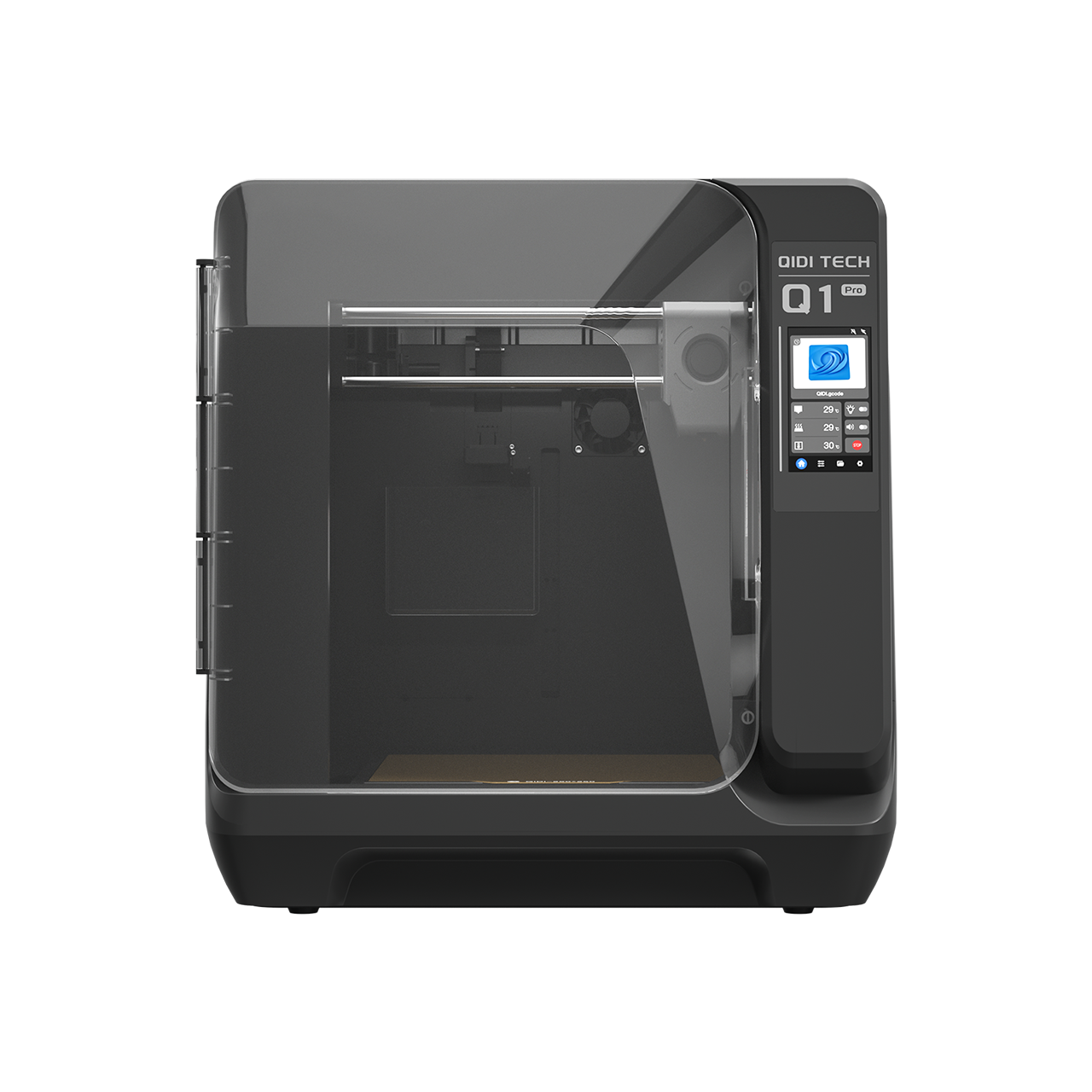
For ASA to reach its full potential, a heated chamber is not just a luxury; it is a technical necessity. We recommend a chamber temperature between 40°C and 70°C to ensure proper layer fusion. Modern prosumer machines like the QIDI Q2 3D Printer feature second-gen active chamber heating (up to 65°C), which effectively eliminates internal stresses during the print.
In contrast, PETG is famously easy to print. It requires no enclosure and has excellent layer adhesion. If you are working on a large-scale project that doesn't face extreme mechanical stress—such as a custom birdhouse or a decorative fence cap—the speed and reliability of PETG Rapido (capable of up to 300mm/s) might outweigh the long-term benefits of ASA.
Advanced Material Strategies: Composites and Recycled Plastics
For those seeking even higher performance, the industry is moving toward carbon fiber (CF) reinforcements. Research published in ScienceDirect highlights how adding carbon fiber to polymers can significantly enhance tensile strength and reduce the environmental impact by utilizing recycled plastic waste.
While pure ASA is excellent for UV, an ASA-CF composite provides even greater dimensional stability and stiffness, which is ideal for industrial-grade outdoor structures. However, for most garden applications, the standard ASA Filament provides the best balance of capability per dollar.
Surface Preparation and Post-Processing
Even the best filament can benefit from proper post-processing. For outdoor parts, the goal is to seal the "valleys" between layers where moisture and microorganisms can settle.
- Sanding: ASA sands much more cleanly than PETG. PETG tends to "gum up" or melt under the friction of high-speed sanding.
- Chemical Smoothing: ASA can be vapor-smoothed using acetone. This creates a monolithic, non-porous surface that is exceptionally resistant to water ingress. PETG does not react to acetone, making it harder to seal chemically.
- Painting: If you require a specific color or extra protection, ASA's chemical resistance allows it to bond well with automotive-grade primers and UV-resistant topcoats.
For more details on choosing between similar materials, see our guide on ABS vs ASA for Outdoor Structural Mounts.
Decision Matrix: ASA or PETG?
Choosing the right material depends on your specific "friction points." Use the following framework to decide.
Scenario A: The High-Stakes Structural Part
- Application: Hose reels, heavy-duty brackets, security camera mounts.
- Environment: Full sun, high heat (35°C+), year-round exposure.
- Recommendation: Use ASA. The investment in a printer with active chamber heating, such as the QIDI Q2 3D Printer, ensures these parts won't warp during printing or fail in the field.
Scenario B: The Rapid Prototype or Seasonal Item
- Application: Seed markers, temporary garden decor, shaded tool organizers.
- Environment: Partial shade, mild temperatures, short-term use (1–2 seasons).
- Recommendation: Use PETG Rapido. The ease of use and lower cost make it highly efficient for items that don't need to last a decade.
Summary of Key Takeaways
- UV Resistance: ASA is chemically superior for direct sunlight due to its acrylic ester component. PETG will eventually yellow and embrittle.
- Thermal Stability: ASA's higher glass transition temperature prevents sagging in high-heat outdoor environments.
- Printability: PETG is significantly easier to print on open-frame machines. ASA requires a heated chamber (40-70°C) to prevent warping and ensure structural integrity.
- Durability: For load-bearing garden fixtures, ASA's creep resistance justifies the higher complexity of the print process.
By matching your material choice to the environmental stressors of your project, you can move from "hobbyist" prints that fail to "industrial-grade" fixtures that endure. For those just starting with engineering materials, ensuring your hardware is capable of handling the thermal demands of ASA is the first step toward outdoor success.
Disclaimer: This article is for informational purposes only. Mechanical failures in outdoor fixtures can lead to property damage or injury. Always test your 3D printed parts in a safe, controlled manner before deploying them in high-load or safety-critical applications. Consult a structural engineer for large-scale outdoor installations.
References
- ASA vs PETG: Choosing the Right Material for Long-Term Outdoor Reliability
- The Chemistry of Sunlight: Why UV Resistance Matters
- Comparative UV Stability Table
- Mechanical Retention and Creep Resistance
- Load-Bearing Scenarios
- The Printing Gap: Ease of Use vs. Performance
- The Enclosure Requirement
- Advanced Material Strategies: Composites and Recycled Plastics
- Surface Preparation and Post-Processing
- Decision Matrix: ASA or PETG?
- Scenario A: The High-Stakes Structural Part
- Scenario B: The Rapid Prototype or Seasonal Item
- Summary of Key Takeaways
- References
Prodotti consigliati