
Is PETG Strong Enough for High-Load Wall-Mounted Brackets?

Share this post
Is PETG Strong Enough for High-Load Wall-Mounted Brackets?

Is PETG Strong Enough for High-Load Wall-Mounted Brackets?

For many prosumers and small shop owners, PETG (Polyethylene Terephthalate Glycol) is often viewed as the "Goldilocks" filament—offering more durability than PLA without the printing headaches of ABS. However, when the project involves a high-load wall-mounted bracket—perhaps for a heavy workstation shelf or a heavy-duty tool rack—the question shifts from "Can it print?" to "Will it hold?"

Assessing whether PETG is fit for structural duty requires looking past the marketing specs and into the mechanical reality of how these polymers behave under sustained stress. Based on our observations of functional part failures in shop environments, the answer isn't a simple yes or no; it depends on your understanding of yield strength, creep, and geometry optimization.

A professional workshop scene showing a heavy-duty wall-mounted shelf supported by large, 3D-printed industrial-style brackets. The brackets have a clean, matte finish and are holding heavy power tools.

The Mechanical Profile: Tensile Strength vs. Yield Strength

When selecting a material, many users look at the Ultimate Tensile Strength (UTS). For standard PETG, this is typically around 50 MPa. However, in functional engineering, the UTS is a "catastrophic failure" metric—it tells you when the part snaps. For wall brackets, the more critical metric is the yield strength.

In real-world bracket applications, we observe that PETG's yield strength—the point where it begins to deform permanently—is approximately 45 MPa. According to a technical comparison by Ultimaker, while PETG offers excellent impact resistance, its raw tensile strength is often lower than PLA, meaning it will flex before it breaks.

The "Silent Killer" of PETG Brackets: Creep

The most common failure mode for PETG in high-load scenarios isn't a sudden crack; it is a phenomenon known as "creep." Creep is the tendency of a solid material to move slowly or deform permanently under the influence of persistent mechanical stresses.

Experienced users and material scientists note that PETG exhibits noticeable creep at room temperature when loaded above 30% of its yield strength for extended periods. This means if you design a bracket to hold 100 lbs and you are utilizing 40% of the material's yield capacity, the shelf may look perfect on day one, but it will gradually sag over several months.

To mitigate this, we recommend a conservative safety factor of 4-5 for wall-mounted brackets. This accounts for:

  • Layer Adhesion Variability: FDM parts are inherently anisotropic, meaning they are weaker between layers.
  • Stress Concentrations: Sharp corners at mounting holes or the "L" junction of a bracket can multiply local stress.
  • Environmental Factors: Fluctuations in temperature can accelerate the creep process.

Optimization Strategies for Structural Integrity

If you choose to use PETG for a high-load application, you cannot rely on default slicer settings. You must optimize the geometry and the printing process to maximize the material's potential.

1. Geometry and Orientation

Geometry optimization is critical. Adding fillets (rounded internal corners) at stress points and orienting layers perpendicular to primary load vectors can increase effective strength by an estimated 30-40% (based on common shop heuristics for FDM part design).

  • Avoid the "Z-Axis Trap": Never print a bracket so that the weight pulls the layers apart (tension along the Z-axis). The load should ideally put the layers in compression or align with the continuous extrusions of the X-Y plane.
  • Fillets over Chamfers: While chamfers look "industrial," fillets distribute stress more evenly, preventing the "notch effect" where cracks typically start.

2. Moisture Control

PETG is hygroscopic, meaning it absorbs moisture from the air. Moist filament causes more than just aesthetic stringing. PETG printed from damp filament can lose 15-20% of its impact resistance and exhibit premature cracking under cyclic loading. For structural parts, always dry your filament at 65°C for 5-8 hours before printing.

When to Step Up: PETG-GF and Engineering Materials

For serious makers moving toward prosumer workflows, there comes a point where standard PETG reaches its limit. If your load calculations suggest you are approaching that 30% yield threshold, it is time to consider reinforced or higher-performance materials.

The PETG-GF Advantage

PETG-GF is a glass-fiber reinforced variant that significantly changes the performance profile. By compounding PETG with 5% short-cut glass fibers, the material gains:

  • Higher Tensile Strength: 51 MPa (X-Y), providing a higher ceiling for loading.
  • Increased Rigidity: A Tensile Modulus of 2400 MPa, which drastically reduces the tendency to flex or creep under load.
  • Dimensional Stability: The fibers help prevent warping during the print and maintain the part's shape under thermal stress.

Using a reinforced material like PETG-GF allows you to maintain the ease of PETG printing while achieving the structural reliability required for industrial-grade fixtures.

Hardware Requirements

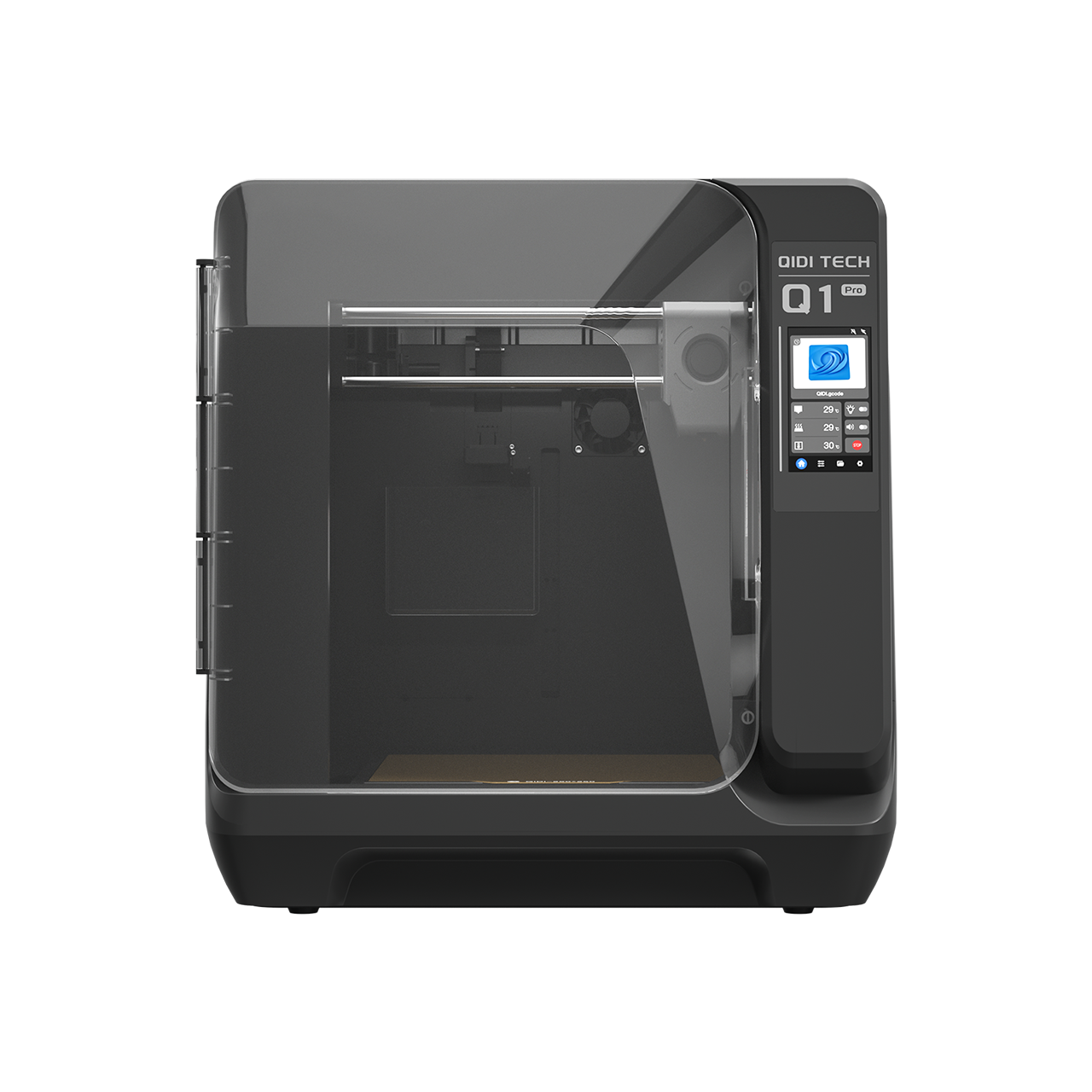
Printing these advanced materials requires hardware capable of maintaining consistent temperatures and resisting abrasion. The QIDI Max4 3D Printer, with its active chamber heating and hardened steel nozzle options, is designed for exactly this transition. A heated chamber is vital for materials like ABS or ASA, but even for PETG, it ensures better layer fusion and reduced internal stress.

The QIDI Max4 3D Printer in a professional setting, printing a large-scale structural component. The large build volume and robust frame are visible.

Practical Checklist for High-Load Brackets

Before committing to a 3D-printed bracket for a high-load application, run through this checklist:

  1. Calculate the Load: Determine the maximum weight the bracket will ever see.
  2. Apply the Safety Factor: Multiply that weight by 5. If the material's yield strength can't handle that theoretical load, upgrade the material.
  3. Optimize Orientation: Ensure the load path does not rely on Z-axis layer adhesion.
  4. Dry Your Filament: Use a dedicated dryer or the QIDI Max4 3D Printer heated chamber to ensure the material is moisture-free.
  5. Test a Prototype: Print one bracket and load it to failure in a safe environment to validate your design.

By following these professional-grade steps, you can confidently use PETG or its reinforced variants to build a safer, more capable workspace.


Disclaimer: This article is for informational purposes only. Wall-mounted brackets for heavy loads involve significant safety risks. Failure of a bracket can result in property damage or personal injury. Always consult with a structural engineer for critical applications, and never exceed the weight limits of your mounting hardware or wall structure. 3D-printed parts can have hidden defects; use them with caution in safety-critical scenarios.

FAQ

당사의 3D 프린팅 장비와 서비스에 대한 가장 궁금한 질문에 대한 답변을 찾아보세요.

3D 프린팅은 디지털 파일로부터 3차원 물체를 제작하는 과정입니다. 플라스틱이나 금속과 같은 재료를 겹겹이 쌓아 최종 제품을 제작합니다. 이 혁신적인 기술은 맞춤형 제작과 신속한 프로토타입 제작을 가능하게 합니다.

저희는 모든 제품에 대해 빠르고 안정적인 배송 옵션을 제공합니다. 주문이 접수되면 배송 진행 상황을 확인할 수 있는 추적 번호를 보내드립니다. 배송 시간은 지역에 따라 달라질 수 있습니다.

저희 3D 프린터는 제조 결함에 대한 1년 보증을 제공합니다. 연장 보증 옵션을 구매하실 수 있습니다. 자세한 내용은 보증 정책을 참조하세요.

네, 저희는 번거로움 없는 반품 정책을 시행하고 있습니다. 구매하신 상품에 만족하지 못하시면 30일 이내에 반품하시면 전액 환불해 드립니다. 상품이 원래 상태 그대로인지 확인해 주세요.

물론입니다! 저희 전담 지원팀이 모든 질문과 문제를 도와드립니다. 이메일이나 전화로 연락하시면 신속한 지원을 받으실 수 있습니다. 또한, 다양한 정보를 제공하는 온라인 리소스 센터도 운영하고 있습니다.

여전히 질문이 있습니까?

문의사항이 있으시면 언제든지 연락주세요.