
PC vs ASA: Choosing Materials for High-Heat Appliance Mounts

Share this post
PC vs ASA: Choosing Materials for High-Heat Appliance Mounts

PC vs ASA: Choosing Materials for High-Heat Appliance Mounts

The transition from hobbyist 3D printing to functional, industrial-grade production is often defined by a single factor: thermal management. In a workshop or small-scale manufacturing environment, the stakes shift from aesthetic "benchies" to parts that must survive the rigors of real-world use. When designing mounts or brackets for household appliances—such as those positioned near ovens, dishwashers, or heating vents—standard materials like PLA or PETG often fail, leading to warped components and compromised safety.

Choosing between Polycarbonate (PC) and Acrylonitrile Styrene Acrylate (ASA) is a critical decision for any prosumer. While both offer superior heat resistance compared to entry-level filaments, their mechanical behaviors and printing requirements differ significantly. This guide analyzes these two heavyweights to help you select the right material for high-stress, high-heat applications.

Understanding the Thermal Threshold: HDT vs. Glass Transition

To make an informed material choice, one must understand Heat Deflection Temperature (HDT). While the glass transition temperature ($T_g$) marks where a polymer begins to soften, the HDT is the temperature at which a polymer deforms under a specific load.

For appliance mounts, the ambient temperature is rarely static. An oven exterior or a dishwasher’s steam vent can create localized "hot zones."

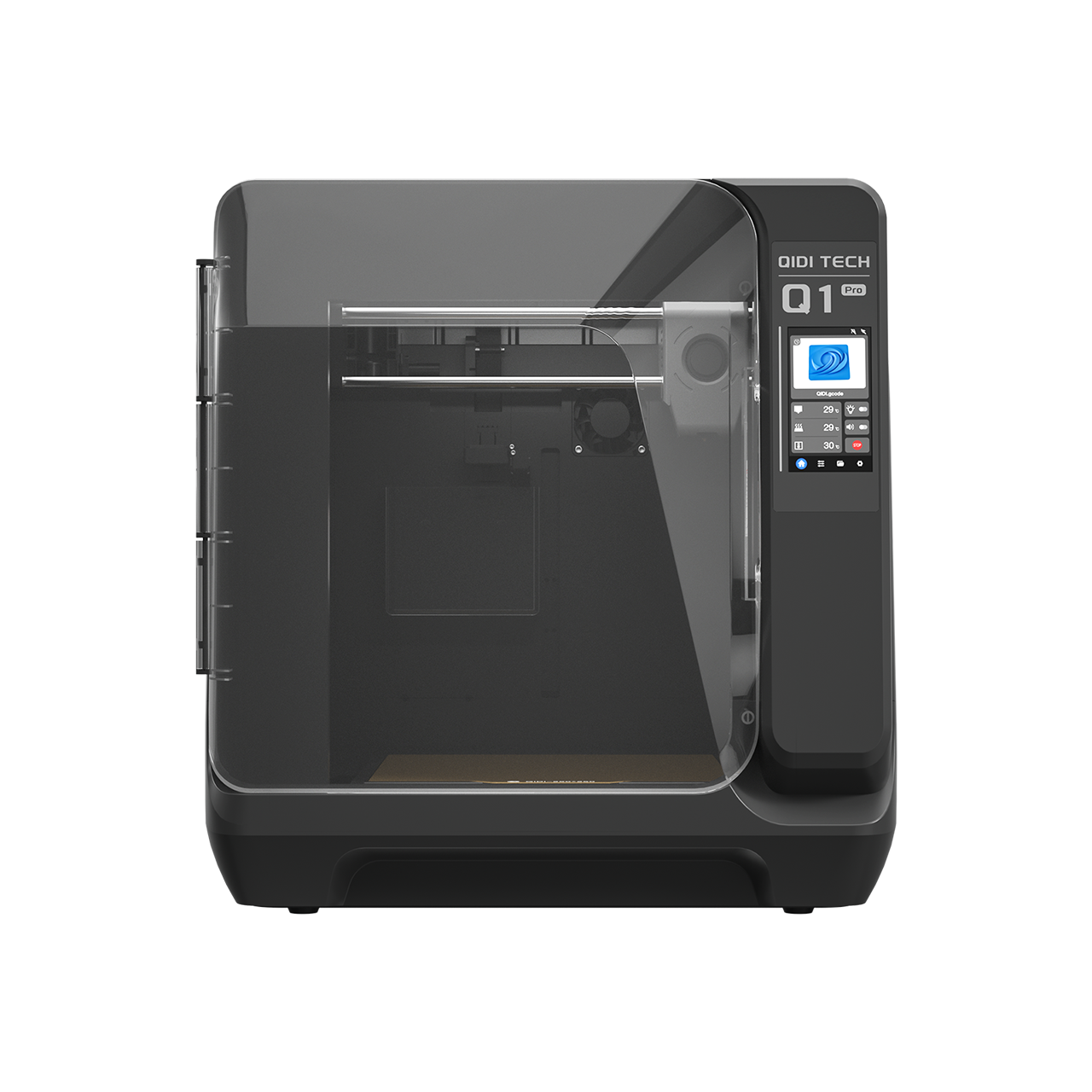
A high-performance 3D printer in a professional workshop setting, showing a clean, industrial aesthetic with focus on the heated chamber.

Polycarbonate (PC): The Industrial Heavyweight

Polycarbonate is often regarded as the "gold standard" for functional FDM printing due to its incredible impact resistance and high thermal ceiling. PC can withstand high-stress environments and shorten prototyping phases for end-use parts.

The Challenge of Internal Stress

The primary hurdle with PC is not its strength, but its tendency to warp. PC has a high shrink rate upon cooling. If the ambient temperature around the part drops too quickly, internal stresses build up, leading to layer separation or "lifting" from the print bed.

To master PC, a controlled environment is non-negotiable. Based on patterns from technical support and industrial repair benches (not a controlled lab study), the most common failure point for PC prints is an under-heated chamber. For successful adhesion and structural integrity, a chamber temperature consistently above 60°C is required.

Professional-grade systems like the QIDI Max4 3D Printer address this with active chamber heating and massive build volumes (390x390x340 mm), allowing for the production of large-scale appliance mounts that remain dimensionally stable throughout the print cycle.

PC Printing Protocol for High-Heat Mounts:

  • Pre-heating: You must pre-heat the chamber until it reaches a stable 60°C throughout before starting. This ensures the entire internal air volume and the machine frame have reached thermal equilibrium.
  • Cooling Management: Set cooling fans to 0–20%. Excessive cooling is the enemy of PC layer adhesion.
  • Speed Control: Maintain speeds between 40–80 mm/s. While modern printers are capable of higher speeds, PC requires time for the polymer chains to bond effectively at the interface.

ASA: The Resilient All-Rounder

If PC is the heavyweight champion, ASA is the versatile decathlete. ASA (Acrylonitrile Styrene Acrylate) was developed as an alternative to ABS, offering similar mechanical properties but with significantly better UV resistance and weatherability.

Why ASA Wins on "Printability"

While PC offers a higher HDT, ASA is generally more "forgiving." It requires a chamber temperature of 40–60°C to minimize edge curling. For prosumers using machines like the QIDI Q2 3D Printer, which features a second-gen 65°C active chamber heating system, ASA becomes as easy to print as PETG but with the thermal benefits of an industrial polymer.

Close-up of a 3D printed functional bracket mounted near a heat-emitting appliance, illustrating the material's ability to maintain shape under stress.

PC-ABS: The Hybrid Solution

For users who need the heat resistance of PC but the ease of processing of ABS/ASA, PC/ABS-FR Filament offers a compelling middle ground. This alloy combines the high HDT of polycarbonate with the fluid melt characteristics of ABS.

The "FR" designation stands for Flame Retardant. In the context of household appliances, this adds a critical layer of safety. QIDI’s PC/ABS-FR can reach a UL94 V-0 flame-retardant grade (at 2mm thickness), meaning it is self-extinguishing. This is a vital feature for mounts near electrical components or heat sources where a malfunction could lead to a fire hazard.

Application Scenarios: Where to Use What?

Selecting the right material requires matching the polymer to the specific "micro-climate" of the appliance.

Scenario A: The Dishwasher Rack or Vent Mount

  • Environment: High humidity, chemical exposure (detergents), temperatures reaching ~70°C.
  • Recommendation: ASA. While PC has the heat resistance, ASA’s chemical resistance and lower moisture absorption make it more durable for long-term exposure to steam and cleaning agents. For more on this, see our guide on replacing dishwasher rack clips.

Scenario B: Oven-Adjacent Wall Mounts

  • Environment: Dry heat, potential for spikes above 90°C, high mechanical load (holding heavy tablets or kitchen tools).
  • Recommendation: PC or PC/ABS-FR. The higher HDT is necessary here to prevent the mount from sagging over time. The structural rigidity of PC ensures the mount won't "creep" under the weight of the device it holds.

Scenario C: Outdoor Utility Mounts (HVAC Units)

  • Environment: Direct sunlight, extreme temperature swings, rain.
  • Recommendation: ASA. The UV stability of ASA is the deciding factor. PC will eventually yellow and become brittle when exposed to constant sunlight.

Post-Processing for Maximum Performance

To truly bridge the gap between "printed part" and "engineered component," post-print annealing is a high-value technique. Annealing involves heating the printed part in a controlled environment to relieve internal stresses and allow the polymer chains to reorganize.

For PC parts, annealing at 110–120°C for 2–4 hours can increase the HDT by an estimated 10–15°C. However, a common "gotcha" is dimensional change. During annealing, parts may shrink slightly along the print lines and expand across them.

System Maturity: The Role of the Printer

The debate between PC and ASA often comes down to the hardware. A printer without an enclosed, heated chamber will struggle with both materials. Prosumers should look for "system maturity"—the combination of validated material profiles and hardware capable of maintaining the necessary thermal environment.

The QIDI Max4 3D Printer and QIDI Q2 3D Printer represent this maturity. By integrating active chamber heating, these machines remove the "luck" factor from high-temp printing. Instead of spending hours tuning for warp prevention, users can focus on the engineering of the part itself.

Summary of Key Takeaways

  1. Check the HDT: Ensure your material’s Heat Deflection Temperature is at least 20°C higher than the expected environment.
  2. Chamber Temperature is King: PC requires >60°C; ASA requires 40–60°C. Never skip the 30-minute pre-heat for PC.
  3. Prioritize Safety: For appliance mounts near electronics, use flame-retardant alloys like PC/ABS-FR Filament.
  4. Match Material to Environment: Use ASA for UV and moisture; use PC for pure heat and impact strength.
  5. Account for Creep: In high-heat zones, parts will deform over time if the load is high. Design with thicker walls and higher infill (40%+) to increase structural mass.

By applying these industrial principles to your household repairs and custom mounts, you ensure that your 3D printed solutions are not just temporary fixes, but reliable, long-term components.


Disclaimer: This article is for informational purposes only. 3D printed parts used near high-heat appliances or electrical components carry inherent risks of failure or fire. Always consult the appliance manufacturer’s safety guidelines and ensure all printed parts comply with local fire safety codes.

FAQ

당사의 3D 프린팅 장비와 서비스에 대한 가장 궁금한 질문에 대한 답변을 찾아보세요.

3D 프린팅은 디지털 파일로부터 3차원 물체를 제작하는 과정입니다. 플라스틱이나 금속과 같은 재료를 겹겹이 쌓아 최종 제품을 제작합니다. 이 혁신적인 기술은 맞춤형 제작과 신속한 프로토타입 제작을 가능하게 합니다.

저희는 모든 제품에 대해 빠르고 안정적인 배송 옵션을 제공합니다. 주문이 접수되면 배송 진행 상황을 확인할 수 있는 추적 번호를 보내드립니다. 배송 시간은 지역에 따라 달라질 수 있습니다.

저희 3D 프린터는 제조 결함에 대한 1년 보증을 제공합니다. 연장 보증 옵션을 구매하실 수 있습니다. 자세한 내용은 보증 정책을 참조하세요.

네, 저희는 번거로움 없는 반품 정책을 시행하고 있습니다. 구매하신 상품에 만족하지 못하시면 30일 이내에 반품하시면 전액 환불해 드립니다. 상품이 원래 상태 그대로인지 확인해 주세요.

물론입니다! 저희 전담 지원팀이 모든 질문과 문제를 도와드립니다. 이메일이나 전화로 연락하시면 신속한 지원을 받으실 수 있습니다. 또한, 다양한 정보를 제공하는 온라인 리소스 센터도 운영하고 있습니다.

여전히 질문이 있습니까?

문의사항이 있으시면 언제든지 연락주세요.