
Heat-Safe Printing for Espresso Machine Tool Organizers

Share this post
Heat-Safe Printing for Espresso Machine Tool Organizers

The High-Heat Challenge of the Espresso Environment

If you have ever left a standard PLA print on the top tray of an espresso machine, you likely discovered a frustrating reality: the "cup warmer" area is not just warm; it is a hostile environment for most hobbyist plastics. In our observations of prosumer coffee setups, the ambient temperature directly above a dual-boiler machine can consistently hover between 55°C and 70°C.

At these temperatures, standard Polylactic Acid (PLA) reaches its glass transition phase. It doesn't melt, but it softens enough to "creep"—a phenomenon where the material slowly deforms under the constant weight of heavy metal tampers, precision baskets, or portafilters. For the serious maker, the goal isn't just to print an organizer that looks good on day one, but one that maintains its dimensional integrity after months of heat cycles.

Understanding the technical requirements of these materials is the first step toward building a professional-grade coffee station. As noted in the Purdue University Libraries 3D Printing Glossary, materials like ABS and advanced composites are specifically designed to withstand these higher thermal stresses.

Why Standard Filaments Fail Near Boilers

To understand why we must move beyond PLA, we have to look at the Heat Deflection Temperature (HDT). The HDT is the temperature at which a polymer deforms under a specified load.

In a typical espresso tool organizer scenario, we aren't just dealing with heat; we are dealing with "static load." A stainless steel tamper can weigh 500g or more. When placed on a shelf that has been softened by the 65°C radiant heat of a boiler, the plastic will eventually sag.

The Material Hierarchy for Coffee Gear

  1. PLA (Avoid): With an HDT typically around 50-55°C, it is unsuitable for any part in direct contact with or directly above a coffee machine.
  2. PETG (The Minimum Baseline): A significant step up from PLA. PETG-Tough Filament offers better impact resistance and a higher thermal ceiling, making it suitable for accessories kept near the machine but perhaps not sitting directly on the boiler lid.
  3. ASA/ABS (The Professional Standard): These materials are favored for their high HDT (often >85°C). ASA, in particular, is the preferred choice for coffee gear due to its matte finish, which elegantly hides the white stress marks that often plague darker-colored plastics.
  4. Carbon Fiber Composites (The "End-Game"): For those who want zero-compromise parts, carbon fiber reinforced filaments like PET-CF Filament provide exceptional dimensional stability and chemical resistance to coffee oils.

A professional-grade espresso tool organizer printed in matte black ASA, holding a heavy tamper and portafilter, sitting on a warm espresso machine.

Engineering a Solution: ASA vs. PET-CF

When choosing between high-performance materials, we often look at two factors: thermal stability and ease of post-processing.

The Case for ASA

ASA (Acrylonitrile Styrene Acrylate) is essentially the weather-resistant sibling of ABS. In the context of a coffee bar, its primary advantage is aesthetics and heat resistance. Unlike PETG, which can be "stringy," ASA prints with a beautiful matte texture that matches the powder-coated finish of many premium espresso machines. If you are debating between these two, our guide on PC vs ASA dives deeper into the mechanical trade-offs.

The Case for PET-CF

For items that might come into contact with wet puck screens or damp portafilters, PET-CF Filament is often superior. While pure Nylon is famous for its strength, it is also notoriously "hygroscopic"—meaning it absorbs moisture and can swell or warp. PET-CF provides the chemical resistance and high-temperature moisture stability required in a steam-heavy environment without the warping risks of pure Nylon. According to research published in ScienceDirect, the addition of carbon fiber significantly improves the mechanical properties and reduces the environmental impact by enabling more durable, long-lasting industrial-grade parts.

Critical Printing Techniques for Large Organizers

Printing high-temp materials requires more than just a hot nozzle; it requires environment control. Large organizer bases are prone to "warping" or "corner lifting" because the top layers cool and contract faster than the layers stuck to the heated bed.

Pre-Heating the Chamber

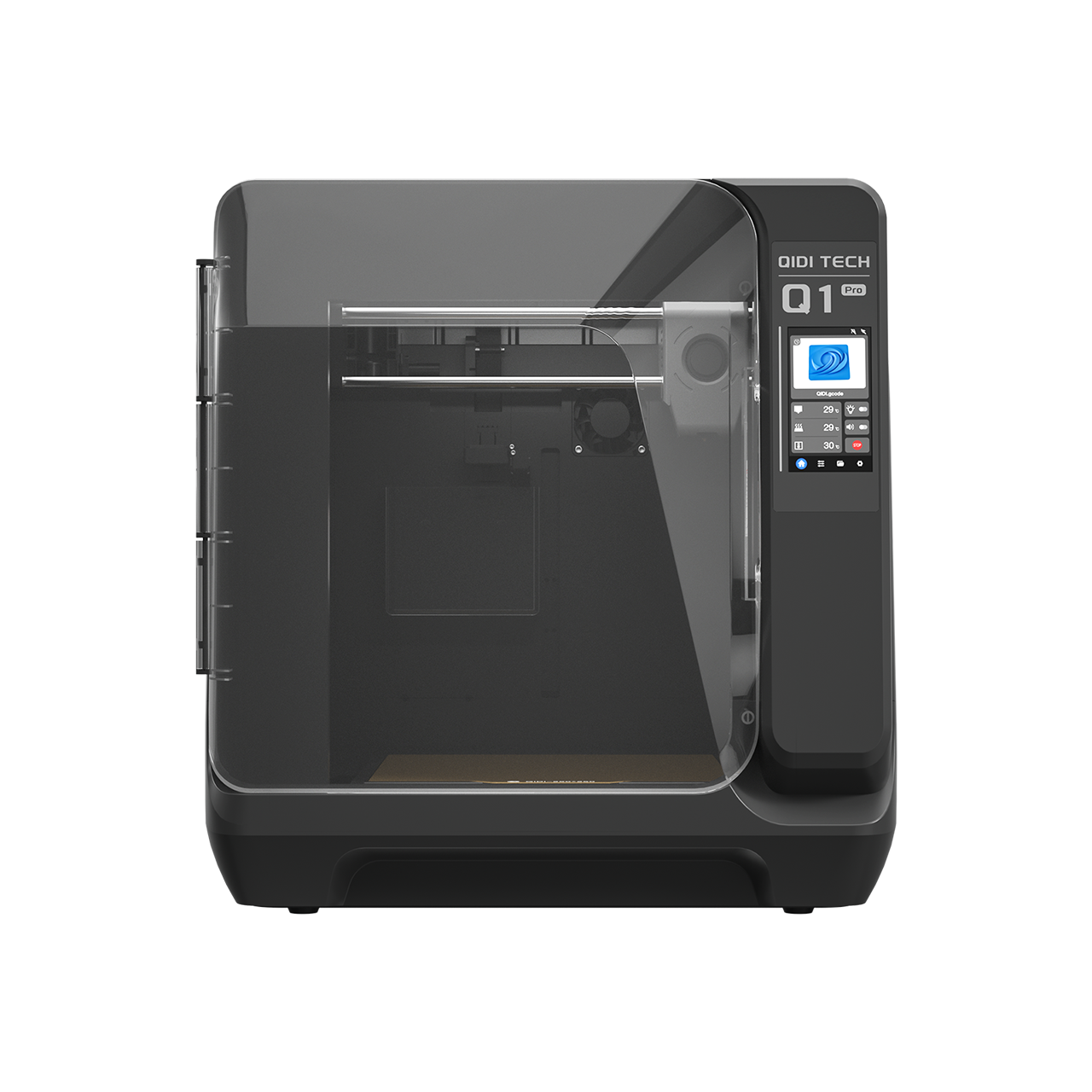
We have found that the most common cause of failure in ASA or ABS prints is a cold environment. To succeed, you should utilize a printer with an enclosed design. Before starting a large print, pre-heat the bed to 100°C and let the chamber reach an internal temperature of at least 40-50°C. This reduces the thermal gradient and prevents the part from pulling away from the build plate.

The "Brim" and Bed Adhesion

For large, flat organizers, a "brim" (an extra wide first layer) is non-negotiable. It provides the necessary surface area to counteract the shrinking forces of high-temp plastics. Additionally, using a specialized adhesive or a PEI sheet is essential for materials like ABS Rapido Filament, which requires high inter-layer adhesion to withstand mechanical stress.

Advanced Material Selection: PA12-CF

For the "Serious Maker" who is also perhaps an engineer, PA12-CF Filament offers the pinnacle of performance. It features a low coefficient of friction and self-lubricating properties, which are excellent if you are designing a sliding drawer for coffee pods or a rotating tamper stand.

Carbon fiber reinforced materials significantly improve heat resistance and dimensional stability. However, they are sensitive to moisture. We recommend drying these filaments at 80-100°C for 4-6 hours before printing to ensure a bubble-free, professional finish.

QIDI Orange PETG-Tough 3D Printing Filament

Practical Checklist for Success

When you are ready to upgrade your coffee station with 3D printed gear, follow this professional workflow:

  • Material Selection: Use ASA for aesthetics and dry heat; use PET-CF Filament if the part will be frequently wet or oily.
  • Design for Heat: Avoid long, unsupported horizontal spans. Use ribs or gussets to reinforce areas that will hold heavy weights.
  • Chamber Management: Ensure your printer is fully enclosed. If you are printing a large base, pre-heat the chamber to 40°C+.
  • Post-Processing: For maximum strength, consider "annealing" your carbon fiber parts. Placing a PA12-CF Filament print in an oven at 80°C for a few hours can further align the polymer chains and increase heat resistance.

By moving beyond entry-level materials and embracing engineering-grade filaments, you can create custom barista tools that are not just functional, but indistinguishable from high-end commercial accessories. Whether you are building a simple tamper seat or a complex under-desk holder for your coffee scale, the right material choice is the difference between a permanent solution and a warped piece of plastic.


Disclaimer: This article is for informational purposes only. When using 3D printed parts near heat sources or electrical appliances, ensure they do not obstruct ventilation or create fire hazards. Always consult your printer and material safety data sheets (MSDS) for proper handling.

Sources

FAQ

당사의 3D 프린팅 장비와 서비스에 대한 가장 궁금한 질문에 대한 답변을 찾아보세요.

3D 프린팅은 디지털 파일로부터 3차원 물체를 제작하는 과정입니다. 플라스틱이나 금속과 같은 재료를 겹겹이 쌓아 최종 제품을 제작합니다. 이 혁신적인 기술은 맞춤형 제작과 신속한 프로토타입 제작을 가능하게 합니다.

저희는 모든 제품에 대해 빠르고 안정적인 배송 옵션을 제공합니다. 주문이 접수되면 배송 진행 상황을 확인할 수 있는 추적 번호를 보내드립니다. 배송 시간은 지역에 따라 달라질 수 있습니다.

저희 3D 프린터는 제조 결함에 대한 1년 보증을 제공합니다. 연장 보증 옵션을 구매하실 수 있습니다. 자세한 내용은 보증 정책을 참조하세요.

네, 저희는 번거로움 없는 반품 정책을 시행하고 있습니다. 구매하신 상품에 만족하지 못하시면 30일 이내에 반품하시면 전액 환불해 드립니다. 상품이 원래 상태 그대로인지 확인해 주세요.

물론입니다! 저희 전담 지원팀이 모든 질문과 문제를 도와드립니다. 이메일이나 전화로 연락하시면 신속한 지원을 받으실 수 있습니다. 또한, 다양한 정보를 제공하는 온라인 리소스 센터도 운영하고 있습니다.

여전히 질문이 있습니까?

문의사항이 있으시면 언제든지 연락주세요.