
 Q2
Q2




Best Filament for Impact Resistance in Door Handles and Latches


Understanding the Mechanical Demands of Door Hardware
Door handles and latches are among the most frequently used mechanical components in any building. Unlike static decorative items, these parts are subjected to dynamic loading, rapid acceleration, and sudden deceleration—commonly known as impact. When a door is slammed or a latch is flicked, the material must absorb a significant amount of kinetic energy in a fraction of a second.
In the world of 3D printing, the transition from hobbyist aesthetics to functional reliability requires a shift in material selection. While PLA is often praised for its ease of use, its brittle nature makes it a poor candidate for high-impact applications. Under stress, PLA tends to shatter, potentially leaving a user with a sharp, broken handle or a non-functional exit. To achieve professional-grade durability, we must look toward polymers engineered for toughness and energy absorption.
High-Performance Materials for Impact Resistance
Selecting the right filament involves balancing mechanical properties with the capabilities of your hardware. For serious makers and small shop owners, the following materials represent the current standard for functional household repairs.
1. PC/ABS-FR: The Industrial Standard for Security
PC/ABS (Polycarbonate/Acrylonitrile Butadiene Styrene) alloys combine the heat resistance and toughness of PC with the processability of ABS. The PC/ABS-FR Filament is particularly effective for institutional or high-traffic settings because it also includes flame-retardant properties.
- Impact Strength: This material offers a measured impact strength of approximately 19.90 KJ/m², providing a significant safety margin against brittle fracture.
- Heat Resistance: With a heat deflection temperature of 102°C, it remains stable even in sun-drenched entryways or near heat sources.
- Safety: The UL94 V-0 flame-retardant rating ensures the part is self-extinguishing, a critical requirement for commercial door hardware.

2. TPU95A-HF: Maximum Energy Absorption
For handles that experience frequent, violent impacts—such as those on heavy workshop doors—a flexible material like TPU95A-HF Filament is often the most effective solution. Unlike rigid plastics, TPU (Thermoplastic Polyurethane) acts as a dampener.
- Resilience: The high elasticity of TPU95A-HF allows it to deform and return to its original shape, effectively "eating" the energy of an impact.
- Grip and Comfort: The slightly rubberized texture provides superior ergonomics for handles compared to cold, hard plastics.
- Limitation: While excellent for handles, TPU may lack the dimensional stability required for internal latch mechanisms that must remain rigid to operate correctly.
3. ABS Rapido: The Durable Workhorse
For internal components like latch bolts and gear housings, ABS Rapido Filament offers a balance of durability and speed. Modern ABS formulations have significantly improved inter-layer adhesion, which was historically the "Achilles' heel" of 3D-printed functional parts.
- Z-Axis Strength: ABS Rapido is engineered to reduce the risk of layer separation, ensuring that the part is nearly as strong in the vertical direction as it is in the horizontal plane.
- Chemical Resistance: It withstands common household cleaners and oils, making it suitable for kitchen and garage environments.
Technical Requirements for Printing Industrial Polymers
Moving beyond entry-level materials requires a printer capable of managing the thermal and physical demands of engineering-grade filaments. A standard open-frame printer will often fail to produce reliable PC/ABS or ABS parts due to warping and poor layer bonding.
The Role of the Heated Chamber
For ABS and PC/ABS, a chamber temperature between 60°C and 80°C is highly recommended. This heat helps release residual internal stresses during the molding process, preventing the part from pulling away from the build plate or cracking between layers.
Nozzle and Extrusion Considerations
Flame-retardant additives and composite reinforcements can be abrasive. We recommend using a hardened steel nozzle to prevent the orifice from wearing out, which would otherwise lead to inconsistent extrusion and weakened parts.
Design Strategies for Impact-Resistant Hardware
Even the best material will fail if the design is fundamentally flawed. When repairing or replacing door hardware, we suggest several geometric optimizations to distribute stress.
- Filleted Corners: Sharp 90-degree angles act as "stress concentrators" where cracks are likely to start. Replacing these with rounded fillets (minimum 3mm radius) can significantly increase the part's longevity.
- Increased Cross-Sections: For latches, thickening the area where the bolt meets the housing by even 20% can provide a disproportionate increase in impact resistance.
- Annealing: For materials like PETG or certain ABS blends, a post-processing heat treatment (annealing) can be highly effective. For example, annealing PETG Rapido prints at 80–100°C for 4–8 hours can relieve internal stresses and improve impact strength.

Material Selection Decision Framework
To help you choose the right filament for your specific repair, consider the following scenarios based on our modeling of common household needs.
| Requirement | Recommended Material | Key Advantage |
|---|---|---|
| Indoor Privacy Latch | ABS Rapido Filament | Cost-effective, high Z-axis strength |
| High-Traffic Handle | PC/ABS-FR Filament | Exceptional toughness, fire safety |
| Workshop Door Bumper | TPU95A-HF Filament | Maximum vibration and impact damping |
| Outdoor Gate (Cold Climate) | PEBA 95A (or specialized TPU) | Maintains flexibility at -40°C |
Case Study: Large-Scale Hardware
For those utilizing larger machines like the Max4, the 390x390x340mm build volume allows for the production of full-sized door hardware as a single piece. Printing a long handle as one continuous part, rather than in segments, eliminates the seams that often serve as the primary failure points under impact.
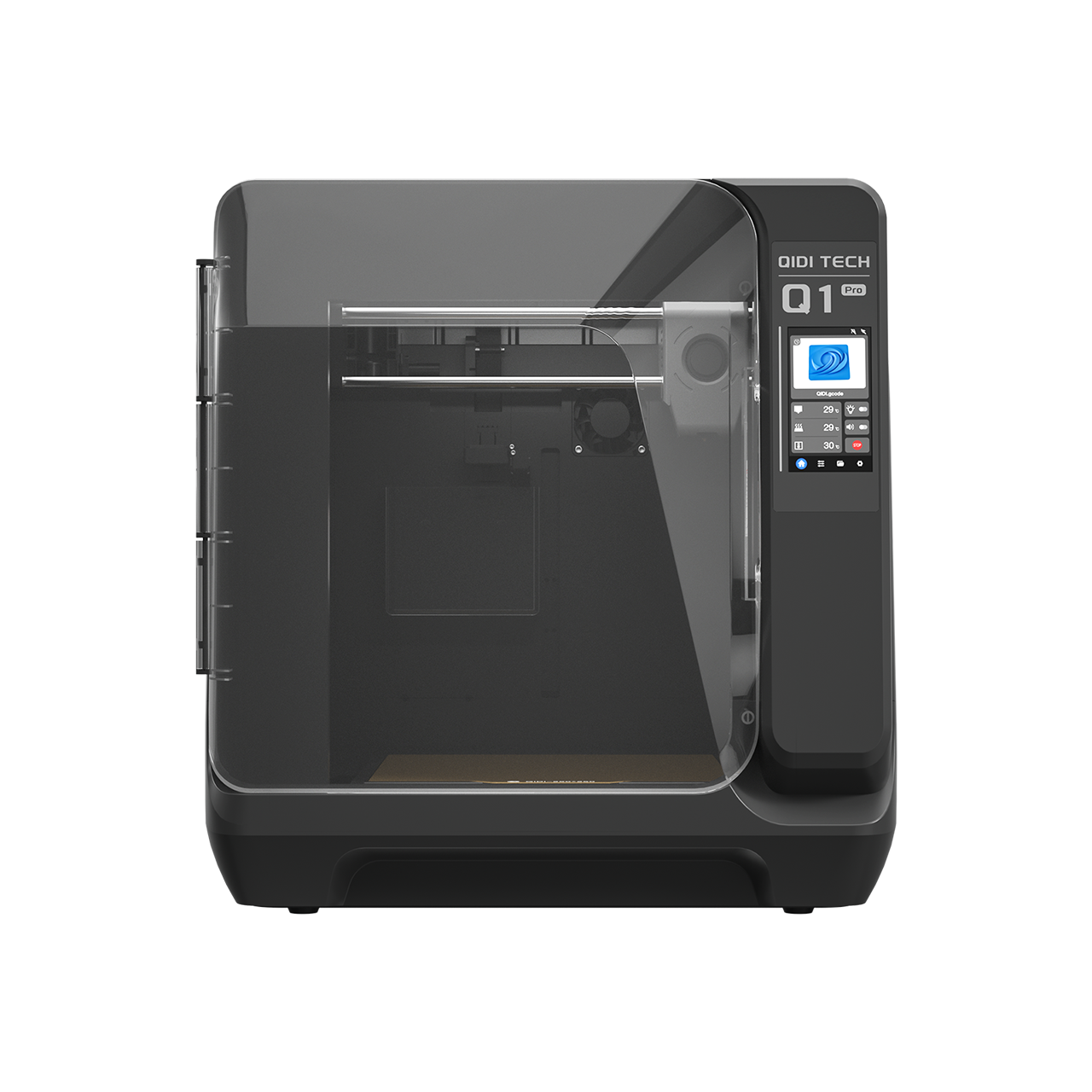
If you are just starting with functional printing, a machine like the QIDI Q2C 3D Printer provides a reliable entry point with a 270x270x256mm volume, capable of handling most standard household hardware repairs with ease.
Summary of Key Takeaways
Creating impact-resistant door hardware is a matter of matching material properties to mechanical stress. By moving to engineering-grade filaments like PC/ABS and ABS Rapido, and ensuring your printer is equipped with a heated chamber and hardened nozzles, you can produce parts that rival or exceed the durability of original injection-molded components.
Remember that functional printing is a holistic process: the material provides the foundation, the printer provides the environment, and the design provides the structural integrity. When these three elements are aligned, 3D printing becomes a powerful tool for maintaining and improving the physical world around us.
Disclaimer: This article is for informational purposes only. 3D printed parts for door hardware, especially those related to security or emergency exits, should be thoroughly tested and evaluated for safety. Consult local building codes and fire safety regulations before installing 3D printed components in critical areas. 3D printing materials may release fumes; always operate printers in well-ventilated areas.
- Understanding the Mechanical Demands of Door Hardware
- High-Performance Materials for Impact Resistance
- 1. PC/ABS-FR: The Industrial Standard for Security
- 2. TPU95A-HF: Maximum Energy Absorption
- 3. ABS Rapido: The Durable Workhorse
- Technical Requirements for Printing Industrial Polymers
- The Role of the Heated Chamber
- Nozzle and Extrusion Considerations
- Design Strategies for Impact-Resistant Hardware
- Material Selection Decision Framework
- Case Study: Large-Scale Hardware
- Summary of Key Takeaways
Produits recommandés