
 Q2
Q2



A Technical Guide of QIDI 3D Printer Filaments
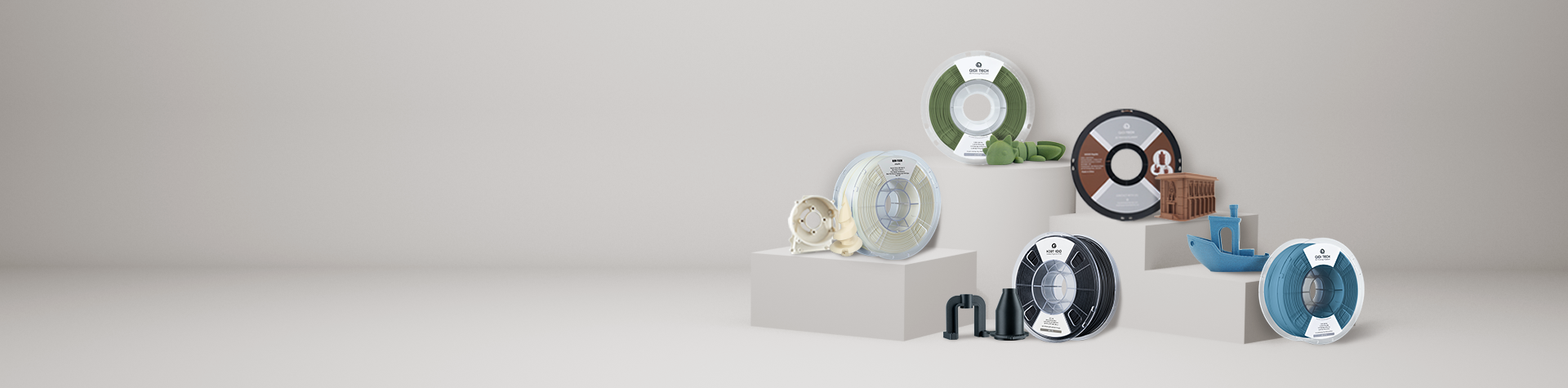
Because material selection is what fundamentally determines success with any 3D printing project, the filament itself dictates the strength, heat resistance, surface finish, and overall performance of the final object. QIDI 3D printer filaments are engineered to provide a precise material solution for every technical requirement, from basic prototyping to industrial-grade functional parts. Each filament is manufactured to exacting standards for consistent diameter and performance, ensuring reliability from spool to finished print. This overview details the properties of our materials to help you select the correct filament for your specific application.
Foundational Filaments for General-Purpose Printing
From prototyping to production, our foundational materials provide an optimal balance of printability and performance.
PLA stands apart from other thermoplastics due to its ease of use and low warping factor, as well as excellent bridging characteristics, making it capable of producing objects featuring fine details. It is a very good material for visual models, as well as for design prototypes. Our QIDI PLA Matte filament improves upon standard PLA by providing a non-reflective, frosted texture that effectively conceals layer lines, giving a sophisticated finish right off the print bed.
PETG, or Polyethylene Terephthalate Glycol, represents a significant jump up in mechanical strength for those applications requiring much more durability. The combination of good impact and chemical resistance, added to the low-shrinkage printing characteristics of PLA, makes it a reliable choice for functional parts, mechanical brackets, and protective casings.
Engineering Filaments for Demanding Environments
When parts need to be subjected to mechanical stress and/or higher temperatures, engineering-grade filaments must be used.
ABS, or Acrylonitrile Butadiene Styrene, is a tough polymer featuring high impact strength and high heat deflection temperature, making it perfect for parts such as electronic enclosures. For outdoor usage, ASA, or Acrylonitrile Styrene Acrylate, provides similar mechanical properties to ABS, with the critical addition of far superior UV resistance against degradation caused by sun exposure. These materials print successfully under the stable thermal environment an enclosed printer can offer.
QIDI ABS-GF25 is an advanced composite filament for more extreme industrial applications, with 25% glass fiber reinforcement. The addition greatly enhances the material's stiffness, dimensional stability, and heat resistance, making it suitable for the creation of robust jigs and fixtures, as well as end-use automotive parts.
High-Performance Composites for Maximum Strength
Composite filaments represent the pinnacle of performance in FDM printing. These materials take a robust base polymer and add in chopped carbon or glass fibers to create parts that boast very impressive stiffness and strength. To print these very abrasive filaments, a hardened steel nozzle is required to prevent rapid wear.
Our QIDI PA12-CF is an industrial-grade material together with reinforcement by carbon fibers. This results in very strong and stiff parts with good high-temperature stability, making this material a top choice for producing manufacturing aids, robotics, and lightweight structural components. For those users who require high stiffness but want much easier printing, QIDI PETG-CF combines the ease of use of PETG with carbon fiber rigidity, ideal for functional parts that must support loads without bending.
Specialized Filaments for Unique Applications
This range also contains specific needs materials like TPU, which is short for Thermoplastic Polyurethane. This flexible and rubber-like filament is used for making parts that may bend, stretch, or absorb impacts while acting as seals, gaskets, or vibration dampeners. Matching the technical specifications of a filament to those required by your project will ensure functionally sound and reliable results.
3 FAQs about QIDI Filaments
Q1: Which QIDI filament is best for a beginner?
We recommend starting with QIDI PLA Matte or standard PLA. These are very forgiving materials, print with minimal warping, and offer great-looking visuals. Most importantly, they will provide an excellent way to learn the basics of 3D printing before moving on to engineering-grade materials.
Q2: Do I need a special nozzle for carbon fiber or glass fiber filaments?
Yes. Abrasive composites such as PA12-CF, PETG-CF, and ABS-GF25 require a hardened steel nozzle to print them reliably. A standard brass nozzle will wear out quite fast, which might lead to print failures.
Q3: What is the main difference between PETG-CF and PA12-CF?
Both are high-stiffness materials, but they serve different performance levels. PETG-CF is for strong, rigid parts with moderate heat resistance. PA12-CF is an industrial-grade material with superior strength, higher temperature resistance, and better chemical resistance for end-use parts in demanding engineering environments.
3Dプリンター購入ガイド
プロジェクトに最適な 3D プリンターを見つけましょう。
今すぐ創造的な冒険を始めましょう!
FAQ
3D印刷機とサービスに関する最も差し迫った質問への回答を見つけてください。
融合堆積モデリングプリンターとしても知られるFDM 3Dプリンターは、溶融プラスチックフィラメントのレイヤーごとの堆積を介してオブジェクトを作成するプリンターです。プラスチックフィラメントは、溶融するまで加熱され、ノズルから押し出されて関心のある形状を形成します。 FDMプリンターが人気がある理由の1つは、それらが安価で非常に使いやすいため、初心者とプロのユーザーの両方が広く使用しているためです。
FDM 3Dプリンターにはいくつかの利点があります。 1つ目は、通常、他のタイプの3D印刷技術よりも費用対効果が高いことです。この経済は、愛好家、教育者、専門家など、幅広い市場にアクセスできるようにします。第二に、FDMプリンターはユーザーフレンドリーであり、ABSやPLAなどの困難な材料からエンジニアリンググレードの熱可塑性プラスチックまで、幅広い材料に対応しています。これらのプリンターは多用途であり、プロトタイプから機能部品の設計まで、幅広いアプリケーションで使用できるようになります。生成された部品は強力であり、機械的使用に耐えることができます。ランニングコストも低く、危険な化学物質を必要としないため、安全で操作が容易になります。
FDM 3D印刷プロセスには、CADソフトウェアを使用して3Dモデルの設計が含まれます。設計の準備ができたら、スライシングソフトウェアを使用してモデルをさまざまなレイヤーに変換します。次に、プリンターはプラスチックフィラメントを加熱し、ノズルを通して押し出し、スライスされたモデルに従って各レイヤーを置きます。レイヤーが敷設されると、冷却して固化し、最終的なオブジェクトが構築されます。この層ごとのメカニズムは、最終的なオブジェクトの形状と構造を制御します。
SLAとFDMは、2つの異なる3D印刷技術です。主な違いは、素材とプロセスです。 FDMプリンターは熱可塑性フィラメントを使用します。これは、溶けて押し出して層の敷設層に押し出されます。 SLAプリンターは、各層を治すためにレーザーによって硬化する液体樹脂を使用します。 SLAは通常、より良い解像度であり、表面はより滑らかであるため、詳細で非常に複雑なデザインに非常に適しています。 FDMは、より強力で安価であるため、機能的なプロトタイプやより大きな部分により適しています。一般に、FDMはSLAプリンターとその材料に比べて安価です。
印刷解像度、レイヤーの高さ、押出機とプラットフォームの温度、印刷速度、フィラメント品質、ノズルサイズ、適切なスライサー設定はすべて、最終的な印刷品質に影響します。デュアル押出、囲まれたビルドチャンバー、および自動キャリブレーション機能は、一貫性、精度、および信頼性の向上にも役立ちます。