
 Q2
Q2




Replacing Broken Dishwasher Rack Clips with 3D Printed PETG


Replacing Broken Dishwasher Rack Clips with 3D Printed PETG
Few household frustrations match the annoyance of a dishwasher rack that refuses to stay on its tracks. Most modern dishwashers rely on small, injection-molded plastic clips that eventually succumb to the brutal cycle of high-temperature water, aggressive detergents, and mechanical stress. When these clips snap, manufacturers often require you to purchase an entire rack assembly—an expensive and wasteful solution.
As a serious maker or small shop owner, you have the tools to bypass this planned obsolescence. However, printing a replacement that survives more than three wash cycles requires moving beyond hobbyist assumptions. It requires a professional approach to material science, part geometry, and post-processing.
In this guide, we will detail how to produce industrial-grade replacement clips using PETG, leveraging advanced hardware like the QIDI Max4 3D Printer to ensure your repairs are permanent rather than temporary.
Why PETG is the Correct Choice for Kitchen Environments
When choosing a filament for appliance repair, the temptation is often to reach for PLA for ease of use or ABS for heat resistance. Both are typically poor choices for this specific application. PETG offers a superior balance of impact resistance and chemical stability compared to PLA, which softens at just 60°C—well below the 65-70°C rinse cycle of a standard residential dishwasher.
While ABS has a higher glass transition temperature, its susceptibility to warping and the requirement for a strictly controlled environment make it difficult for complex snap-fit geometries. PETG, specifically when reinforced like PETG-GF, provides the necessary "flex" for a clip to engage without the brittleness that leads to catastrophic failure.
We recommend PETG for dishwasher components because its glass transition temperature (~80°C) provides a safety margin of approximately 10-15°C over peak residential water temperatures. This prevents the "material creep" that causes clips to lose their grip over time.
The Chemical Factor
Dishwasher detergents are highly alkaline. Standard 3D prints are porous by nature, and these chemicals can seep into layer lines, weakening the polymer chains. PETG exhibits high resistance to these soap solutions.

Engineering for Durability: Design and Print Specifications
A replacement part shouldn't just replicate the original; it should improve upon it. In our experience with household hardware repair, we have identified three critical "friction points" where most 3D printed clips fail: the hinge point, the steam barrier, and load-bearing creep.
1. The 100% Infill Mandate
In a dry environment, 20% infill is sufficient. In a dishwasher, it is a recipe for failure. Steam penetration between layers creates internal pressure that can delaminate a part from the inside out.
- Solution: Use 100% infill (rectilinear) with at least 4-5 perimeters. This transforms the part into a solid block of polymer, leaving no internal voids for moisture to collect.
2. Compensating for Material Creep
Under constant tension, thermoplastics "creep"—they slowly deform to relieve stress. If your clip is designed to be a perfect fit on day one, it will likely be loose by month three.
- Heuristic: Design your clips with a slight oversize of 0.2mm to 0.3mm on critical clamping dimensions. This "pre-tension" ensures that even after the initial material relaxation, the clip maintains a firm hold on the rack.
3. Hardware Requirements: The Enclosed Advantage
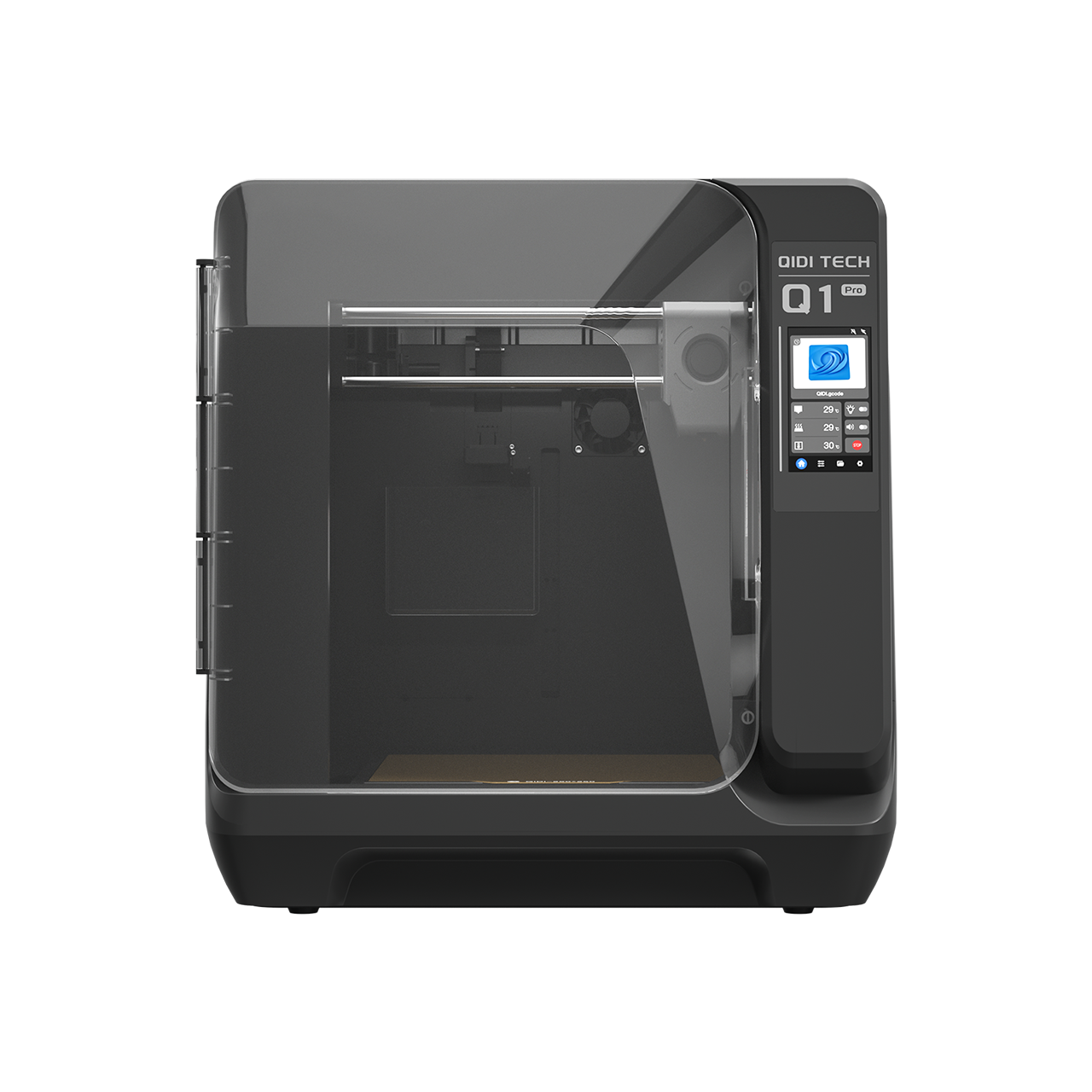
To achieve the structural integrity required for these parts, the printing environment must be stable. The QIDI MAX4 3D Printer features a third-generation 65°C active chamber heating system. This is not just a luxury; it is a mechanical necessity for high-performance PETG. By keeping the ambient temperature elevated, you reduce internal thermal stresses during the build, leading to significantly better interlayer adhesion.
Post-Processing: The Secret to Longevity
Even a perfectly printed part can benefit from professional post-processing. To ensure your 3D printed clip outlasts the dishwasher itself, we recommend two specific steps: annealing and coating.
Annealing PETG for Stress Relief
Annealing is the process of heating a part to just below its softening point to allow the polymer chains to reorganize and relieve internal stresses from the printing process.
- Place the finished part in a controlled oven.
- Maintain a temperature of 70°C for 2 to 4 hours.
- Allow the part to cool slowly inside the chamber.
This process significantly reduces the part's vulnerability to steam penetration and improves its overall dimensional stability in hot environments.
Creating a More Wash-Friendly Surface Barrier
While PETG is generally considered safe, the ridges in 3D prints can harbor bacteria or detergent residue. For parts in contact with dishes, applying multiple thin coats of an appropriate protective epoxy resin (often used for aquarium or countertop repair) creates a smooth, impermeable barrier.
- Pro Tip: Avoid a single thick coat, which can drip and ruin the tolerances of your clip. Two thin, brushed applications provide a more uniform shield against aggressive dishwasher chemicals.
The Macro Perspective: 3D Printing and Sustainable Homes
Repairing a dishwasher clip might seem like a small task, but it aligns with a global shift toward "Green Manufacturing." According to a 2024 review in ScienceDirect, the integration of 3D printing into smart homes is a key driver for sustainability, reducing waste by extending the lifecycle of existing appliances.
Summary of Key Takeaways
Transitioning from a hobbyist "fix" to a prosumer "repair" requires attention to detail. By following these steps, you can ensure your 3D printed dishwasher components are robust and reliable:
- Material Choice: Use PETG-GF for its superior heat resistance and structural rigidity.
- Print Settings: Stick to 100% infill and 5 perimeters to prevent steam ingress.
- Design Tweaks: Add a 0.2-0.3mm oversize to critical dimensions to account for material creep.
- Hardware: Utilize active chamber heating, found in printers like the QIDI Max4 3D Printer, to maximize interlayer strength.
- Post-Process: Anneal your parts at 80°C to relieve internal stresses.
3D printing offers a powerful alternative to the "throwaway" culture of modern appliances. With the right hardware and an engineering mindset, you can produce parts that are not just replacements, but upgrades.
Disclaimer: This article is for informational purposes only. Repairing household appliances may void warranties or present risks if not performed correctly. Always ensure that any materials used in food-contact environments are properly sealed with FDA-approved coatings. Consult your appliance manual before making modifications.
- Replacing Broken Dishwasher Rack Clips with 3D Printed PETG
- Why PETG is the Correct Choice for Kitchen Environments
- The Chemical Factor
- Engineering for Durability: Design and Print Specifications
- 1. The 100% Infill Mandate
- 2. Compensating for Material Creep
- 3. Hardware Requirements: The Enclosed Advantage
- Post-Processing: The Secret to Longevity
- Annealing PETG for Stress Relief
- Creating a More Wash-Friendly Surface Barrier
- The Macro Perspective: 3D Printing and Sustainable Homes
- Summary of Key Takeaways