
 Q2
Q2




Custom TPU Feet to Stop Furniture from Sliding


Why felt pads keep failing
Felt pads have two jobs: protect the floor and stay attached. They do the first one for about 60–90 days before the adhesive gives up. Hair, dust, and grit accumulate on the adhesive layer until the pad falls off and gets stuck to someone's sock. Then you're back to bare chair legs scratching the hardwood.
Felt also doesn't prevent sliding. Its coefficient of friction on hardwood is low enough that chairs drift whenever someone sits down or stands up. That's fine on carpet. On hardwood, tile, or laminate, it means your dining set rearranges itself during every meal.
TPU can improve grip on hard floors when the foot is mechanically fitted to the leg. Friction and wear vary with TPU formulation, Shore hardness, floor finish, load, contamination, and contact geometry, so test the design on the intended surface before making a full set.
The friction coefficient advantage
| Material on hardwood | Friction coefficient | Sliding resistance |
|---|---|---|
| Plastic glides | ~0.30 | Low (slides easily) |
| Felt pads | ~0.35 | Low-moderate |
| TPU 95A | 0.70–0.80 | High |
| TPU 85A | 0.80–0.90 | Highest |
Softer TPU (lower Shore number) grips more because the material conforms to micro-irregularities in the floor surface. 85A deforms enough to create almost suction-like contact. The tradeoff: 85A wears faster than 95A under daily chair-sliding use. For dining chairs that get dragged across the floor constantly, TPU 95A balances grip with durability. For heavy furniture that sits in one place (bookshelves, side tables), 85A gives maximum grip. Siraya Tech's shore hardness comparison has a visual guide to how different hardness grades feel and flex.
Measuring your chair legs
Flip the chair upside down and grab calipers. Measure the leg cross-section at the bottom. Common sizes:
| Furniture type | Typical leg size | Shape |
|---|---|---|
| Dining chairs | 19–25 mm | Round or square |
| Office chairs (caster stems) | 10–11 mm | Round |
| Table legs | 32–50 mm | Round, square, or rectangular |
| Metal tube furniture | 20–25 mm | Round tube |
For cap-style feet (the most common design), add 0.2–0.4mm clearance to the leg measurement. The foot should push on snugly without excessive force. TPU's flexibility is forgiving here. I've had feet with 0.5mm of clearance that still hold perfectly because the material grips the leg.
If you can't easily flip heavy furniture, use the paper template method: press a piece of paper against the leg bottom, trace the outline with a pencil, then measure the tracing. Not as precise as calipers, but close enough for TPU's flexible tolerance.
Design styles
Cap style (friction fit)
A cup that slides over the leg end. This is what I use on everything. The TPU wall stretches slightly during installation and then grips the leg. Stays put through daily use without adhesive. For tapered legs, match the inner profile to the taper angle. A straight cup on a tapered leg will rock.
Cup style (gravity-held)
An open cup the leg sits into. Works well for heavy furniture where gravity does the holding. The leg doesn't need to fit perfectly because the weight keeps it seated. Easier to remove for cleaning. Less secure for light chairs that get picked up and moved.
Adhesive-backed pad
A flat disc printed in TPU, attached with double-sided tape or contact adhesive. Simplest to design and print, but relies on the adhesive bond. Better than commercial felt pads because the TPU is thicker and the adhesive area is larger, but eventually the adhesive weakens. I'd only use this for legs where a cap won't work (odd shapes, very wide legs).
For design ideas on functional print fit and tolerances, the replacement knob guide covers the same friction-fit principles with detailed clearance values. And for broader furniture printing projects, the furniture printing overview has more ideas.
Print settings for TPU feet
- Layer height: 0.2mm for the body, but the grip surface (the part that contacts the floor) matters most.
- Bottom layers: 5–8 solid layers. This is the contact surface. More solid layers = smoother, more consistent grip.
- Infill: 30–50%. Concentric pattern works well because the load distributes evenly.
- Speed: 30–50 mm/s for 95A, 15–25 mm/s for 85A.
- Temperature: 220–240°C nozzle, 50–60°C bed.
- Retraction: 0.5–1.5mm, 15 mm/s. Minimal retraction prevents jams.
Print the foot with the grip surface on the build plate. The first-layer contact with the build plate produces the smoothest possible surface, which is exactly what you want touching your floor. The inside of the cap (which contacts the chair leg) can have layer lines; those actually help grip the leg.
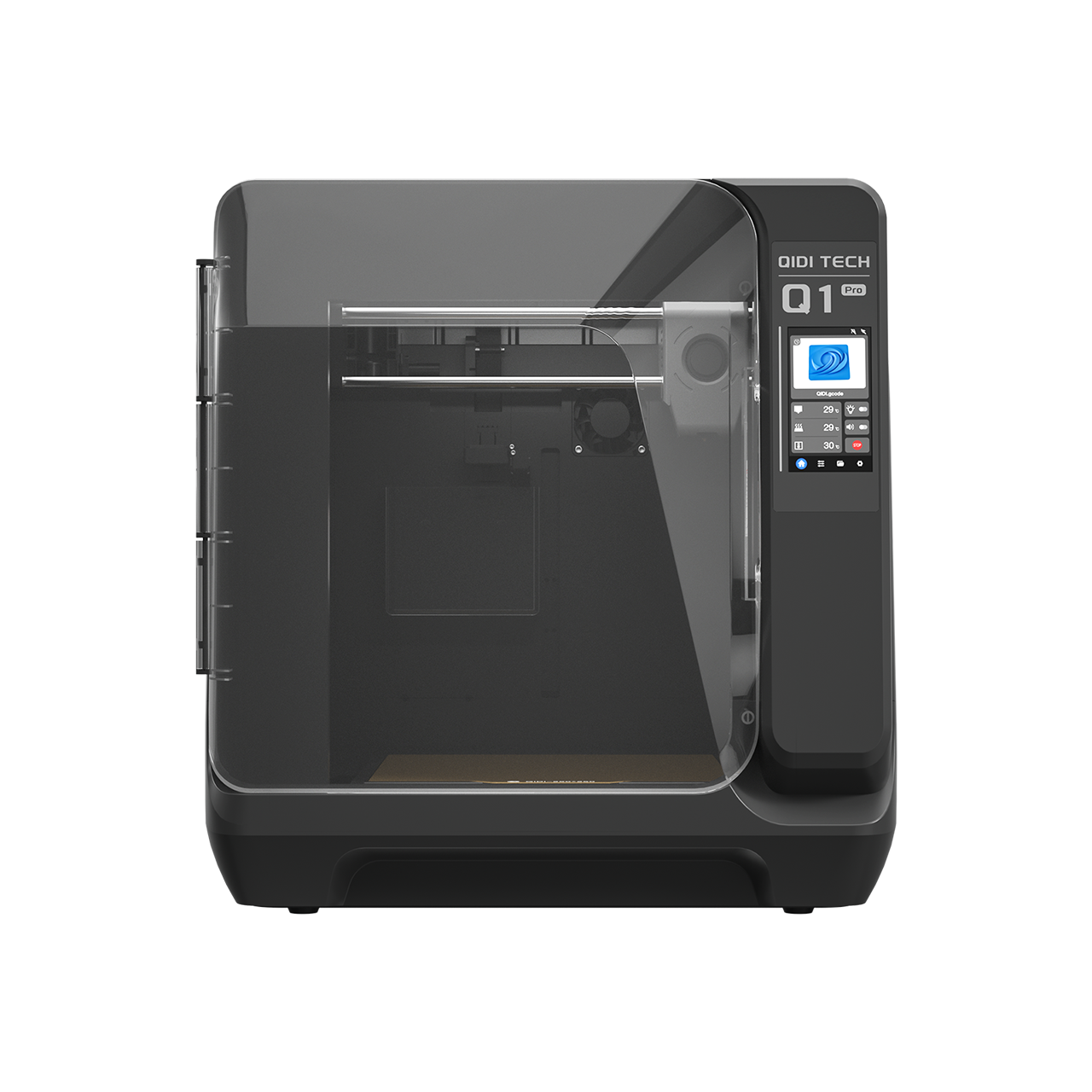
The Q2 uses a direct-drive extruder suited to TPU 95A, but settings still require material-specific calibration. For more functional print ideas using TPU, plenty of household projects benefit from the same material.
Parametric models worth downloading
Don't model from scratch unless your legs are an unusual shape. These parametric designs let you input your leg dimensions and generate a custom foot:
- Chair Leg Pads Collection by Lucandia (Printables) — parametric round and square, 5–50mm range.
- Table Leg Foot Generator by SteveS42 (Printables) — OpenSCAD with customizer sliders.
- Parametric Chair Foot by buteomont (Thingiverse) — default 22.2mm, adjustable via customizer.
Print a test foot before making a full set. I print one, test-fit it, adjust if needed, then print the remaining batch once I'm happy with the fit. A set of four feet for a single chair uses about 20–30g of TPU ($0.50–0.75 in filament). A dining set of six chairs costs about $3–4.50 total. Commercial TPU furniture feet run $2–5 per chair in the sizes I need.
For more TPU project ideas, the phone case guide uses the same material with tighter tolerances. And the cosplay armor guide takes TPU to the opposite extreme in size and complexity. Browse the common filaments collection for TPU options.
Frequently asked questions
Will TPU feet mark my hardwood floor?
TPU formulations and floor finishes vary, so marking or plasticizer interaction cannot be ruled out universally. Test a printed foot in an inconspicuous area before extended use on hardwood, vinyl, or LVP. A Maker Forums thread provides one anecdotal example rather than a universal compatibility guarantee.
How long do TPU feet last?
Service life depends on furniture weight, movement frequency, floor texture, TPU formulation, hardness, and print quality. Inspect the feet periodically and replace them when the contact surface becomes worn, cracked, loose, or contaminated.
Should I try PEBA instead?
PEBA is lighter (15–20% less dense than TPU), has higher rebound elasticity (78% vs. ~55% for TPU), and resists fatigue better. It's the material used in high-end running shoe midsoles. For furniture feet, the advantages are marginal because you're not using the elasticity. SainSmart's PEBA guide covers the material if you want to experiment, but TPU 95A is the practical choice for this application.
Can I use these on chairs that roll on carpet?
TPU feet on carpet create too much friction. The chair won't slide at all, which makes it hard to scoot in and out at a desk. For carpet, you want the opposite: smooth glides or casters. TPU feet are specifically for hard floors where sliding is the problem.
- Why felt pads keep failing
- The friction coefficient advantage
- Measuring your chair legs
- Design styles
- Cap style (friction fit)
- Cup style (gravity-held)
- Adhesive-backed pad
- Print settings for TPU feet
- Parametric models worth downloading
- Frequently asked questions
- Will TPU feet mark my hardwood floor?
- How long do TPU feet last?
- Should I try PEBA instead?
- Can I use these on chairs that roll on carpet?
Produits recommandés