
 Q2
Q2




ABS vs ASA for Outdoor Structural Mounts Under UV and Heat


The Outdoor Challenge: Why Standard Prints Fail
For functional prototypers and small shop owners, transitioning from indoor decorative models to outdoor structural components is a "step-up" moment fraught with engineering risks. A bracket that holds a security camera or an antenna mount isn't just a plastic part; it is a critical link in a system where failure results in equipment damage or client dissatisfaction.
The primary enemies of 3D-printed polymers in the wild are Ultraviolet (UV) radiation and thermal cycling. While many makers reach for ABS due to its familiarity and high heat resistance, it often fails prematurely when exposed to the sun. Understanding the mechanical divergence between ABS and ASA is essential for ensuring that your outdoor structural mounts maintain their integrity for years, not just months.
The UV Resistance Gap: ABS vs. ASA
The chemical composition of a filament determines how it reacts to high-energy UV photons. ABS (Acrylonitrile Butadiene Styrene) contains butadiene rubber, which provides its signature impact resistance. However, butadiene is highly susceptible to photo-degradation. When exposed to sunlight, the butadiene chains break, leading to "chalking," yellowing, and—most critically—micro-cracks that propagate through the part.
ASA (Acrylonitrile Styrene Acrylate) solves this by replacing the butadiene with an acrylate elastomer. This single chemical swap makes ASA inherently weather-resistant.
In real-world terms, an ABS mount might look intact but will become brittle and snap under a wind load after one summer. In contrast, ASA maintains nearly all of its original tensile strength, making it the preferred choice for structural applications.

Thermal Management: The Role of the Heated Chamber
The challenge of printing high-performance materials like ABS and ASA isn't just the material itself, but the environment in which it is printed. Both materials have high glass transition temperatures (~100°C), which leads to significant internal stress as the part cools. If you print these materials at room temperature, the outer layers cool faster than the core, causing the part to warp or, worse, develop "latent" stresses.
Latent stress is a hidden killer for outdoor mounts. When a part with internal stress is placed in the sun, the heat causes the polymer chains to attempt to "relax," which can lead to warping or cracking months after the print is finished.
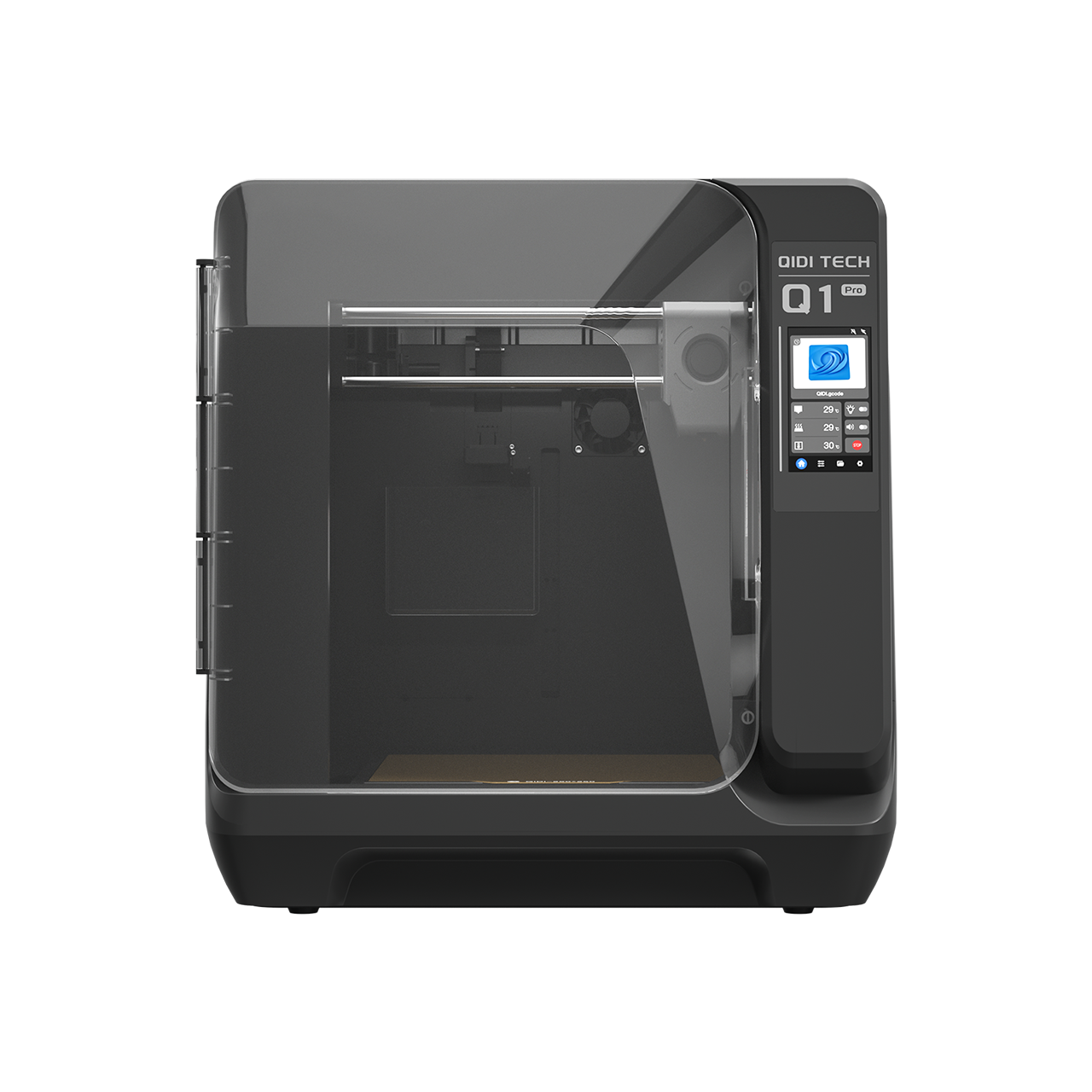
To mitigate this, professional-grade equipment like the QIDI Q2 3D Printer utilizes active chamber heating. By maintaining a constant chamber temperature of 55-65°C, the printer allows the material to cool uniformly. This process, similar to annealing, significantly reduces residual stress and ensures that the part's dimensions remain stable even when subjected to summer heat. For a deeper look at how these materials handle heat in other contexts, see our guide on PC vs ASA for high-heat mounts.
Mechanical Optimization: Orientation over Infill
A common mistake in functional printing is increasing infill percentage to "make it stronger." However, for structural mounts, print orientation is significantly more important than density. FDM prints are anisotropic, meaning they are weaker in the Z-axis (between layers) than in the XY plane.
If an outdoor mount is oriented so that the primary load pulls the layers apart (Z-axis loading), it is vulnerable to delamination. Experienced users always orient the part so that the expected load runs along the continuous strands of the XY plane.
Furthermore, surface finish plays a role in longevity. Materials like ASA-Aero Filament offer a matte texture that reduces the visibility of layers. More importantly, ASA-Aero utilizes on-demand foaming technology, allowing you to reduce the weight of a model by up to 50% while maintaining the UV and heat resistance of standard ASA. This is particularly valuable for "Macro" applications like drones or lightweight automotive components, where every gram counts.
Choosing Your Filament: A Decision Matrix
When deciding between the available options for your next outdoor project, consider the specific environmental stressors:
- ASA-Aero Filament: Best for lightweight outdoor applications (drones, RC planes, mobile sensors). The foaming technology allows for density adjustment, while the ASA base provides UV stability.
- Odorless-ABS Rapido Filament: Ideal for functional prototypes and jigs used in small shops or home offices. It offers the mechanical strength of ABS—approaching 40MPa tensile strength in the XY axis—without the harsh fumes typically associated with the material. While not as UV-stable as ASA, it is excellent for high-stress indoor parts or outdoor parts that will be painted or coated.
- ABS Rapido Filament: A high-speed, high-durability option for general functional parts. It is a cost-effective choice for components that require high heat resistance but won't face prolonged direct sunlight.
For those comparing these to more common materials, our analysis of PETG vs ABS for garage accessories provides additional context on moisture resistance and impact strength.
Summary Checklist for Outdoor Structural Mounts
To ensure your printed parts survive the elements, follow this professional workflow:
- Material Selection: Prioritize ASA for any part facing direct sunlight. Use Odorless-ABS Rapido Filament for high-stress parts where UV is not a factor.
- Chamber Temperature: Ensure your printer (like the QIDI Q2 3D Printer) maintains an active chamber temperature between 55-65°C to minimize residual stress.
- Orientation: Align the expected load along the XY plane. Avoid designs that put significant tension on the Z-axis layer bonds.
- Post-Processing: For ABS parts that must go outdoors, apply a UV-resistant clear coat to slow the degradation of the butadiene rubber.
- Weight Optimization: For moving parts or aerial mounts, use ASA-Aero Filament to reduce mass without sacrificing weatherability.
By focusing on these technical pillars, you move from "printing parts" to "engineering solutions" that stand up to the rigors of the real world.
Disclaimer: This article is for informational purposes only. Structural failures can lead to property damage or injury. Always perform load testing on critical components and consult with a structural engineer for applications involving significant safety risks or high overhead loads.