
 Q2
Q2




Optimizing Infill for Heavy Glass Coffee Bean Cellar Racks


The Structural Challenge of Coffee Station Organization
Organizing a professional-grade coffee station requires more than just aesthetic appeal; it demands industrial reliability. For many prosumers and small shop owners, the "bean cellar" has become the gold standard for workflow efficiency. These setups typically involve 10 to 20 heavy glass tubes, each filled with 18-22 grams of coffee beans, seated in a custom-printed rack.
While a simple rack may look sturdy on the build plate, the reality of long-term use often reveals structural weaknesses. A rack holding a dozen glass tubes can easily weigh over 1.5kg. In a kitchen environment—where temperatures fluctuate and humidity varies—standard hobbyist printing techniques often fail. To move beyond the trial-and-error of entry-level machines, we must apply engineering principles to infill patterns, wall thickness, and material science.
Our goal is to help you build a "ready-to-run" solution that balances printing speed with the structural integrity required to protect high-value glass accessories. By optimizing your slicer settings and selecting the right industrial-grade materials, you can achieve a professional finish that lasts for years.
The Silent Failure: Understanding Material Creep in the Kitchen
One of the most common mistakes we observe in the community is the over-reliance on standard PLA for functional kitchen organizers. While PLA is easy to print, it is highly susceptible to "creep." Creep is the tendency of a solid material to move slowly or deform permanently under the influence of persistent mechanical stresses.
In a coffee bean cellar rack, the constant weight of glass and beans creates a continuous load. Over 3 to 6 months, a PLA rack will often begin to sag or "bow" in the center. This effect is accelerated in warm kitchen environments.
For a rack that maintains its shape, we recommend moving toward materials with a higher modulus of elasticity and better thermal resistance. ABS-GF25 Filament, a glass-fiber reinforced ABS, offers the structural rigidity needed to resist long-term sagging. Alternatively, ASA Filament provides excellent UV resistance and thermal stability, ensuring your coffee station remains pristine even near a sunny window or a steaming espresso machine.

Advanced Filament Selection for Industrial Durability
When selecting a filament for coffee accessories, you must balance ease of use with mechanical performance.
- PLA-CF Filament: This is chopped carbon fiber reinforced PLA. It is as easy to print as regular PLA but offers a significant upgrade in stiffness and a beautiful matte finish that hides layer lines. It is ideal for racks that won't be exposed to high heat.
- ABS-GF25 Filament: For the ultimate in "ready-to-run" reliability, this glass-fiber reinforced material is preferred. It has a high modulus, meaning it resists bending under the weight of heavy glass tubes much better than standard filaments.
- ASA Filament: Often used for outdoor applications, ASA is perfect for the coffee bar because it resists the oils and heat common in beverage preparation areas without yellowing or degrading.
Precision Printing: Avoiding the Elephant's Foot Pitfall
When printing large-format racks designed to hold glass tubes, precision is non-negotiable. Glass is unforgiving; if your rack's holes are even slightly tapered or flared at the base, the tubes will not seat flush.
The "elephant's foot" effect—a slight widening of the first few layers due to bed heat and the weight of the part—is the hidden enemy of bean cellar racks. Even a 0.2mm flare can prevent a glass tube from sliding in smoothly.
Pro Tip: Use "Elephant's Foot Compensation" in your slicer (typically found in the 'Advanced' or 'Quality' settings). Setting this to 0.15mm or 0.2mm will slightly pull in the first layer, ensuring the holes remain dimensionally accurate from top to bottom.
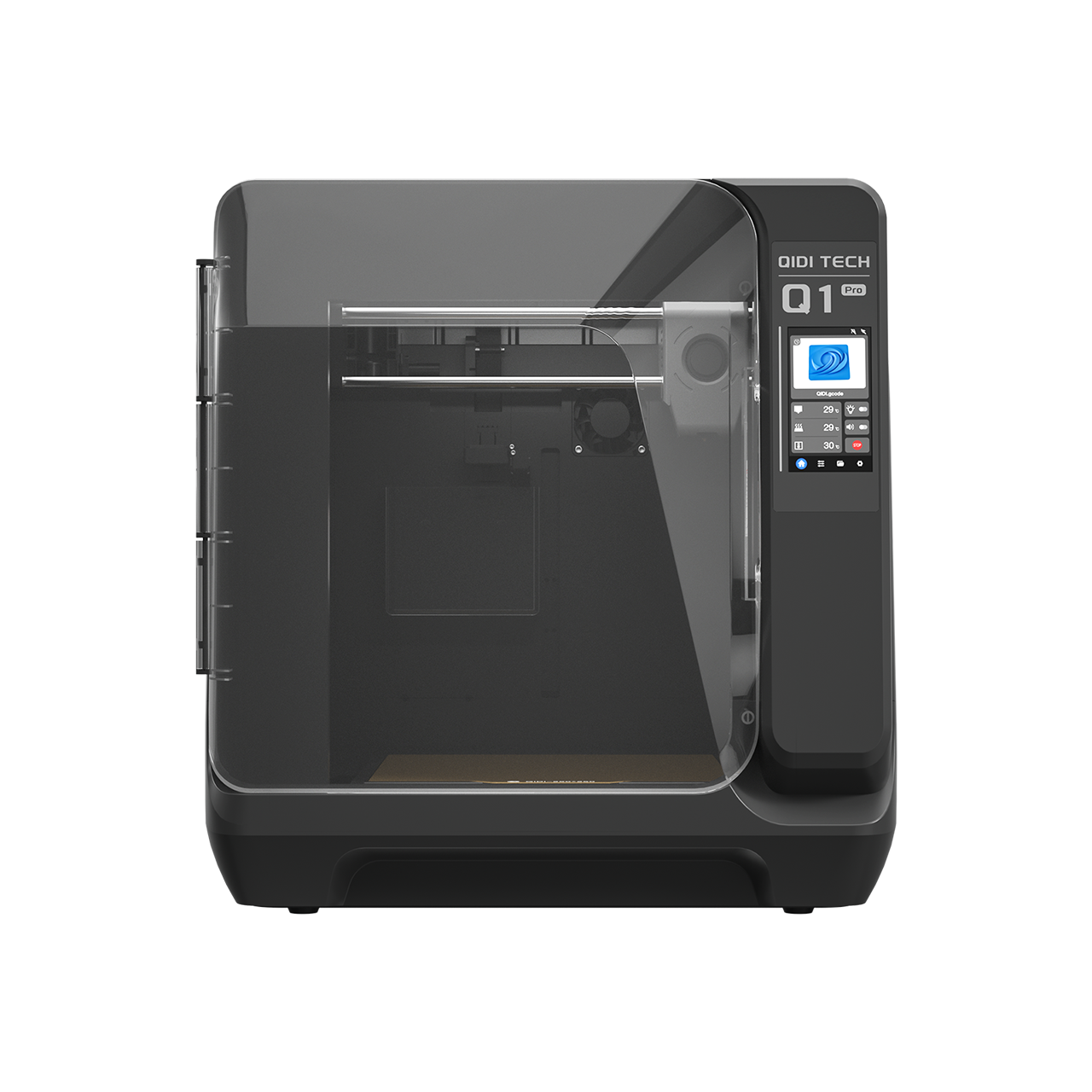
Furthermore, using a printer with a heated chamber, such as the QIDI Q2 3D Printer, is critical when working with industrial materials like ABS-GF25 or ASA. Its active chamber heating (up to 65℃) prevents warping and ensures that large-format racks remain perfectly flat across the entire build volume of 270×270×256 mm.
Optimizing the Workflow for Professional Results
To achieve a professional-grade coffee station, your workflow should focus on capability and reduced friction. If aesthetics allow, we strongly recommend using a 0.6mm nozzle. Thicker extrusions not only speed up the print time by 30-40% but also drastically improve the shear strength of the rack's vertical supports. The thicker "beads" of plastic provide more surface area for layer adhesion, making the rack nearly indestructible under normal coffee bar conditions.
When comparing material choices, it's also worth considering the trade-offs between Toughness vs Rigidity. For a rack, rigidity is your primary goal to prevent sagging, whereas toughness would be more important for a coffee tamper handle that might be dropped.
Summary of Key Takeaways
- Prioritize Walls: Use 4-6 wall loops instead of high infill percentages for superior load-bearing capacity.
- Combat Creep: Avoid standard PLA for long-term heavy loads; opt for ABS-GF25 Filament or ASA Filament.
- Compensate for Flare: Apply elephant's foot compensation to ensure glass tubes seat flush without post-processing.
- Utilize Chamber Heat: Use a printer like the QIDI Q2 3D Printer to prevent warping in large-format industrial prints.
- Nozzle Choice: Consider a 0.6mm nozzle for a stronger, faster, and more reliable functional print.
By following these engineering-first principles, you can create a coffee bean cellar rack that isn't just a hobbyist project, but a durable piece of industrial-grade equipment for your coffee station.
Disclaimer: This article is for informational purposes only. When 3D printing items for use around food and beverages, ensure you are using food-safe coatings or materials where direct contact occurs, and follow all safety guidelines for your specific 3D printing hardware.
Sources
- The Structural Challenge of Coffee Station Organization
- The Silent Failure: Understanding Material Creep in the Kitchen
- Advanced Filament Selection for Industrial Durability
- Precision Printing: Avoiding the Elephant's Foot Pitfall
- Optimizing the Workflow for Professional Results
- Summary of Key Takeaways
- Sources