
 2º trimestre


 Primeiro trimestre Pró
 X-Max 3


Comparing Recycled vs Virgin PLA for Eco-Friendly Decor


For static decor — vases, lampshades, wall panels — recycled PLA performs close enough to virgin PLA that the difference is invisible in the finished piece, provided you print 5–10 °C hotter and buy a whole project from one lot. Virgin PLA is still the right call whenever colour has to match across production runs.
Two Materials That Are Chemically the Same and Practically Different
Polylactic acid (PLA) is a thermoplastic polyester produced by polymerising lactic acid derived from fermented plant starch — usually corn or sugarcane. Virgin PLA is extruded directly from that freshly polymerised resin. Recycled PLA (rPLA) is made from PLA that has already been through at least one melt cycle: post-industrial rPLA comes from factory purge, sprue and off-spec filament; post-consumer rPLA comes from used printed parts and packaging.
The two are chemically the same polymer. What differs is thermal history, and thermal history is what a decor business actually has to manage.

Polymer Degradation and Thermal History
Every melt cycle shortens PLA's polymer chains through thermal and hydrolytic scission. Lower average molecular weight means lower melt viscosity, reduced elongation at break, and a part that is measurably more brittle. Experimental work on the effect of repeated extrusion on the mechanical and rheological properties of reinforced PLA documents this loss across successive reprocessing passes, and a broader review of recycled thermoplastics for 3D printing filament production reaches the same conclusion for the feedstocks now reaching the market.
For interior decor this matters less than it sounds. Reduced elongation makes rPLA a poor choice for snap-fit joints or anything that has to flex. For a vase, a lampshade shell or a wall tile, the load case is static and the difference is usually negligible when the part is printed correctly.
Recycled vs Virgin PLA: What Actually Changes
| Attribute | Virgin PLA | Recycled PLA | Consequence for decor work |
|---|---|---|---|
| Glass transition (Tg) | 55–65 °C | 55–65 °C | Unchanged — same heat limits apply |
| Molecular weight | Baseline | Reduced by each melt cycle | More brittle; avoid flexing parts |
| Elongation at break | Baseline | Typically lower | Handle finished pieces with more care |
| Melt viscosity | Baseline | Lower | Watch for stringing and over-extrusion |
| Recommended nozzle temperature | Supplier spec | +5 to +10 °C | Restores interlayer bonding |
| Colour consistency between lots | High | Variable | Buy a whole project from one lot |
| Diameter tolerance | Typically ±0.02 mm | Varies by supplier | Check the spec before large runs |
| Best fit | Repeat production, matched colour | Static one-off and small-batch pieces | Choose per project, not per brand |
These are typical ranges across the category. Recycled feedstocks vary far more between suppliers than virgin resin does, so a supplier's own data sheet carries more weight here than any general guide.
Aesthetics: The Professional's Real Hurdle
In interior design, surface finish decides whether a piece reads as a curated object or a plastic prototype.
Colour Consistency
Batch-to-batch colour is the single biggest practical problem with recycled PLA. Because the feedstock comes from mixed waste streams, hitting the same white or the same black across production runs is genuinely difficult. On a multi-part piece such as a segmented floor lamp, spools from different recycled lots can produce visible banding at the joins.
The working rule is simple: buy the entire material requirement for a project from a single lot, and buy roughly 20 % more than the model calls for so a reprint does not force a lot change mid-project.
Matte Finishes as a Mitigation
Matte filaments are the standard workaround. Products like PLA Matte Basic produce a soft, non-reflective texture that helps in three ways:
- Diffused light. A matte surface scatters light, making layer lines far less visible.
- Ceramic aesthetic. The stone-like feel suits current interior trends better than glossy plastic.
- Less post-processing. Good matte prints often need no sanding at all, which is the largest hidden labour cost in decor production. Where sanding is needed, our guide to sanding and polishing PLA prints covers the grit progression.
The Print Settings That Make rPLA Work
Run 5–10 °C Hotter
The standard adjustment for recycled PLA is to print 5–10 °C above the supplier's recommendation for the equivalent virgin material. Shorter polymer chains melt at lower viscosity, so the extra heat is not about flow — it is about keeping the layer interface above the glass transition temperature long enough for chains to interdiffuse across it. That is what compensates for the reduced toughness of the base material.
Dry It First
PLA is mildly hygroscopic, and recycled PLA more so, because prior processing and storage give it a head start on moisture uptake. Wet PLA hydrolyses further in the hotend — the exact degradation you are trying to avoid — and prints with stringing and a rough, pitted surface that ruins a matte finish. Dry at 45–55 °C for four to six hours before a decor run. Work on accelerated ageing of PLA filaments shows how quickly stored filament properties drift. Our guides to filament drying and correct filament storage cover the schedules.
Stabilise the Environment
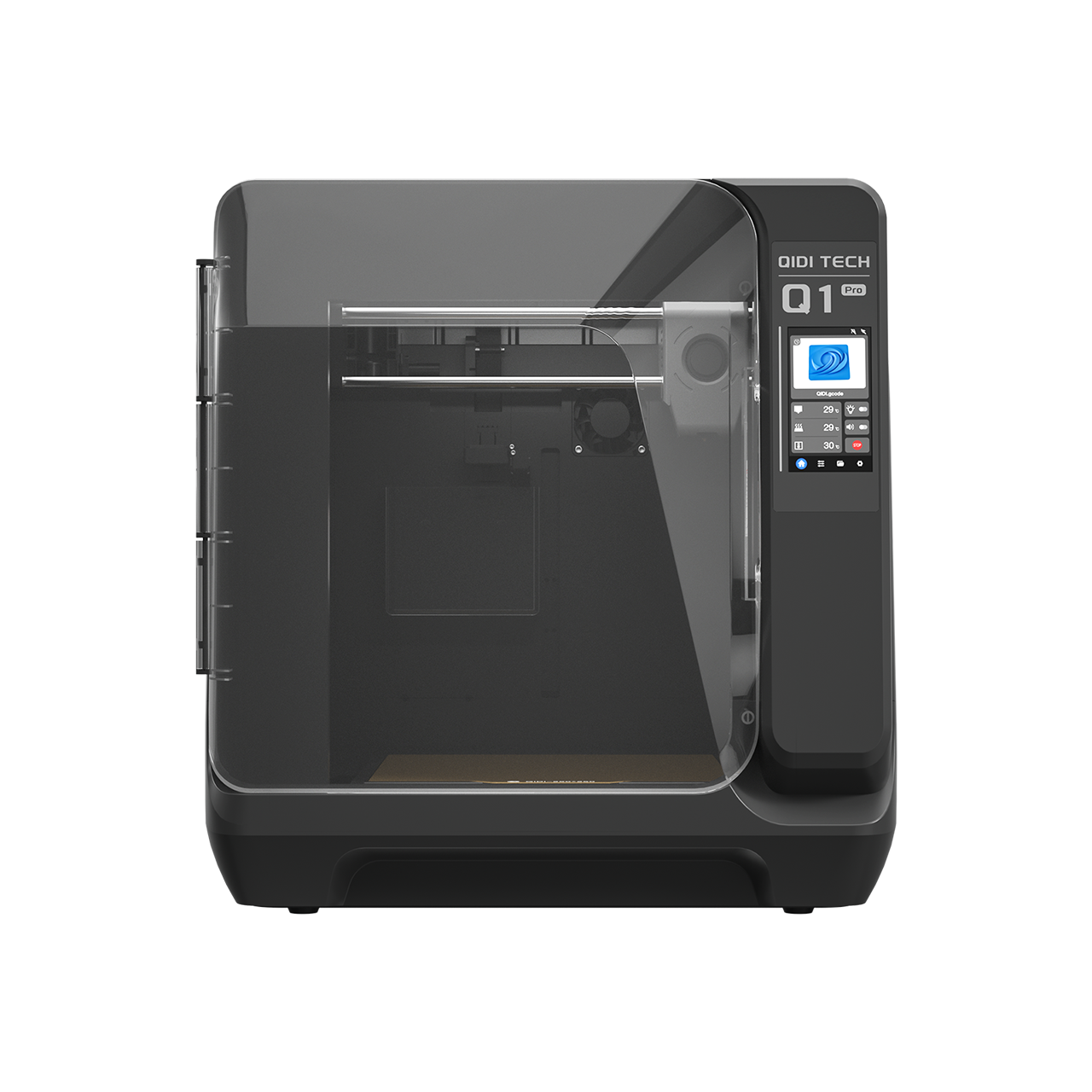
Consistent ambient temperature matters more for tall, thin decor geometry than for functional parts, because a draft on one side of a 400 mm vase produces a visible seam. An enclosed machine such as the QIDI Q2 or the QIDI Q2C keeps interlayer bonding uniform through a long print. The full range is in the QIDI printer collection.

Where PLA Decor Fails, Recycled or Not
Both materials share PLA's real limit: a glass transition temperature of roughly 55–65 °C. That is low enough to matter in ordinary interiors. A vase on a south-facing windowsill, a lampshade close to an incandescent or halogen source, or anything left in a parked car in summer can soften and deform. The problem is identical for virgin and recycled PLA — recycling does not make it worse, and virgin resin does not make it better.
If a piece will sit in direct sun or near a heat source, PLA is the wrong polymer regardless of feedstock. Our comparison of PLA and PETG for load-bearing wall hooks covers where to step up, and PETG or ASA is the usual answer for anything exposed to sustained warmth.
Sustainability Claims You Can Actually Support
Recycled PLA is a genuine marketing asset, but overstating it creates risk. Two distinctions are worth keeping straight.
Compostable is not the same as home compostable. PLA is certified compostable under industrial composting conditions — sustained elevated temperature and controlled humidity. In a home compost heap, or in landfill, PLA can persist for a very long time. Describing a product as "biodegradable" without that qualifier is not accurate.
Post-consumer is not the same as post-industrial. Post-industrial rPLA diverts factory waste; post-consumer rPLA diverts material that reached an end user. Both are legitimate, but they are different claims and buyers in the design trade increasingly ask which one applies. The US EPA's material-specific data on plastics puts the overall recycling rate for plastics in the single digits by weight, which is the context that makes a verified post-consumer stream worth paying for.
You can also close the loop in your own shop. Failed prints and support material are the cleanest possible feedstock, because you know their exact composition — see our guides to recycling failed 3D prints and melting and reusing PLA for the practical limits of that approach.
Choosing Between Them
Use Virgin PLA When
You need flawless colour matching across a repeat order, tight dimensional tolerance, or maximum throughput on a deadline. Printing fifty identical bowls for a hotel project is the clearest case: reliability and consistency outweigh the sustainability story, and PLA Basic or a matte equivalent will not surprise you mid-run.
Use Recycled PLA When
The piece is one-off or small-batch, static rather than flexing, and the brand story genuinely benefits. Slight organic variation between pieces can be positioned as a feature rather than a defect — but only if you say so up front, and only if you have verified the batch prints cleanly first. Filament options are listed in the QIDI filament collection.
A Three-Step Rollout
- Sample and stress-test. Before committing to a client order, print a torture-test model — a tall thin-wall vase is ideal — and apply moderate pressure at the layer boundaries. If it delaminates easily, raise the nozzle temperature 5 °C and retest before blaming the filament.
- Standardise the palette. Restrict recycled feedstocks to matte and textured finishes, which mask the batch variation that gloss exaggerates.
- Document the claim. Record the supplier, lot number and whether the feedstock is post-industrial or post-consumer. That record is what turns a marketing line into a defensible one.
Frequently Asked Questions
Is recycled PLA weaker than virgin PLA?
Somewhat, and specifically in the properties tied to polymer chain length: elongation at break and impact resistance drop with each melt cycle. Stiffness and glass transition temperature are largely unchanged. For static decor the difference is rarely visible; for parts that flex or take impact it is.
Can I print recycled PLA with the same settings as virgin PLA?
Nearly. Raise the nozzle temperature 5–10 °C to restore interlayer bonding, and dry the filament first. Keep an eye on stringing, since the lower melt viscosity of reprocessed PLA can make it more prone to oozing at the same retraction settings.
Is recycled PLA more sustainable than virgin PLA?
It diverts material from waste streams, which virgin PLA does not, so on that specific measure yes. Virgin PLA is already bio-based rather than petroleum-based, so the comparison is not one-sided. The honest framing is that recycled PLA reduces feedstock demand and waste volume, not that it is categorically greener.
Will a PLA decor piece survive on a sunny windowsill?
Often not. PLA's glass transition temperature of roughly 55–65 °C can be reached by a dark-coloured object in direct summer sun behind glass, and the part will soften and creep. This applies equally to virgin and recycled PLA. Use PETG or ASA for those positions.
Can I make my own recycled PLA filament from failed prints?
Yes, with a grinder and a filament extruder, and it is the cleanest feedstock available because you know exactly what went into it. Expect diameter tolerance to be worse than commercial filament and mechanical properties to fall with each pass, so reserve shop-recycled material for non-critical decorative work.
Disclaimer: This article is for informational purposes only. Ensure adequate ventilation when printing. For load-bearing or suspended decor, carry out independent strength testing under the conditions the piece will actually see, and verify any sustainability or compostability claim against the certification your supplier holds.
Sources
- Recycled Thermoplastics for 3D Printing Filament Production: A Review
- Effect of Extrusion on the Mechanical and Rheological Properties of Reinforced PLA: Reprocessing and Recycling
- Effects of Accelerating the Ageing of PLA Filaments after Fused Filament Fabrication
- US EPA — Plastics: Material-Specific Data
- UTHSCSA Libraries — 3D Printing Filaments & Materials
- Purdue University Libraries — Glossary of 3D Printing Terminology
- Two Materials That Are Chemically the Same and Practically Different
- Polymer Degradation and Thermal History
- Recycled vs Virgin PLA: What Actually Changes
- Aesthetics: The Professional's Real Hurdle
- Colour Consistency
- Matte Finishes as a Mitigation
- The Print Settings That Make rPLA Work
- Run 5–10 °C Hotter
- Dry It First
- Stabilise the Environment
- Where PLA Decor Fails, Recycled or Not
- Sustainability Claims You Can Actually Support
- Choosing Between Them
- Use Virgin PLA When
- Use Recycled PLA When
- A Three-Step Rollout
- Frequently Asked Questions
- Is recycled PLA weaker than virgin PLA?
- Can I print recycled PLA with the same settings as virgin PLA?
- Is recycled PLA more sustainable than virgin PLA?
- Will a PLA decor piece survive on a sunny windowsill?
- Can I make my own recycled PLA filament from failed prints?
- Sources
Produtos recomendados