

 Q2
 QIDI Box
 Plus 4
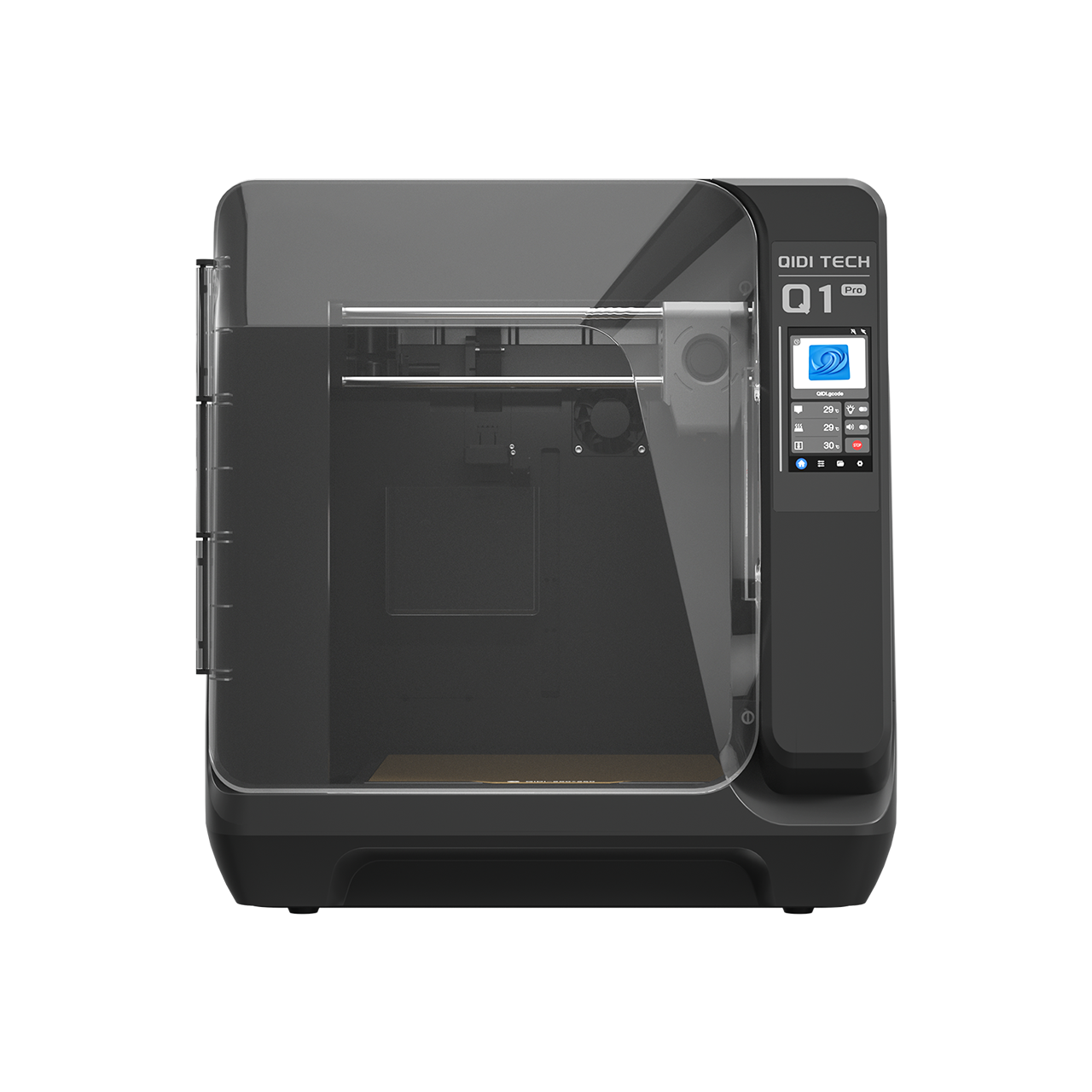 Q1 Pro
 X-Max 3


QIDI 3D Printer Filaments
This collection covers every 3D printer filament QIDI produces, from $16.99 everyday PLA to glass-filled PPS that deflects heat at 236°C. Every spool is standard 1.75mm and runs on any FDM machine; many carry an RFID chip that loads the right profile into your QIDI printer.
Everyday 3D Printer Filament: PLA & PETG
PLA Basic and PETG Basic anchor the range at $16.99 per kilogram. PLA Basic runs at 190–240°C on a 30–60°C bed, flows well enough to hold 250–300 mm/s, and comes from corn and potato starch. PETG Basic trades a little ease for toughness, pairing impact resistance close to ABS with resistance to water, UV, and heat for parts that live outside the enclosure.
- PLA Basic: Low odor, biodegradable, and the friendliest first spool on the shelf.
- PLA Matte Basic: A matte surface hides layer lines, and supports release cleanly from display pieces.
- PLA Silk Rapido: A silky metallic sheen at $17.99 for models meant to be seen.
- PETG Basic: Minimal warping for brackets, clips, and enclosures.
- PETG Rapido: The same toughness, tuned for stable 300 mm/s on high-speed machines.
Engineering-Grade ABS, ASA & Glass-Filled Filament
ABS and ASA handle heat and real loads, and both reward an enclosed printer with active chamber heating. ABS-GF25 adds 25% glass fiber for gears, brackets, and fixtures, and keeps flat parts flat on the bed. ASA pushes weather resistance to roughly ten times that of ABS, while ASA-CF20 Core wraps a 20% carbon-fiber core in a pure ASA skin for stiffness that holds through the Z-axis.
- ABS Rapido: $17.99 with high-speed extrusion and strong layer adhesion.
- Odorless-ABS Rapido: A low-VOC formula cuts fumes at the source; a ventilated room completes the setup.
- ABS-GF25: Rigid, dimensionally stable parts that hold tight tolerances through long runs.
- ASA: The UV-resistant choice for outdoor enclosures, mounts, and automotive trim.
- ASA-CF20 Core: A bright matte finish plus Z-axis strength for real loads.
High-Performance Composites
The top of the range targets heat, wear, and chemistry. PET-CF prints at 270–300°C and deflects heat at 155°C on an open machine. PA12-CF combines 15% carbon fiber with self-lubricating wear resistance for gears and sliding parts. UltraPA is a modified PPA nylon whose layers bond two to three times stronger than ABS. PPS-GF20 holds shape to a 236°C heat deflection temperature and carries a UL94 V-0 rating.
- PET-CF: 64 MPa of tensile strength, minimal moisture pickup, and annealing at 80–100°C for extra strength.
- PA12-CF: Enclosed printing and 77 MPa of tensile strength for high-wear industrial parts.
- UltraPA (PPA): Saturated moisture uptake runs at a fifth of standard PA6, so parts keep their dimensions.
- PPS-GF20: Resists acids, bases, fuels, and steam — a fit for chemical-contact parts and electrical housings.
Flexible & Specialty Filament
TPU95A-HF pairs 95A flexibility with a high-flow formula built for speed. TPU-Aero is a foaming TPU that comes out more than 50% lighter than standard TPU, with hardness tunable between 85A and 65A through print temperature. PEBA 95A returns over 70% of the energy it absorbs and stays flexible at -40°C. S-White Support breaks away from PA12-CF and other demanding materials by hand, and works with QIDI ABS Rapido, TPU95A-HF, TPU85A-HF, PET-GF, PET-CF, and ABS-GF25.
- TPU95A-HF: Gaskets, grips, and sleeves at 95A, tuned for faster output.
- TPU-Aero: A 0.74 g/cm³ density and a matte, fabric-like surface for cushioning and wearables.
- PEBA 95A: Rebound and cold-weather performance for sports gear, damping, and aerospace parts.
- S-White Support: Peels off by hand the moment the print finishes.
Frequently Asked Questions about QIDI Filaments
Which filament should a beginner buy first?
PLA Basic. It prints at 190–240°C, forgives speed changes, and delivers a clean first part on the first try. Move to PETG Basic when a project needs toughness or sun exposure.
Do fiber-filled filaments need special hardware?
Yes. Pair every CF or GF material with a hardened-steel nozzle in 0.4mm or larger, since glass and carbon fibers wear brass away. ABS, ASA, nylon, PPS, and PC blends do their best work in an enclosed printer with active chamber heating.
Can I run QIDI filament on a non-QIDI printer?
Yes. Every spool is standard 1.75mm and fits any FDM machine. The RFID chip is a QIDI convenience that auto-loads profiles; on other brands, the temperature ranges on each product page give the same starting point.
How should I store and dry filament?
Keep spools sealed with desiccant below 15% relative humidity, and a dry box makes this a one-step habit. Dry PLA at 50–55°C for 6–8 hours, PETG at 60–65°C, and nylon or PPS at 80–100°C prior to printing, while PET-CF needs a full 100°C for 10 hours. The engineering spools arrive vacuum-sealed in aluminum foil, which keeps them dry on the shelf; once opened, you can run the drying cycle above depending on your printing environment.

